
Why do people act against their own interests?
What hidden motives shape love, power, belief, and fear?
Across generations, psychologists and thinkers have tried to decode these questions. The most enduring books do more than analyze behavior—they hold up a mirror to the human condition.
This curated selection traces a panoramic journey of the psyche: from social games and archetypal drives to the biology of trauma and the search for meaning.
Each author here unpacks a vital layer of human nature and invites you to integrate insight into daily life.
Let’s explore the books that best explain why people think, feel, and act the way they do.
Why Read Psychology Books on Human Behavior
Human behavior refers to the patterns of thinking, feeling, and acting formed by both conscious intentions and unconscious influences.
Readers pursue psychology to explain behavior—but the true reward is transformation.
Understanding why we do what we do expands empathy, choice, and moral imagination.
It has been said that there are three main ways to learn about human psychology:
- Read Greek mythology
- Read Carl Jung
- Observe others
Of these three ways, observing others is the most powerful, but reading about the psyche helps inform our observations.
There are at least five significant reasons to learn about the psychology of human behavior:
- Understand yourself and your motivations.
- Learn about and understand other people.
- Change a behavior, thought pattern, or feeling.
- Support self-healing.
- Encourage self-development.
Arguably, the main reason to read psychology books on human behavior is to answer this question:
Why do we do what we do?
How to Choose the Best Books on Human Behavior
In my exploration, I’ve read many psychology books—well over 500. Not every psychology title deepens understanding; many simply recycle pop‑science summaries.
To choose well, look for books that balance three elements:
- Depth of insight — they reveal principles beneath personality or habit.
- Cross‑disciplinary reach — they unite science, philosophy, and lived experience.
- Transformational impact — they invite introspection, not just information.
A transformational psychology book offers frameworks that change how you see yourself—and through that shift, how you behave.
Still, it’s a challenging task to feature the “best books” because we’re all at different levels of development. The “best book” for one person will undoubtedly be different for another.
I’ve learned the most about human behavior from the Jungian community (depth psychology). However, I’ve already curated a detailed list of Jungian books here.
In this review, we’ll focus on other books that highlight different dimensions of human behavior.
The Best Psychology Books on Human Behavior
Below are my top picks for the best psychology books on human behavior, not in any particular order, but separated into categories:
- Social Dynamics and Collective Behavior
- Archetypes and Personality Structure
- Cognition, Decision‑Making, and Performance
- Trauma and Emotional Integration
- Meaning, Virtue, and Transcendence
Disclaimer: Amazon affiliate links below.
Social Dynamics and Collective Behavior
Human behavior begins in a relationship to others. Before we ever study the psyche in solitude, we learn it through interaction—through the subtle games of attention, approval, and belonging.
The following books decode the invisible scripts within communities, families, and crowds.
They reveal how our search for connection, status, and purpose shapes not only individual choices but the collective dramas of history.
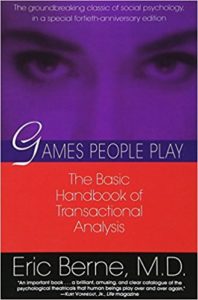
1. Games People Play — Eric Berne
Berne’s classic from the 60s is still highly relevant today. Transactional analysis examines human behavior through a social lens. Berne highlights that in social relationships, individuals embody one of three different expressions of the ego: the adult, the parent, and the child.
The adult is rational; the parent is critical and nurturing; the child is dependent and intuitive. All three expressions are in each of us, and different social situations trigger different ones, in specific combinations.
Games People Play is a fascinating read if you’re interested in understanding human behavior within various social settings.
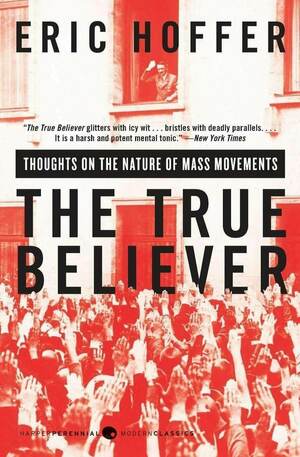
2. The True Believer — Eric Hoffer
If you’re going to read one book on cult psychology and mass movements, The True Believer is it. The psychology of cults influences so much of society and culture as it plays to a host of unconscious mechanisms within the psyche.
Whether we’re talking about organized religions, mass social movements, cult brands like Harley-Davidson, or destructive cults, the same psychology applies. Hoffer illuminates many key underlying dynamics observable throughout human behavior.
Archetypes and Personality Structure
Beneath the surface of personality lies architecture—archetypal energies and recurring symbolic patterns that steer our motivations.
Understanding these patterns turns psychology into mythic cartography: we begin recognizing ourselves as players in larger narratives.
These works show how archetypes give depth to identity, how type patterns mature, and how symbols bridge the conscious and unconscious mind.
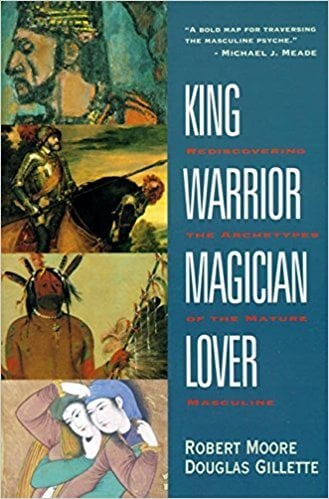
3. King, Warrior, Magician, Lover — Robert Moore & Douglas Gillette
If you want to understand human behavior, in my opinion, King Warrior Magician Lover (commonly referred to as KWML) is a must-read.
KWML is a wild ride into the psyche. You’ll meet the whole cast of characters, but, in my opinion, the real story isn’t about the four main archetypes in the title. Instead, the insights into human behavior are found revealed through their bipolar shadow counterparts.
In getting to know and understanding these shadow archetypes, we begin to appreciate the forces that rule most human behavior.
For anyone interested in psychology and human behavior, put KWML on your list. Although this title is geared towards men, it’s just as applicable for women.
If you would like to read an introduction to KWML, see this guide: King Warrior Magician Lover: Four Foundational Masculine Archetypes.
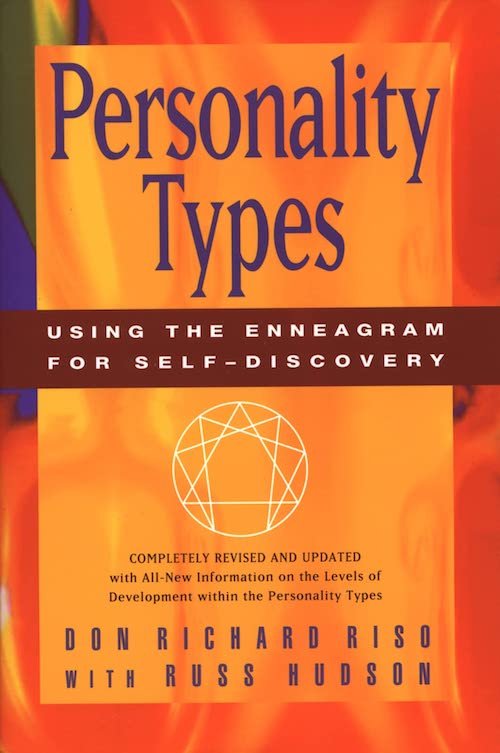
4. Personality Types — Don Riso & Russ Hudson
Working in the coaching field for almost three decades, I explored most, if not all, of the psychological assessments on the market (Myers-Briggs, DISC, Human Design Engineering, etc.) Personality typing systems reveal a great deal about human behavior.
From my experience, the Enneagram is the most robust and functional personality model. To appreciate the depth and robustness of this personality system, read Personality Types. The nine levels of each type illustrate a path for healthy personality development, a key differentiating factor of this system from other models.
However, if you’re entirely new to this personality system, The Wisdom of the Enneagram is perhaps the most practical and accessible. The Enneagram by Helen Palmer is also an excellent primer.
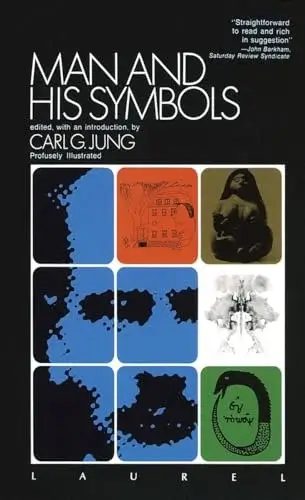
5. Man and His Symbols — Carl G. Jung
Jung’s final work explains how the unconscious communicates through images, myths, and dreams.
By studying symbols, we witness how personal and collective patterns—the “archetypes”—shape behavior outside awareness.
Understanding them bridges Western psychology with timeless wisdom traditions.
Man and His Symbols converts inner chaos into coherence. It remains the most accessible introduction to analytical psychology: a reminder that the images we fear often carry the meaning we crave.
Cognition, Decision‑Making, and Performance
Once we see our symbolic and emotional drives, the next layer is cognition—the thinking machinery that translates impulse into action.
Our decisions, biases, and focus states determine whether behavior repeats or evolves.
These books explore how thought patterns form, how attention crafts experience, and how peak states of flow align our skill level with a sense of meaning.
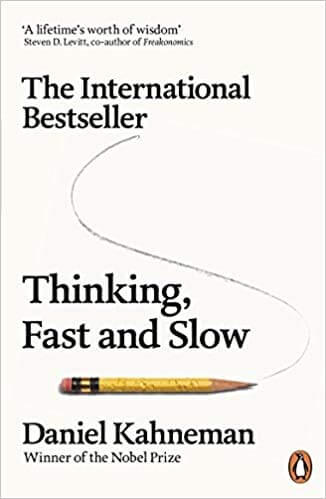
6. Thinking, Fast and Slow — Daniel Kahneman
Kahneman’s book has become a modern classic—and for good reason. This Nobel laureate in economics explains how two different systems in our minds guide our behavior: one system is conscious and aware, while the other is automatic and impulsive.
Kahneman’s research is the “source material” for dozens of other best-selling psychology books.
In many ways, Kahneman’s research provides “scientific evidence” of the unconscious as described in depth psychology.

7. Flow: The Psychology of Optimal Experience — Mihaly Csikszentmihalyi
“Flow” is the invisible zone where skill meets challenge and self‑consciousness disappears.
Csikszentmihalyi’s decades of research uncovered that happiness depends less on circumstance than on focused attention.
The state arises when goals are clear, feedback is immediate, and effort feels meaningful.
Laboratory and field studies on flow confirm that clear goals and immediate feedback synchronize attention and dopamine‑based reward cycles, giving empirical grounding to Csikszentmihalyi’s theory of effortless mastery.1Nakamura, J., Csikszentmihalyi, M. (2014). The Concept of Flow. In: Flow and the Foundations of Positive Psychology. Springer, Dordrecht. https://doi.org/10.1007/978-94-017-9088-8_16
Combine his methods with my Peak Experience & Flow Guide to design activities that trigger deep engagement.
Flow transforms work into play and discipline into joy—the behavioral signature of self‑actualization.
8. The Farther Reaches of Human Nature — Abraham Maslow
Maslow is considered the father of humanistic psychology (the “third wave” of psychology). While most researchers were studying mental illness, Maslow focused on positive mental health. Although all of Maslow’s writings are interesting, I’ve selected The Farther Reaches of Human Nature for this list.
The Farther Reaches was published posthumously. In my opinion, the book is very accessible and includes some of Maslow’s best ideas on the importance of creativity for positive mental health.
Trauma and Emotional Integration
Every life accumulates invisible wounds. Modern trauma research shows that behavior often originates not in choice but in unprocessed pain.
Healing, therefore, means integrating what the body remembers but the mind resists.
The following works illuminate how emotional neglect and suppression distort behavior—and how reconnecting with feeling restores both vitality and empathy.
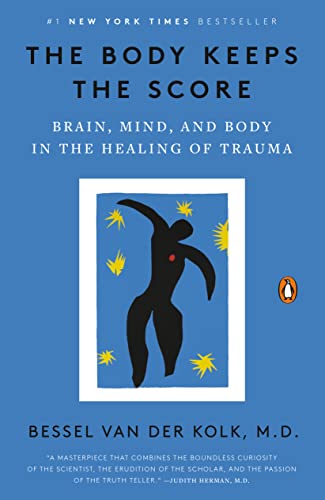
9. The Body Keeps the Score — Bessel van der Kolk
Trauma imprints itself in physiology—the body remembers what the mind suppresses.
Brain‑imaging studies show that trauma actually changes how the brain works.2Liberzon, I., Britton, J. C., & Phan, K. L. (2003). Neural correlates of traumatic recall in posttraumatic stress disorder. Stress (Amsterdam, Netherlands), 6(3), 151–156. https://doi.org/10.1080/1025389031000136242
When people with PTSD remember a painful event, the parts of the brain that help with thinking and self‑control—like the medial prefrontal cortex—tend to shut down, while emotion centers such as the amygdala become overactive.
Follow‑up work by Elzinga and Bremner found that trauma also disrupts the hippocampus, the brain’s memory organizer.3Elzinga, B., & Bremner, J. (2002). Are the neural substrates of memory the final common pathway in posttraumatic stress disorder (PTSD)? Journal of Affective Disorders, 70(1), 1-17. https://doi.org/10.1016/S0165-0327(01)00351-2 This helps explain why flashbacks can feel vivid but disconnected from time or language.
In short, trauma changes both mind and body—and healing needs to address both.
Van der Kolk’s pioneering studies in neurobiology and attachment reveal how chronic stress reshapes perception, emotion, and behavior.
Integrating yoga, EMDR, and mindfulness, he offers practical paths toward body‑mind reconnection.
For those exploring trauma and repressed emotions, this book grounds abstract psychology in lived experience: healing is not about reliving pain but reintegrating it into wholeness.
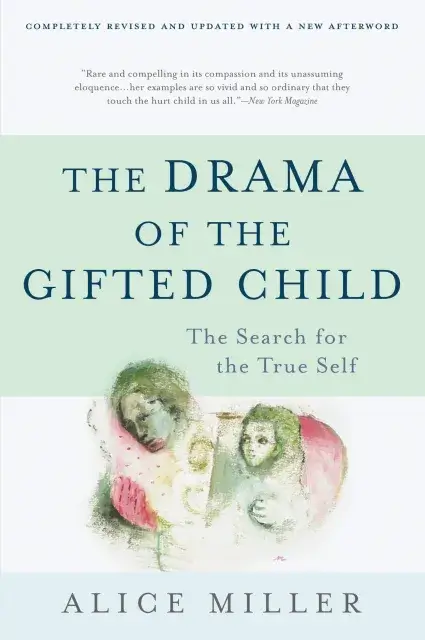
10. The Drama of the Gifted Child — Alice Miller
Anyone who bravely explores the depth of their psyche will come to know their trauma.
Miller exposes how childhood adaptation—becoming the “good” or “talented” child—creates adults estranged from authentic feeling.
Her compassionate psychology explains perfectionism, guilt, and the quiet despair of caretakers who were never cared for. Miller’s message is revolutionary in its simplicity: your sensitivity isn’t your wound; it’s the doorway to real strength.
Alice Miller’s revealing book, The Drama of the Gifted Child, provides insight into how their psychological wounds unfolded and how to relate to these human behaviors in adulthood.

11. Emotional Intelligence — Daniel Goleman
Goleman redefined intelligence as empathy plus regulation—a framework that changed education and leadership worldwide.
Drawing on neuroscience, he shows that self‑awareness and self-regulation predict success more reliably than IQ.
Emotional literacy, therefore, becomes the foundation of ethical behavior and resilience. His insights and suggested practices can help strengthen self-reflection and our flexibility in response.
Research on adult emotion regulation backs Goleman’s argument: individuals who consciously restructure feeling responses report higher life satisfaction and cooperation—confirming that emotional intelligence translates directly into behavioral wisdom.4Gross, J. J., & John, O. P. (2003). Individual differences in two emotion regulation processes: implications for affect, relationships, and well-being. Journal of personality and social psychology, 85(2), 348–362. https://doi.org/10.1037/0022-3514.85.2.348
By balancing cognition with compassion, readers learn that wisdom is intelligence embodied.
12. How to Be an Adult — David Richo
If you’re looking for a handbook on understanding human behavior and developing yourself psychologically, How to Be an Adult may be right for you. This concise, 120-page book is jam-packed with valuable insights and practices.
In How to Be an Adult, Richo frames the development of our psychology within the Hero’s Journey, exploring the “challenges” we face as we approach adulthood. These challenges take us into what we tend to resist the most: our grief, fears, anger, and guilt.
Richo’s handbook isn’t something you read once and set aside. You carry it with you, often referring back. Don’t be fooled into believing that adulthood comes naturally with age. If everyone read this book—and lived the practices it contains—I’m confident we would live in a very different world. But that change starts with each of us.
Meaning, Virtue, and Transcendence
Once we’ve understood patterns, cognition, and healing, the natural question arises: What is all this for?
Psychology matures into philosophy when it asks about purpose.
These final volumes investigate happiness, morality, and transcendence—the motives that carry us beyond survival into significance.
They draw from philosophy, myth, and contemplative insight to show that understanding behavior ultimately leads to wisdom and wonder.
13. The Happiness Hypothesis — Jonathan Haidt
Haidt unites moral psychology and ancient wisdom, demonstrating that the mind is an inner ecosystem where reason and instinct must cooperate.
Drawing on Stoicism, Buddhism, and neuroscience, he shows that joy emerges from coherence between values and behavior.
The Happiness Hypothesis echoes an insight from Positive Psychology: long‑term well‑being depends more on purpose than on pleasure.
Haidt gives readers a scientific language for virtue—eudaimonia renewed for the modern world.

14. Man’s Search for Meaning — Viktor Frankl
Frankl’s account of surviving concentration camps distilled a truth central to all psychology: human freedom begins with meaning.
Through logotherapy, he teaches that the perception of purpose transforms suffering into strength.
His observations echo Maslow’s highest need—self‑transcendence—and anticipate modern positive psychology.
Frankl clarifies that resilience is not born from comfort but from a chosen “why.”
15. The Lucifer Effect — Philip Zimbardo
Zimbardo’s classic, grounded in the Stanford Prison Experiment, exposes how environment and authority can corrupt ordinary people.
By connecting situational power to moral disengagement, he explains atrocities and corporate scandals alike.
Recognizing these pressures strengthens personal ethics and organizational awareness—essential for anyone doing shadow work.
The Lucifer Effect challenges readers to build systems that elevate conscience rather than conceal it, proving that self‑knowledge is society’s real safeguard.
You can get a “Cliff’s Notes” version of The Lucifer Effect in Zimbardo’s TED Talk on the psychology of evil.
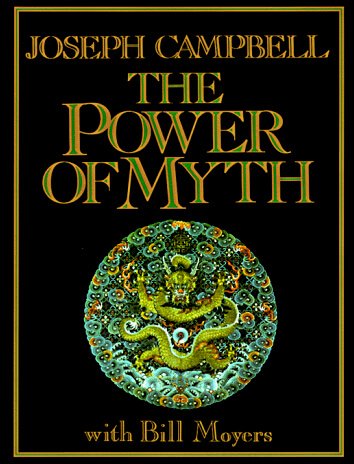
16. The Power of Myth — Joseph Campbell
I can’t imagine a list of the best psychology books on human behavior without at least one title by famed mythologist Joseph Campbell. As Campbell explains, at its deepest level, mythology is the study of the psyche.
In Flight of the Wild Gander, Campbell explained, “Mythology is psychology, misread as cosmology, history, and biography.”
Every story—from Buddha to Luke Skywalker—traces the same archetypal path: departure, ordeal, return.
Most of Campbell’s work can be a bit “dense” for the average reader; however, The Power of Myth is different. The Power of Myth is the transcript of an extensive PBS interview Campbell did with Bill Moyers.
Note: In this case, I would recommend the video version over the book, mainly because of the additional visuals in the presentation. Also, if you want to take a masterclass on Eastern and Western psychology, see Campbell’s 3-part lecture series, Mythos. There’s nothing else like it.

17. The Wisdom of Insecurity — Alan Watts
Watts marries Eastern philosophy with Western clarity, arguing that anxiety arises from resisting impermanence.
Modern people chase psychological security through control, yet fulfillment lies in presence.
By surrendering to flow—the natural rhythm of experience—we rediscover spontaneity and compassion.
The Wisdom of Insecurity is a classic guide to relaxed awareness: the state beyond striving.
Watts’s humor and lucidity close the psychological journey where it began—in simple, awake humanity.
Explore Human Behavior More Deeply
From my perspective, the best psychology books on human behavior address the unconscious and the nature of the psyche itself.
The challenge with exploring the unconscious is that it can be dark, chaotic, messy, and sometimes irrational (from the perspective of our conscious minds).
In exploring the unconscious realm, we enter the world of symbols, images, myths, dreams, and fairy tales.
Ready to go deeper? Read Jung.
Read Other Guides on Human Behavior
Maslow’s Basic Human Needs: What’s Really Driving Your Behavior
The Hero’s Journey: Joseph Campbell’s Map of Inner Transformation
How to Change a Fixed Mindset into a Growth Mindset
Spiral Dynamics Integral: Stages of Human Values & Psychological Growth
References
- Elzinga, B., & Bremner, J. (2002). Are the neural substrates of memory the final common pathway in posttraumatic stress disorder (PTSD)? Journal of Affective Disorders, 70(1), 1-17. https://doi.org/10.1016/S0165-0327(01)00351-2
- Gross, J. J., & John, O. P. (2003). Individual differences in two emotion regulation processes: implications for affect, relationships, and well-being. Journal of personality and social psychology, 85(2), 348–362. https://doi.org/10.1037/0022-3514.85.2.348
- Liberzon, I., Britton, J. C., & Phan, K. L. (2003). Neural correlates of traumatic recall in posttraumatic stress disorder. Stress (Amsterdam, Netherlands), 6(3), 151–156. https://doi.org/10.1080/1025389031000136242
- Nakamura, J., Csikszentmihalyi, M. (2014). The Concept of Flow. In: Flow and the Foundations of Positive Psychology. Springer, Dordrecht. https://doi.org/10.1007/978-94-017-9088-8_16