
Beneath symptoms and stress, the body‑mind already knows how to repair and renew itself.
The task of self-healing is remembering how to cooperate with that intelligence.
In this guide, drawn from psychology, contemplative science, and holistic energy traditions, we’ll explore what activates your innate healing response and how to engage it intentionally—through breath, attention, and daily practice.
You don’t need to know where to start. You just need to start where you are. This guide gives you the full map—then points you to the first step.
Let’s dive in …
What is Self-Healing?
Self‑healing is the natural capacity of the body‑mind‑spirit system to restore energetic and psychological balance when given attention, safety, and alignment.
As the term implies, self-healing is the process of healing oneself. The “self” in this context refers to one’s entire being.
Healing means becoming whole and returning to one’s natural state.
When your skin is cut, and it heals, it becomes whole again. The same thing goes for healing biochemical imbalances, emotional wounds, mental distress, and spiritual emptiness.
Self-healing is the process by which we achieve a state of wholeness—our way of restoring and recovering from prior physical and emotional wounds, traumas, illnesses, and imbalances.
Where to Begin Your Self-Healing Journey
Self-healing is simple but not easy. Most people fail not because they pick the wrong technique, but because they try to build on a foundation that isn’t there.
Four practices help form the foundation. Master these before chasing any “quick fix” methods or any of the 70+ other techniques listed below:
1 – Train Yourself to Breathe Properly
Most adults breathe shallowly from the chest, keeping the nervous system in a low-grade state of alarm. Restoring natural, diaphragmatic breathing is the single highest-leverage change you can make.
2 – Ground Yourself Daily
Reconnect your body to the Earth’s electrical field. Twenty minutes barefoot on soil, grass, or sand rebalances your nervous system faster than most techniques you’ll ever learn.
Begin grounding yourself to the Earth →
3 – Find Your Center Frequently
Learn to detect when you’re scattered, reactive, or “off”—and how to return to a calm, neutral point of presence. This skill alone can change how you experience every difficult moment.
Build your awareness of the Center →
4 – Release What You’ve Buried
Unprocessed emotions don’t disappear. They live in your tissues, driving chronic tension, pain, and reactivity. Opening the body, releasing trauma, and learning to feel what’s there is where real healing begins.
Address your stagnant, repressed emotions →
Pick one technique. Spend a week with it. Then add the next.
The rest of this guide explains why these practices work and what else is available once your foundation is solid. If you want the full map before you choose a path, keep reading.
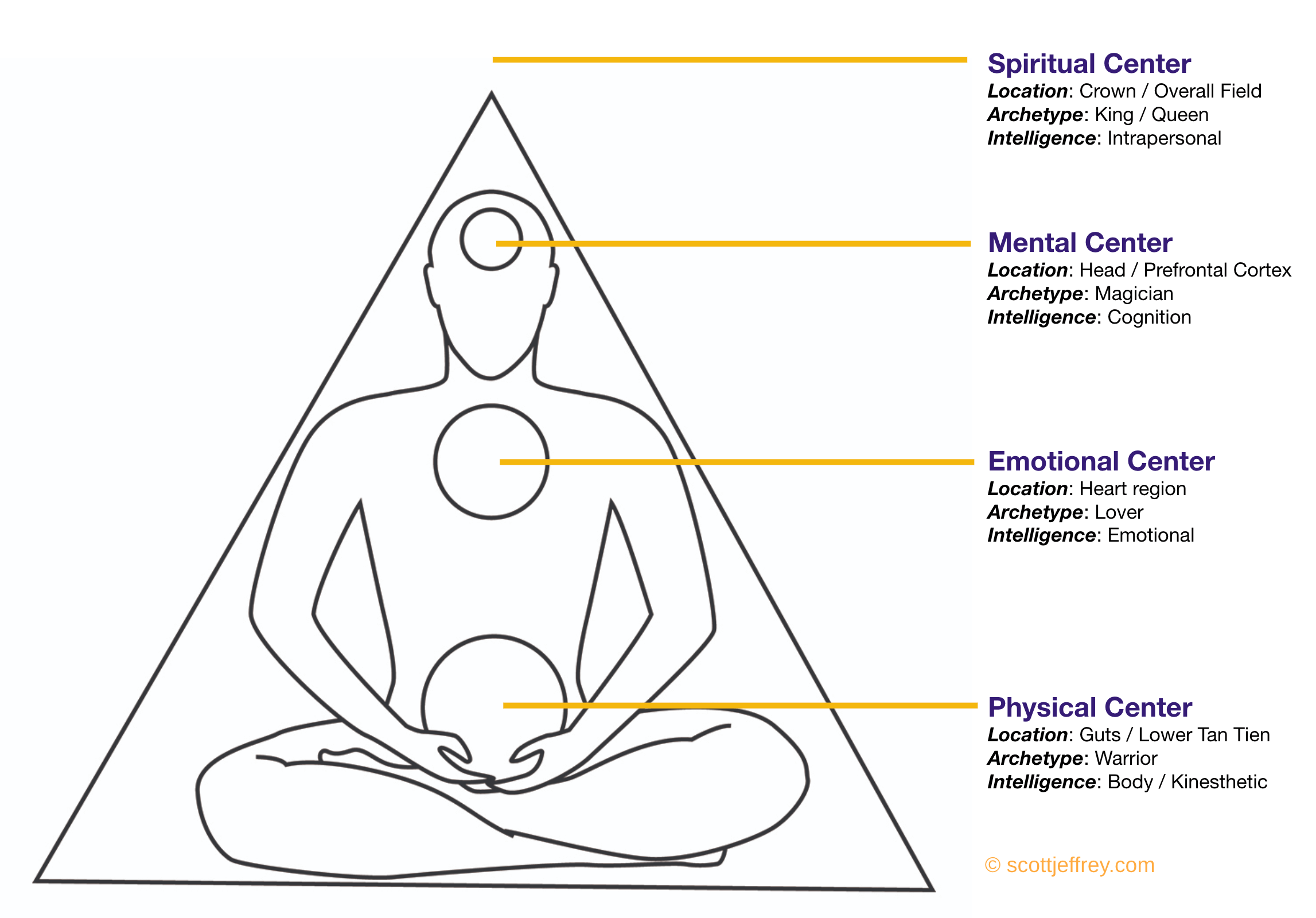
The Four Dimensions of Self‑Healing
Self-healing can be applied to at least one of the physical, mental, emotional, or spiritual dimensions of one’s being. Ultimately, attention to all four domains is necessary.
1 – Healing the Body: Energy, Vitality, and Regeneration
Healing the physical body might include addressing inflammation, infections, and chronic illnesses.
Any form of inflammation or chronic ailment taxes the body’s energetic system. Healing these issues restores our innate energetic coherence.
The body heals the moment we stop interrupting its innate intelligence.
Movement, rest, and nourishment are important ways we dialogue with our bodies.
When we start to sync our breath, movement, posture, and circadian cycles into a daily rhythm, vitality emerges without strain.
2 – Healing the Mind: Clarity, Belief, and Focus
Limiting beliefs, negative self-talk, poor self-image, and various mental disorders are all afflictions of the mind.
What the mind calls “healing” is often simply a matter of stabilizing our awareness in stillness.
Our thoughts organize themselves once our attention steadies and beliefs about ourselves loosen their grip.
Cognitive reframing, meditation, and reflective inner work help dissolve our distortions and give us a clearer sense of perception.
3 – Healing the Emotions: Integration and Release
Healing our emotional center involves releasing repressed emotions and addressing chronic emotional problems like anxiety and depression.
Emotion is energy asking to move. Resistance traps it; present-moment awareness of emotion helps liberate it.
Breathwork, mindful self-expression, trauma release exercises, and shadow inquiry reopen closed circuits between our feelings and our awareness.
When we stop suppressing and repressing our emotions, the weight of unprocessed emotions lifts. Then, our internal guidance strengthens along with our resilience and empathy.
4 – Accessing the Spirit: Meaning, Connection, and Transcendence
Spiritually-related problems involve spiritual emergencies, a prevailing sense of meaninglessness, and existential angst—the classic “dark night of the soul” experience.
Spirit itself is never wounded—it is the unbroken field from which healing arises.
The real work is turning inward through silence and devotion until consciousness re‑tunes to its source.
In that recognition, separation dissolves, and our sense of presence deepens. Abraham Maslow and others call this self-transcendence.
Self‑healing culminates here as remembrance: the individual reclaimed by the wholeness that has always been.

Can You Heal Yourself?
For most of us, the phrase heal yourself triggers doubt. It sounds defiant—like trying to outsmart biology or bypass professional help.
But instead of being rebellious, self‑healing is more about personal responsibility. It means cooperating with the same intelligence that built the body itself and animates our consciousness.
Self-healing unfolds when our awareness and life force energy reconnect. Cells repair, not because the ego commands them to, but because conditions allow their natural order to return.
Every genuine therapeutic system—from meditation and nutrition to psychotherapy—works by aligning with this principle of reconnection.
The Shift from Dependence to Responsibility
Modern culture teaches dependence on external authority: experts are supposed to fix us, doctors “cure” us, and technology restores us.
But is that your personal experience? In fact, in the medical industry, the concept of “cure” is usually omitted. Instead, the word “treatment” is used. Cures have an endpoint; treatments do not.
Ultimately, all external methods rely on the body‑mind’s innate capacity to reorganize and restore itself. Even a surgeon can only set the stage; life itself performs the recovery.
The Power of Belief in Healing
As biologist Bruce Lipton illuminated in The Biology of Belief, our beliefs matter because attention directs biology.
When you trust your internal process, the nervous system relaxes, internal alignment returns, and energy begins to circulate more efficiently.
However, if you fundamentally believe you need external assistance to heal—if you believe self-healing is impossible—your biology will comply with your mind’s beliefs. Psychologists call this confirmation bias.
Conversely, if you believe—with full conviction—that you CAN heal yourself, your cells, psyche, and vital energy can work in concert to actualize this reality.
Once you make this vital shift inward, you can begin actively collaborating with your body and mind to facilitate self-healing.
What Happens When You Practice Self‑Healing
At the core of self-healing are the principles of responsibility and self-reliance.
When we embark on our self-healing journey, we take responsibility for ourselves and the healing process.
Restoring Internal Authority
Meaning our physical, mental, emotional, and spiritual state is in our hands—and no one else’s.
When we avoid personal responsibility, we subconsciously adopt the helpless victim archetype. When this occurs, genuine healing cannot manifest.
With self-healing, instead of playing the victim or projecting authority onto others, we constellate our innate power within ourselves.
In doing so, we cultivate self-reliance, a crucial aspect of developing into strong, competent, and autonomous adults.
Note: This doesn’t suggest that we can’t seek any external aid at times, when appropriate or necessary. It simply means that the function of healing is up to us, and no one else.
Essential Self-Healing Benefits
Why would someone practice self-healing?
This spiritual journey comes with numerous benefits:
Improved self-confidence: It’s empowering to address and resolve personal ailments and tensions effectively on one’s own. Confidence grows quietly in the background with every reconnection.
Stronger self-reliance: Your inner sense of authority grows. Instead of relying on outside systems and professions, you start trusting your own capabilities.
Enhanced self-awareness: The self-healing process enables you to observe, understand, and regulate your emotions and thought patterns more effectively. This greater self-awareness pays dividends in every area of your life.
Greater internal balance: Your self-healing journey tends to strengthen your connection of body, mind, soul, and spirit.
Increased vitality: The more you shift your autonomic nervous system from survival to renewal, the more vital energy you unlock.
And, of course, you’ll be healing yourself along the way!
The Integrative Approach: Body‑Mind‑Spirit Alignment
Self-healing is a natural, organic process. Our natural state is full of vitality and vibrancy.
The body’s innate ability to heal itself will never be rivaled by any insights or interventions from the medical industry.
All holistic self‑healing practices rest on a single premise: life is a circulating current of energy.
When that current flows freely through body, mind, and spirit, vitality expresses itself as clarity, strength, and calm alertness.
Taoist and Ayurvedic traditions both describe this current—qi in China, prana in India—as the invisible architecture uniting physiology, psychology, and consciousness.
Integrated healing means learning to cooperate with this living field rather than imposing control upon it.
Three Treasures: The Energetic Foundation of Healing
The body is a complex energetic system comprising intricate channels, points, fields, and pathways. It contains numerous types of energetic frequencies and “data packets”. (For example, each vital organ has its own frequency.)
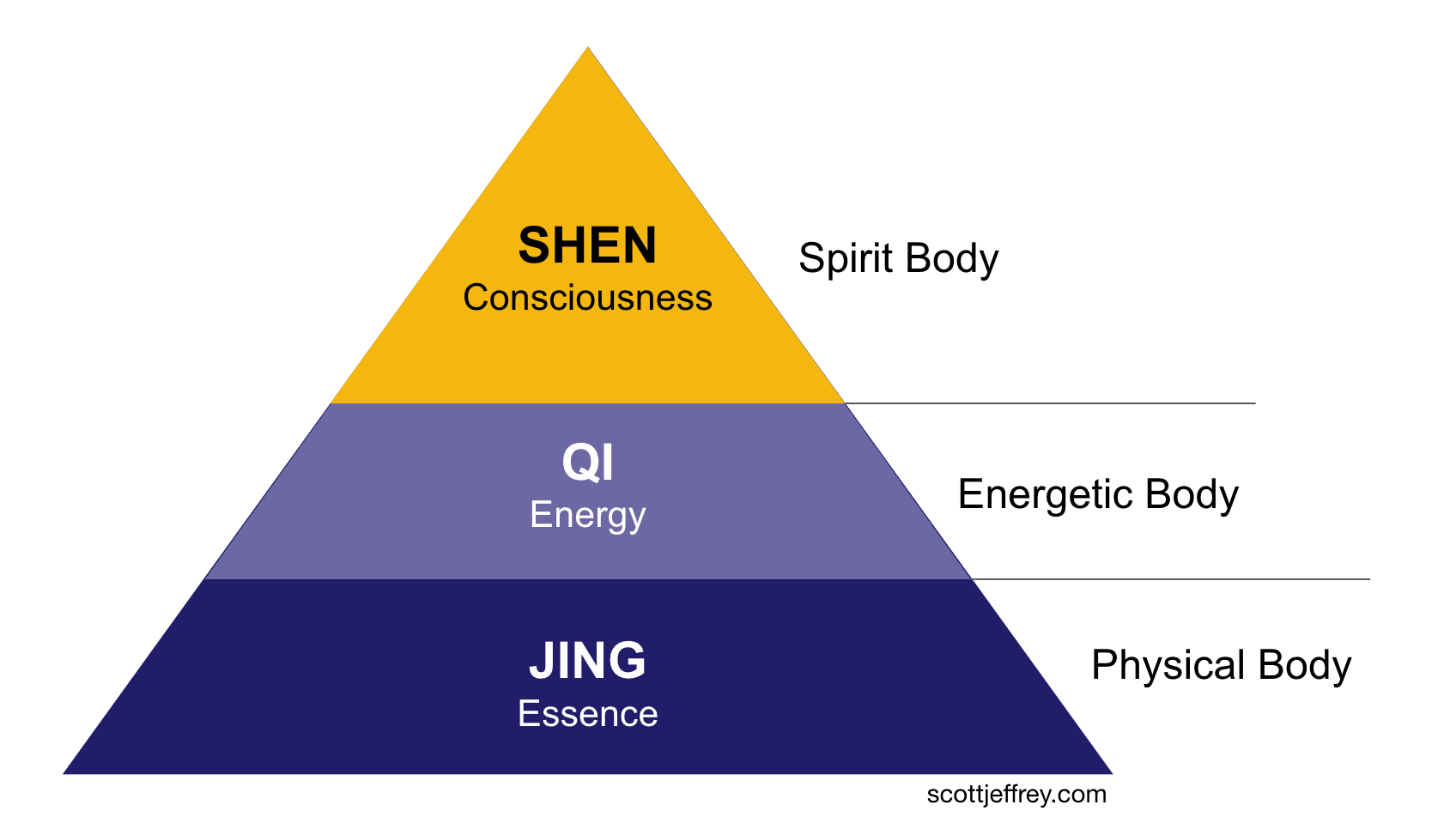
Various types of energetic signatures exist within the body. Ancient Taoists mapped these signatures as the “Three Treasures” of human energy:
- Jing: The Vitality or Life Essence (Physical Body)
- Chi: The Energetic System or Life Force (Energy Body)
- Shen: Consciousness or Spirit (Consciousness Body)
Ayurveda speaks similarly of Ojas, Prana, and Tejas—the triad sustaining vitality.
When Jing is conserved through nourishment, Qi rises naturally as vital energy, and Shen illumines awareness.
Modern somatic research echoes this: balance the nervous system, and energy coherence follows.1McCraty, R., & Zayas, M. A. (2014). Cardiac coherence, self‑regulation, autonomic stability, and psychosocial well‑being. Frontiers in Psychology, 5, Article 1090. https://doi.org/10.3389/fpsyg.2014.01090
All genuine self‑healing emerges from this tri‑level alignment of matter, energy, and consciousness.
Inwardly Directed Awareness is the Key
To integrate body, mind, and spirit, you must feel energy, not merely think about it.
Practices like Qigong, yoga, and mindful breathwork can help retrain your perception to directly sense your life force.
Most body-mind integration practices require you to sink your awareness into your body. Doing so helps stabilize both your mind and energy system.
When your mind is settled, your shen (consciousness) can stabilize too.
When you inhabit the body as the meeting point of Jing‑Qi‑Shen, your thoughts and feelings quiet, and vitality circulates without effort.
Integrated Systems of Healing
Western medicine tends to focus on addressing physical issues without understanding the underlying cause. This root cause is usually systemic.
As such, ancient healing systems were all integrative.
For example, Ayurvedic Medicine seeks to balance the body, mind, and spirit (consciousness) through modalities such as dietary changes, yogic stretching, herbal remedies, and meditation.
The ancient Taoists also employed a holistic system encompassing meditation, stretching, standing, herbalism, dietary adjustments, and energy-based practices.
It’s less about championing a single system and more about addressing multiple domains simultaneously.
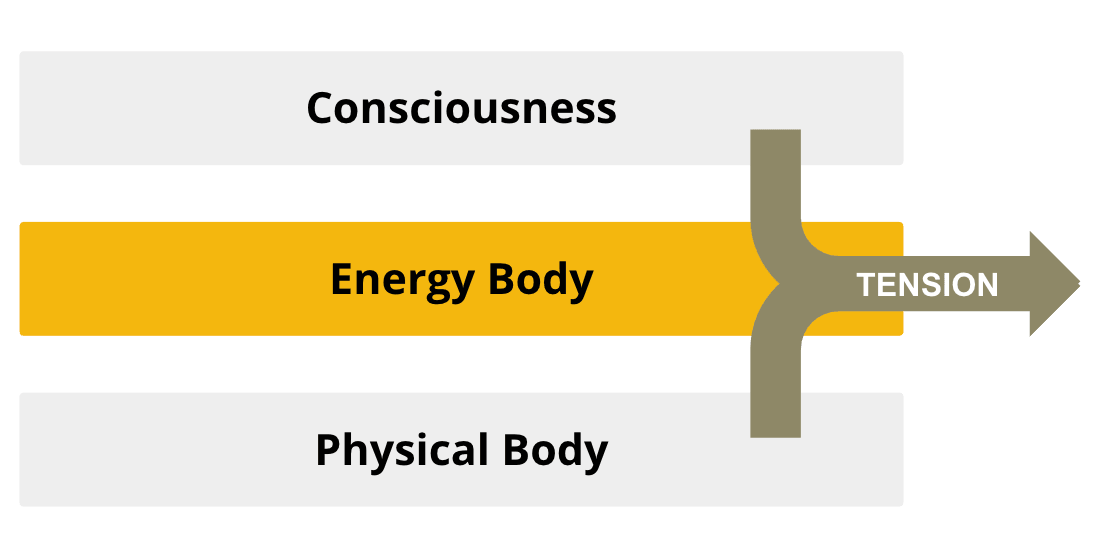
Self-Healing as Energetic Release
I’ve found understanding energy essential to the process of self-healing.
When the body’s energy is blocked, stagnant, or out of balance, dis-ease manifests.
However, when the body’s energy system is open, fluid, and freely moving, self-healing becomes a natural process.
It’s a simple yet powerful self-confirming framework.
This dynamic is clearly documented in the Taoist tradition of Neigong. Even when you’re treating a physical problem, a release within the energy body is still the causal mechanism.
The integral relationship between body, mind, emotions, and spirit becomes increasingly apparent on your spiritual journey. You begin to see how vital energy binds these domains together.
This energetic understanding helps explain why many healing methods involve interaction with the natural world.
Unlike our modern world, filled with disharmonic and unnatural frequencies and fields, nature’s vibrations are more aligned with our natural state.
As such, when you immerse yourself in nature, the mind often quiets down naturally without effort.
How Energetic Blocks Manifest in the Nervous System
Energetic blocks aren’t metaphors as they have a biological correlate.
When Qi stagnates, your nervous system shows it: shallow breath, a clenched gut, and shoulders living somewhere near your ears.
Ancient traditions mapped this intuitively; modern research on the vagus nerve now confirms it.
The vagus is the physical highway between brain and body—and it responds most directly to one thing: slow breathing with a long exhale.2Poli, A., Gemignani, A., Soldani, F., & Miccoli, M. (2021). A systematic review of a polyvagal perspective on embodied contemplative practices as promoters of cardiorespiratory coupling and traumatic stress recovery for PTSD and OCD: Research methodologies and state of the art. International Journal of Environmental Research and Public Health, 18(22), 11778. https://doi.org/10.3390/ijerph182211778
That extended out-breath tells your nervous system that the threat has passed and that repair can begin.
The energy body and the nervous system aren’t two separate things. They’re one system described in two languages.

Common Causes of Illness, Disease, and Disharmony
Once you understand that the body is a complex system of energetic fields and frequencies, it becomes easier to appreciate how many factors can influence its current state.
While the body’s energetic matrix is naturally self-healing and self-regulating, various factors can hinder its ability to do so.
Obstacles exist on two main fronts: the external environment, which distorts natural frequency, and internal patterns that resist restoration.
External Interferences to Healing
Our modern environment constantly scrambles the body’s energetic rhythm.
Blue light after sunset, electromagnetic fields from wireless networks, chemical residues in food and water, and chronic sensory overload all disrupt subtle regulation within the nervous and endocrine systems.
Harmful agents include:
- Processed and genetically modified foods
- Refined sugars
- Seed oils
- Preservatives
- Artificial flavoring & coloring
- Fluorinated water
- Heavy metals
- Harmful bacteria
- Synthetic chemicals
- Non-native EMF
- Poisons like arsenic
- Drugs/medications
- Microplastics
- Artificial blue light (“junk light”)
- Molds & fungus
- Parasites
Every form of pollution of the natural world—light, sound, air, and water—disrupts our biofields. Every foreign “agent” influences our energetic fields in various harmful ways.
Human physiology evolved in resonance with natural cycles—sunlight, the Earth’s magnetic field, circadian variation, clean water, and pure air.
When those patterns break, cellular communication falters, and fatigue, anxiety, or hormonal imbalance arise.
Also, the negative emotions of others in our proximity, such as repressed anger, can influence our vibrations just as harmful electromagnetic radiation does.
Inner Blocks to Healing
From a Taoist perspective, approximately 95% of illness is psychosomatic. That is, emotional and mental factors are perceived as the root cause of most physical issues.
Unprocessed emotion occupies the energetic bandwidth meant for regeneration.
Fear, resentment, worry, and chronic guilt constrict the energetic channels the same way muscular tension limits movement. Suppressed and repressed feelings don’t disappear; they become internal tension.
Also, the mind’s recurrent conclusions—“I can’t,” “I don’t deserve,” “This is who I am”—form energetic eddies that trap attention.
Ultimately, our thoughts are also expressions of energy that can either work with our natural cycles or sow disharmony.
Internal blocks include:
- Unrecognized trauma
- Disempowering beliefs
- Negative self-talk
- Resentment
- Destructive behaviors
- Persistent Frustration
- Shallow breathing
- Judgementalism
- Poor posture
- Ego inflation (grandiosity)
- Overwhelm
- Bad habits
- Chronic depression or anxiety
- Intense hatred, desire, or envy
- Repressed emotions
- Ego deflation
Perpetual busyness—the neurotic need to continually be “doing something”—numbs sensitivity to our inner signals. The nervous system, when denied rest, forgets its baseline.
Generally, internal tensions hinder the flow of energy, leading to improper biological functioning over time. Issues tend to compound, leading to dis-ease, in one form or another.
It’s not about entirely removing all these internal and external factors (which is virtually impossible). Instead, it’s about becoming adept at navigating through them.

Directional and Receptive Energy Dynamics
Every form of self-healing expresses a movement of energy.
Some currents flow outward—defining, focusing, stabilizing.
Others move inward—listening, yielding, dissolving.
Understanding the nature and differences between masculine and feminine energies supports the healing process.
Directional Energy Dynamics (Masculine)
Directional energy is active, goal‑oriented, and clarifying. It mobilizes our will and internal structure, including exercise routines, dietary protocols, disciplined meditation, and precise adjustments.
This force penetrates stagnation, establishes boundaries, and implements insight through consistent action. Without it, the attempt to heal drifts into abstraction.
But too much direction hardens the system and creates more internal tension. The drive to “fix a problem” can fragment what only patience can mend.
Directional energy uses concentration to initiate balance, then steps back. Its mantra is “focus, act, release.”
Receptive Energy Dynamics (Feminine)
Receptive energy welcomes rather than manipulates. It listens through the body’s sensations, honors timing, and allows unforced integration.
Breathwork, restorative posture, and quiet contemplation invite this mode. Beneath receptive energy, cellular repair accelerates precisely because effort subsides.
In psychological terms, receptivity means trusting the process rather than controlling it—an openness that allows unconscious material to surface without judgment.
Yet, unchecked receptivity can slide into passivity, losing containment and direction. Its strength lies in surrender paired with awareness: a relaxation so complete that alignment re‑establishes itself. Its mantra is “notice, allow, be.”
The Dance of Polarity
Healing oscillates between these two motions as night complements day. Directional energy ignites transformation; receptive energy consolidates it.
Each needs the other for wholeness. In Taoist terms, Yang stimulates Yin and Yin nourishes Yang.
In practice, you might meet pain with focused breathing (directional) and then relax into silence (receptive).
Let’s say you’re struggling with intense emotions you want to get rid of, so you explore a self-healing technique like Emotional Freedom Technique (EFT) or the Sedona Method.
You might use directional energy to “tap, tap, tap” to try to release the emotion when you might really need to just sit with the feeling (receptive energy) until your Center returns. Then, you can experiment with a technique—if you still need to.
Over time, you begin to sense when to apply will (masculine) and when to yield (feminine).
This balanced polarity marks mature self‑healing: strength without strain, softness without loss of direction.

Practical Self-Healing Techniques (75+)
Self‑healing becomes real only through conscious repetition.
Regular practice rewires how energy moves through every layer of our being.
These four domains—physical, mental/emotional, energetic, and spiritual—form a complete daily ecosystem of restoration.
What follows is a list of various self-healing techniques and practices available to you that address each of these domains.
Keep in mind that many of these techniques influence multiple domains. For example, while breathwork is a physical practice that offers numerous benefits for the body, it can also have a profound impact on our mental and emotional state.
Select what resonates with you and let rhythm, not willpower, lead the way.
Physical Techniques for Resilience
The physical layer stabilizes the foundation. Fasting, mindful eating, hydration, movement, and herbal tonics cleanse stagnation and renew Jing (essence).
Choose whole foods close to their source, simplify meals, and favor warmth over stimulation. When your digestion calms, your energy reallocates from processing to repairing; the body can then remember its natural harmony.
Physically-oriented self-healing techniques include:
Improving Sleep
Dietary changes
Eating wholefoods
Somatic breathing exercises
Cold showers
Fasting / intermittent fasting
Trauma Release Exercises
Grounding techniques (earthing)
Conscious stretching
Mindful walking
Supplementation
Aromatherapy
Holotropic breathing
Pranayama breathing
Relaxation techniques3Norelli SK, Long A, Krepps JM. Relaxation Techniques. [Updated 2023 Aug 28]. In: StatPearls [Internet]. Treasure Island (FL): StatPearls Publishing; 2025 Jan-. Available from: https://www.ncbi.nlm.nih.gov/books/NBK513238/
Sound therapy
Frequency therapy (Rife, Zappers)
Magnet therapy
Red light therapy
PEMF
Self-acupuncture
Acupressure techniques
Homeopathy
Crystal healing
Gardening
Nature walks
Herbology
Herbal organ detoxes
Parasite cleanses/detoxes
Candida cleanse
Restoring gut health
Biofeedback
Mental and Emotional Techniques for Clarity
Our mind and emotions regulate our perception. Reflective journaling, shadow work, breath‑anchored meditation, and creative self-expression help bring unconscious material into awareness—an essential step toward wholeness.
Observe recurring thought loops with curiosity rather than critique. Our emotions lose volatility when we feel them fully without extensive commentary. Clarity, then, replaces the need for control.
Mental and emotional self-healing techniques include:
Shadow work
Various meditation practices
Dream work
Inner work
Self-hypnosis
Emotional Freedom Technique (EFT)
Sedona Method
Cognitive Behavioral Therapy (CBT)
ABCDE Model (from CBT)
Creative expression
Journaling / spontaneous writing
Challenging existing beliefs
Internal Family Systems
Psychosynthesis
Ericksonian hypnosis
Lucid dreaming
Neuro-linguistic programming
Release Technique
Active imagination
Positive Affirmations
Letting go
Creative visualization
Changing your mindset
Subliminal reprogramming
Autosuggestion
Mindfulness-based stress reduction
Thought-field therapy (tapping)
EMDR
Lojong mind training practices
Psychedelic journeys
Brain entrainment programs
Voice Dialogue
Energetic Practices for Flow
Energy techniques synchronize vitality through regulated movement and breath. Qigong, Pranayama, and gentle standing practices circulate Qi through meridians, loosening internal friction.
A few minutes of deliberate breathing or a still posture each day strengthen the body’s electromagnetic coherence and clear residual fatigue. Feel the current, don’t force it.
Energetic-based self-healing techniques include:
Qigong
Zhan Zhuang
Yoga
Tai Chi
Reiki
Internal martial arts
Centering techniques
Pranic energy healing
Subtle energy healing
Six Healing Sounds (Qigong)
Energy Medicine
Bioenergetic analysis
Spiritual Practices for Alignment
At the subtlest level, healing is a form of remembrance. Meditation, contemplative prayer, or time in silence reunites you with the Original Spirit (Self).
Stillness acts as the highest medicine—balancing direction with receptivity.
In Taoism, although the Six Healing Sounds are used to restore the vital organs, mental silence is considered the best hygiene and the most curative.4The Secret of the Golden Flower: The Classic Chinese Book of Life (T. Cleary, Trans.). (1991). HarperOne.
When our awareness rests in the heart’s quiet field, healing becomes effortless and enduring.
Various forms of meditation
Compassion exercises
Practicing forgiveness
Going in solitude
Loving-kindness meditation
Nonduality practices
Connecting with the Self
Maitri (making friends with yourself)
Prayer
Practice gratitude
DMT experiences
Cultivating cardinal virtues

The Journey Leads Inward
The self-healing process brings us inward to a closer examination of ourselves: our hidden thoughts, aspirations, dreams, attitudes, impulses, and feelings.
We come to understand that our conscious personalities are not who we are, not in the slightest.
Healing, the return to wholeness, asks us to bring unconscious content back into consciousness and fully accept it.
Here are six guiding principles for those on their inner, spiritual journey:
1 – Mine Your Shadow
The psyche is built on opposing forces. We each have a cast of characters within our psyche, what Jung called archetypes: some of these parts are familiar to us, while most remain unknown.
The trauma we experience in childhood scars the psyche, giving way to various shadow archetypes that influence our thoughts, emotions, attitudes, and behavior.
The process of becoming whole requires us to bring these shadow elements into the light of consciousness, leading to an acceptance of our past and present.
This is the essence of shadow work and a vital process in one’s self-healing journey.
I don’t personally see how an individual can move toward wholeness (healing) without first getting to know their shadow.
This integral aspect of inner work is most relevant when we enter the second half of life.
2 – Embrace the Negative
I know, the self-help literature tells us to “be positive.” After all, negativity can lead to dis-ease in the body. So why embrace negativity? Because it’s there.
And if you try to suppress it, ignore it, or play any other mind tricks with it, you’ll only make this negative energy stronger. (This valuable insight becomes undeniable when you do shadow work.)
Also, trying to “be positive” in the face of negative energy only makes the negative grow stronger in the background.
Our cultural bias toward positivity is based on the assumption that we’re supposed to be happy. Why? Who said so? Is this human experience not filled with both light AND dark? (Look around.)
Often, the best way to heal negative emotions and attitudes is to turn towards them, embrace them, and even express them (without harming yourself or others). Only then can this energy release on its own.
The point is not to dwell on negativity, but to avoid suppressing or repressing it, or trying to escape it.
3 – Engage in Self-Reflection
Ask yourself questions like:
- Where am I investing a lot of time and attention?
- What single habit drains the most energy, and what nurtures it?
- What am I investing time in that’s not supporting my healing?
- What am I NOT doing that I believe will be most beneficial?
Pay attention to where you’re placing your energy, rather than letting external conditions and established habits dictate your daily life.
4 – Connect with an Inspiring Vision
It’s easy to become fixated on our problems, especially when they persistently demand our attention.
Clarify in your mind’s eye what you’re after. “Good health” is a nondescript term; it conveys little meaning. As such, it’s vital to clarify a personal vision.
- What’s your vision for your Future Self?
- What does self-healing look like for you?
- Do you feel vibrant? Full of energy?
- Resilient and adaptable?
- Ready to take on new challenges?
State your vision in the positive (meaning what you want, rather than what you don’t want). In your mind’s eye, see and feel what it looks like.
5 – Pay Attention to Your Hidden Attitudes
How you approach self-healing is just as vital as what you do.
For example, you can do everything “right” but with the wrong attitude or subconscious intention, and you will fail (make little progress).
Conversely, you can achieve great results with a well-aligned attitude and intention, but minimal effort.
Detecting internal resistance and hidden attitudes requires a high level of self-awareness and inner honesty.
6 – Practice Self-Acceptance
Fitting into this world comes at a high cost. Only through doing inner work does one begin to appreciate the magnitude of this cost on one’s soul.
Regardless of where you are now, accept yourself as best you can, even the parts you find undesirable and wish to change.
Being too hard on yourself or comparing yourself to others tends to add needless self-inflicted suffering and stall self-healing.
Common Pitfalls and How to Avoid Them
Here are seven tendencies and potential obstacles to watch out for:
1 – Leaning on a Guru
Many individuals on their self-healing journey subconsciously seek out and cling to a “guru.”
I’m not just talking about a spiritual guru, but any kind of “health expert,” “master,” or “influencer.”
It can be beneficial to learn from others, but be wary of the psyche’s tendency to project your inner gold onto others.
Different healers may serve you at different points along your journey. But ultimately, you will need that internal power (inner gold) to help you heal.
2 – Looking for Quick Fixes
Let go of needing things to change “now.”
Accept that many ailments and problems take time to heal. Having unrealistic expectations creates unnecessary anxiety and tension, setting you up for needless disappointment and discouragement.
Searching for quick fixes will often waste more time, energy, and money while stalling genuine healing.
3 – Fixating on the Inner Critic
We all have numerous inner critics and sabotaging voices within our psyche.
Sometimes the inner critic provides valuable insights and perspectives, but most often it hijacks positive momentum.
For example, in the context of self-healing, the inner critic might tell you it’s not possible or that you’ve tried it before and it “just didn’t work.”
This guide on peak performance explains how to silence the inner critic when it arises.
4 – Ignoring your Inner Hypochondriac
As Jung’s work highlighted, the psyche is built on opposites. Most often, our conscious minds hold one attitude, while our unconscious minds hold a conflicting one.
In the case of self-healing, a conscious part of us (call it “ego”) wants to heal, while an unconscious part doesn’t. That unconscious part is sometimes referred to as the Hypochondriac.
This archetypal pattern is established during childhood and is more potent in some individuals than others. Children who received unhealthy attention and positive reinforcement when they were sick tend to have this same pattern active within their psyches as adults.
The hypochondriac wants attention, not healing. If you are fully functioning and whole, this part cannot exist within you. As such, it may attempt to thwart your efforts for its agenda.
5 – Confusing Knowledge with Execution
Individuals often immerse themselves in the quest for knowledge in the early stages of healing. This knowledge can dispel ignorance and lead to a better understanding and more life-supporting habits and behaviors.
However, make sure you’re not fixating on “knowing about” the problems; ensure that you’re consistently applying methods, techniques, and principles to realize the desired solution.
Fixating on accumulating more information instead of actively addressing emotional wounds is called the spiritual bypass, and it’s an incredibly common trap.
Many individuals immerse themselves in New Age belief systems or even spiritual practices as a clever way of avoiding emotional trauma and self-healing.
6 – Neglecting Discernment and Critical Thinking
Discernment is a crucial component in an individual’s self-healing journey.
For example, as part of your journey, you may come to learn that much of “modern medicine” does not support genuine health and healing. Instead, it’s driven mainly by profiteering and sadism. As such, you may become skeptical of mainstream explanations and “solutions” for common problems.
However, you might then adopt various new-age belief systems and ideologies with the same lack of due diligence. “Big pharma” may not be the answer, but that doesn’t mean healing crystals, juice cleanses, or positive affirmations are the solution either.
Always apply critical thinking, discernment, and intuition to your particular case.
7 – Seeking Distraction to Avoid Discomfort
There’s a part of each of us that resists change. We may consciously want to heal, but our current state of being is what we are familiar with.
As Abraham Maslow explained, we tend to fear the unknown and be driven toward safety (the known).
As such, it’s common to seek distraction, pleasure, and entertainment to avoid the transformations involved in self-healing.
Distraction helps the ego maintain its current equilibrium seemingly permanently. In contrast, self-healing requires us to embrace the unknown and lean into discomfort.
How to Sustain Your Self-Healing Practice
Every journey begins with listening.
Self‑healing doesn’t necessarily demand huge changes. But it does require intense sincerity, mindful presence, and stillness.
It asks for small, daily moments that trigger shifts in our awareness: from “what do I need to do to heal” to relaxing into a sense of beingness beyond our current self-identity.
Step 1: Slow Down
If there was one thing I could recommend to someone at the early or middle stage of self-healing, it’s this: slow down and relax!
Most of us tend to move way too fast. Our cultural values of fitting in, consuming, competing, and achieving lead us to focus exclusively on the external world and move fast to “get things done.”
Self-healing requires significant time to observe ourselves and process feelings, memories, and conflicting attitudes.
While there are no quick fixes, “spontaneous healing” is a real phenomenon.
However, it doesn’t come through effort or will, but through surrender, acceptance, and genuine relaxation. We can’t accept what we haven’t observed or brought to consciousness.
We can subconsciously thwart the natural healing process by moving too quickly, tensing up our bodies, and ignoring our internal terrain.
But when we begin to slow down, relax, and pay attention within, the self-organization design kicks in. Sometimes it’s slow initially. Over time, your willingness, earnestness, and intent help coax the process along, as the pieces come back into place.
Each step, however small, brings you closer to wholeness.
Related Books
The Biology of Belief by Bruce Lipton
How to Be an Adult by David Richio
Inner Work by Robert A. Johnson
Untethered Soul by Michael Singer
Read Next
How to Seek Spiritual Guidance (7 Proven Methods)
Jungian Synchronicity: Decoding the Psychology of Meaningful Coincidences
The 3 Stages of Spiritual Growth: From Self‑Discovery to Self‑Realization
What Is Spiritual Psychology? The Path to Integrating Ego and Spirit
References
- Johnson, R. A. (1986). Inner work: Using dreams and active imagination for personal growth. New York, NY: Harper & Row.
- Lipton, B. H. (2005). The biology of belief: Unleashing the power of consciousness, matter & miracles. Elite Books.
- McCraty, R., & Zayas, M. A. (2014). Cardiac coherence, self‑regulation, autonomic stability, and psychosocial well‑being. Frontiers in Psychology, 5, Article 1090. https://doi.org/10.3389/fpsyg.2014.01090
- Norelli SK, Long A, Krepps JM. Relaxation Techniques. [Updated 2023 Aug 28]. In: StatPearls [Internet]. Treasure Island (FL): StatPearls Publishing; 2025 Jan-. Available from: https://www.ncbi.nlm.nih.gov/books/NBK513238/
- Poli, A., Gemignani, A., Soldani, F., & Miccoli, M. (2021). A systematic review of a polyvagal perspective on embodied contemplative practices as promoters of cardiorespiratory coupling and traumatic stress recovery for PTSD and OCD: Research methodologies and state of the art. International Journal of Environmental Research and Public Health, 18(22), 11778. https://doi.org/10.3390/ijerph182211778
- The Secret of the Golden Flower: The Classic Chinese Book of Life (T. Cleary, Trans.). (1991). HarperOne.
- Richo, D. (1991). How to be an adult: A handbook on psychological and spiritual integration. New York, NY: Paulist Press.