
Across cultures and centuries, the healer has symbolized the bridge between the seen and the unseen.
Yet, behind the luminous promise of spiritual healing lies a paradox: many who seek to heal others still carry unhealed parts within themselves.
In my 30s, I went through an extensive “exploratory” phase. I was trying to address many different ailments and issues.
I sought virtually every kind of healer and “alternative” practitioner to help address these problems, including energy healers, Reiki masters, Jungians, applied kinesiologists, acupuncturists, shamans, psychic healers, and other alternative health providers.
This guide explores both sides of this archetype—the gift and the shadow—based on my experiences and observations.
By the end, you’ll see why genuine healing begins not with power over others but with radical honesty toward yourself.
Let’s dive in …
What is a Spiritual Healer?
A spiritual healer facilitates transformation by aligning the mind, body, and spirit through awareness‑based, energetic, or consciousness‑centered methods.
A spiritual healer’s function is to heal an individual using “nonphysical” methods. These methods may include the use of internal energy (prana/chi), meditation, prayer, psychedelic substances, consciousness, or psychic ability.
Spiritual healing may involve:
- Repairing past trauma,
- Releasing repressed emotions,
- Restoring mental or emotional imbalances,
- Unblocking chi energy,
- Overcoming chronic addictions,
- Undergoing past life regression therapy,
- Examining ancestral trauma,
- Reconnecting with the Divine
One might say a spiritual healer’s role is to help “heal the soul.”
The Spiritual Healer at a Glance
| Aspect | Description |
|---|---|
| Core drive | To restore wholeness by bridging the seen and unseen |
| Key Traits | Intuition, empathy, energetic sensitivity, and often deep personal wounds transmuted into insight |
| Highest expression | The conscious healer who has done their own inner work and facilitates without attachment |
| Shadow expression | The unconscious healer who projects their wounds onto patients, chases status, or forms co-dependent bonds |
| Archetypal masks | Energy Healer, Psychic Healer, Wounded Healer, Shaman, Medicine Man/Woman, Reiki Master |
| Element | Water—receptive, cleansing, able to hold others’ pain, but shapeless without its own container |
| Essential question | “Physician, heal thyself—have I?” |
Who Seeks Spiritual Healers—and Why Now
Who needs a spiritual healer? Why would someone seek out such a healer?
Individuals who look for spiritual healers may be experiencing:
- A growing sense of internal discontent
- Pervasive feelings of meaninglessness or emptiness
- Feelings of hopelessness and despair (“dark night of the soul”)
- Existential depression
- Chronic addiction
- Strong feelings of isolation and disconnection
- Chronic disease with no known medical cure
- Suicidal thoughts or tendencies
Essentially, at a deep, internal level, the individual senses something is wrong. Something nonphysical is causing great discontent.
And, as a general rule, conventional healing methods do not address these more profound and potentially pervasive psychic malalignments.
Types of Spiritual Healers & Their Archetypes
One challenge with the term “spiritual healer” is its vagueness. “Nonphysical” or “metaphysical” (beyond physical) can imply many different things.
For example, psychologists who address mental and emotional problems are also working “beyond the physical,” but they are not spiritual healers (in most cases).
Ultimately, the Healer is a powerful archetype. It represents a universal image and set of tendencies that extend throughout time and location.
In most cases, spiritual healers are closely aligned with the magician and sage archetypes,
1 – Energy Healers (Eastern Traditions)
Individuals who awaken their energy body often have a natural talent and inclination toward healing.
In the Eastern Traditions, this life force energy, known as chi (qi) or prana, can be directed and projected from one individual to another. Individuals with strong qi can help unblock others’ channel pathways.
Various schools of Qigong, Traditional Chinese Medicine, Kundalini Yoga, Ayurvedic Medicine, and Reiki have their own methods of energy healing.
2 – Psychic & Mystical Healers
Whereas energy healers tend to train in and study specific ancient healing systems, psychic and mystic healers are often more intuitive. These healers often have Kundalini awakening episodes early in life.
Ideally, they learn how to utilize their gifts to their advantage and assist others with their intuitive healing methods when they’re ready.
3 – The Wounded Healer Archetype
Most often, healers endured extensive trauma or intense psychic malady in childhood. This archetypal variation is specifically called the Wounded Healer.
After bringing this trauma to consciousness and healing it, there may arise a drive to help others suffering from a similar malady. In this context, healers often feel internally “guided” to become healers.
Many individuals in the “alternative healing” field are naturally aligned with this archetype.
4 – Inherited Lineages of Healing
Alternatively, extraordinary healers often come from a lineage of healers.
Treasured skills and healing abilities are passed down from generation to generation in a kind of master-apprentice relationship. This lineage is common among shamans and medicine men/women.
Because these healers often begin cultivating their talents at an unusually young age, they become remarkable adepts.
Traits of Authentic Spiritual Healers
Generally, the Healer archetype is characterized by a distinct set of traits and qualities.
Core Qualities of a True Healer
Authentic healers tend to be highly intuitive. In a Jungian sense, they often have a dominant “intuitive function.”
They are naturally empathetic and possess strong, compassionate listening skills. They are often introverted, meaning they draw energy primarily from themselves rather than from others.
Consequently, they have high levels of energetic sensitivity within themselves, around others, and in their environments.
Generally, healers have high levels of intrapersonal intelligence. They are contemplative, introspective, and reflective. These qualities together provide them with superior self-awareness—an essential quality of the healing arts.
Many spiritual healers have experienced the “dark night of the soul.” These dark episodes can naturally lead them to engage in inner work to gain a deeper understanding of their psyche. Sometimes consciously, other times intuitively.
They are likely intimate with existential angst and the search for meaning. Most likely, they have already initiated their own spiritual awakening.
How Spiritual Healing Works (Eastern and Western Models)
Numerous models exist in Eastern traditions and Western alternative fields that explain how spiritual healing (or any nonphysical healing) works through psycho‑energetic integration.
The Yogic Model of Healing: The Five Kosha Layers of Being
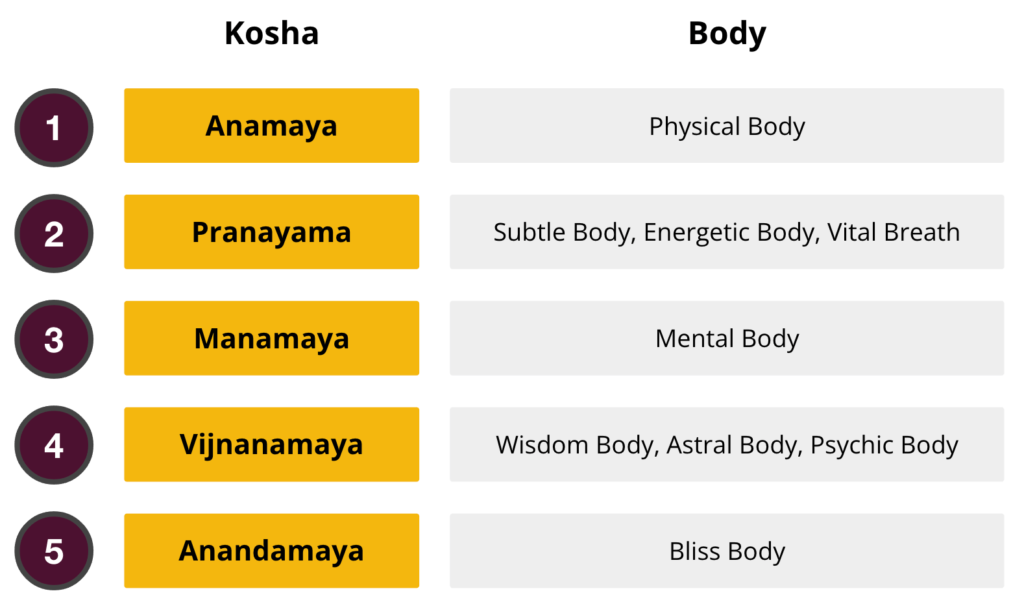
In the Yogic tradition, the five kosha (layers or sheaths) represent different dimensions of the self.
The five koshas are:
- Anamaya Kosha: food sheath, associated with the physical body
- Pranayama Kosha: subtle body (energetic body and breath)
- Manamaya Kosha: mental body
- Vijnanamaya Kosha: wisdom, astral, or psychic body
- Anandamaya Kosha: bliss body
Traditional medicine focuses on healing the physical body, the food sheath.
“Spiritual healing” may directly address one of the other four sheaths, focusing on the energetic and psychic bodies.
The Taoist Perspective: Balancing Energetic Bodies Through Neigong
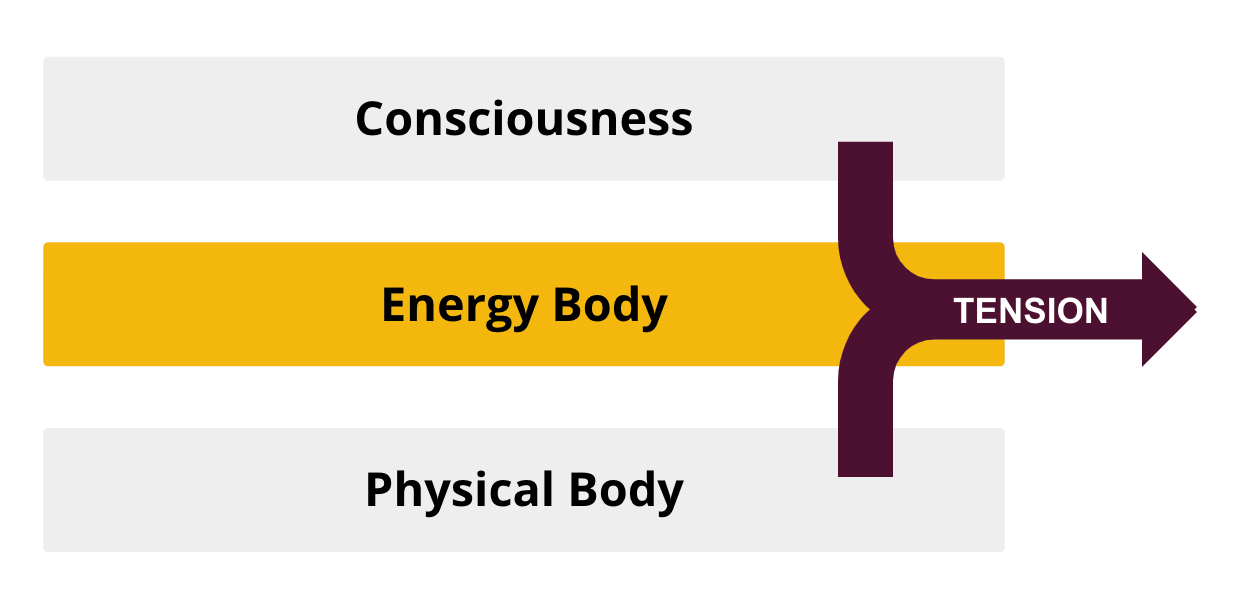
The above image is a simplified framework from the Taoist tradition (Neigong).
From a Taoist perspective, all physical, emotional, and mental issues have an energetic component.
Thus, there must always be a release on the energetic level to facilitate healing and lasting change (even with perceived physical-level problems).
From this context, an “emotional release” always has an energetic component, thereby facilitating unconscious healing.
Multilayered Energy Intelligence
Both systems above describe the human being as multilayered energy intelligence—one maps five sheaths of consciousness, the other charts three interpenetrating bodies existing between Earth and Heaven.
Environmental‑health research now recognizes the same principle healers describe: systems thrive when invisible influences are addressed.
A transparent review method used in environmental medicine found that subtle, often‑ignored exposures—from toxins to psychosocial stressors—can create cumulative energetic stress.1Woodruff, T. J., & Sutton, P. (2014). The Navigation Guide systematic review methodology: a rigorous and transparent method for translating environmental health science into better health outcomes. Environmental health perspectives, 122(10), 1007–1014. https://doi.org/10.1289/ehp.1307175 This insight echoes the ancient view that disturbance in the “subtle body” precedes physical disease.
Energetic healers from various traditions, including Qigong, Yoga, and Reiki, operate on this principle.
What Trauma Science Confirms About the Energy Body
Modern trauma research has caught up to what the kosha model described centuries ago.
Bessel van der Kolk’s The Body Keeps the Score demonstrated what the kosha model described centuries ago: that trauma lives in the body—not just the mind.
Talk therapy alone often fails because trauma is stored in the pranamaya kosha (energy body) as stuck charge, chronic tension, and nervous-system dysregulation.
This is why someone can understand their problems intellectually and still feel broken.
Spiritual healing works at the layer where trauma actually resides—below language, in the body’s energetic architecture. The ancient models weren’t metaphors. They were maps of a terrain neuroscience is only now rediscovering.
Why Spiritual Healing Matters More Than Ever
Societally, the need for spiritual healing is arguably greater now than it has been in recent history. Why?
The Crisis of Meaning in Modern Life
The late mythologist Joseph Campbell argued that, as modern folks, we struggle for meaning because we lack collective living myths.
While many people believe in and practice various traditional religions, these mythologies aren’t as “alive” in the collective psyche as they once were. And humans crave living myths. (That’s why franchises like Star Wars and Lord of the Rings are so popular.)
Without a living mythology within their psyche, humans tend to experience a crisis of meaning, which leads to emotional depletion and feelings of emptiness.
Many individuals struggle with psychological fragmentation and existential angst. They struggle to find a higher meaning in their existence and have yet to establish a personal meaning for their lives.
Dominant cultural values, such as achievement, success, status, money, fame, competition, and image, can weigh heavily on our souls. These values can fuel a crisis of meaning and lead to feelings of moral bankruptcy and cultural burnout.
This sense of meaninglessness can lead to a “dark knight of the soul,” triggering existential depression and chronic addictions.
Technology, Isolation, and Energetic Disruption
Lured in by the promise of “advancement” and “progress,” our technological age ultimately fails to support any of the five bodies (koshas) outlined above.
Instead, individuals feel far more isolated and disconnected overall.
- The adoption of daily social media use is highly correlated with an increase in anxiety and depression.2Vidal, C., Lhaksampa, T., Miller, L., & Platt, R. (2020). Social media use and depression in adolescents: a scoping review. International Review of Psychiatry, 32(3), 235–253. https://doi.org/10.1080/09540261.2020.1720623
- Our coveted smartphones are like dog-tracking collars that disrupt our bodies’ natural energy fields, radiating us and damaging us 24/7 at the cellular level.3Lear, R., & Rees, C. (2025, February 19). Report: U.S. regulators knew for 50 years that wireless radiation is linked to 23 chronic diseases — and did nothing. The Defender (Children’s Health Defense).
- Interacting with artificial intelligence (AI) can foster a sense of soullessness, especially in children, as one teacher observed.4Kosmyna, N., et al. (2025). Your Brain on ChatGPT: Accumulation of Cognitive Debt when Using an AI Assistant for Essay Writing Task. ArXiv. https://doi.org/10.48550/arXiv.2506.08872
Digital overstimulation and technostress lead to a perpetual state of nervous-system dysregulation (a continual state of neurosis).
Excessive EMF exposure leads to a perpetual loss of grounding and a continuous attack on our subtle energy bodies.
The bottom line is that technology accelerates attention scattering and subtle-body stress.

Why Authentic Healing Requires Self‑Integration
“Spiritual healing” is a misnomer. The term implies that the Spirit needs healing, which is never the case.
Each tradition has its terminology to describe the Spirit, including:
- Atman,
- Original Face,
- Original Nature,
- Original Spirit,
- Higher Self,
- Oversoul
The problem is not the Spirit, but one’s disconnection from it.
The Spirit or Self is present at birth, but the disconnection begins soon after (often immediately).
We are severed from the core of our being via trauma and what the Taoists call “mundane conditioning.”
Spiritual Healing is a Return to the Self
Some of us manage to maintain a minor connection to the Self, but for most of us, by adulthood, we are a collection of conditioning, programming, and installed behavioral patterns.
The ego (small self) has taken the driver’s seat, and the Self isn’t even in the car.
That is, the outer world tends to shape our reality over time, and in the process, we lose our direct connection to inner truths, wisdom, and spontaneous self-healing.
We come to lack an understanding of ourselves and our environment. Carl Jung, for example, referred to the process of returning to oneself as individuation, which may be initiated by the individual, especially around midlife.
But by whatever name, path, method, or process, the primary goal of one’s healing and spiritual growth is to return to Spirit.
Healing, or wholeness, represents this Return.
That is, the true cause of suffering isn’t a “broken spirit” but our disconnection from it; healing is the reunion of consciousness with its original wholeness.
The Shadow Side of Spiritual Healers
Like any archetypal pattern, the Healer is not without a dark side.
Unconscious Motives
In truth, the drive for life (Eros) cannot be separated entirely from the drive for death (Thanatos).
As such, consider the following:
- What happens when healers are unconscious of their shadow?
- What happens when they assume they have only “good intentions” toward their clients and patients?
- Does the average spiritual healer know they likely have a dark witch or warlock within them?
If not, what is happening on the unseen psychic or etheric level when the Healer heals?
Have you ever gone to a practitioner to resolve a persistent problem, had it successfully addressed, only to discover a new problem taking its place?
One part wants to heal; another seeks damage and destruction. (Shakti and Shiva in an endless dance.)
Similarly, in the patient, one part wants to be healed while another part may like the attention from being sick (hypochondriac archetype), and therefore, resists healing.
These unconscious internal tensions may be beneficial for business, but they are detrimental to actual healing.
Projection and Unaddressed Wounds
As mentioned above, a Healer is typically someone who has experienced deep wounds.
I think it’s fair to state that a strong drive to heal others isn’t going to arise in a “healthy” individual. Their interests would go elsewhere.
The Healer’s drive to heal is built on one’s wounds.
This is a general principle echoed by the ancient proverb, “Physician, heal thyself.”
That is, at the deepest level, the drive to heal others stems from an internal directive that’s projected outward.
Now, some healers come to understand this consciously. They may take many years to heal themselves and integrate their experiences before devoting their attention to healing others. Doing so helps them actualize their true healing potential.
Self-Deception and the Drive to Heal
However, I would argue that this is not what happens in most cases.
Instead, the drive to heal others becomes the central focus at the expense of directing one’s attention inward.
We can observe the same tendency in general physicians who are grossly overweight and unhealthy, and therapists who are overwhelmed by their unaddressed mental issues.)
This subconscious aversion is a subtle form of self-deception. “Healing others” becomes a means of justifying this fundamental avoidance of one’s internal tensions.
How can individuals seek to heal (make whole) others who are themselves fragmented and divided?
The same goes for energy workers and psychic healers:
How can someone with stagnant or blocked energy channels seek to “unblock” the energy in others?
If someone’s energy pathways were fully fluid and open, would they even be interested in “healing others”? (Something to seriously consider.)
Energetic Risks and Psychic Attachments
Remember that most healers still have their own wounds. They may still be largely unconscious of the archetypal forces operating within their psyche. They may know very little about their shadow.
For example, they may unknowingly be possessed by the vampire archetype.
Additionally, when someone seeks guidance from a spiritual healer, the patient may be vulnerable, naive, open, and undiscerning.
Consequently, they may open themselves up to various “etheric infections” and psychic attacks.
In fact, I would be especially hesitant to go to a psychic healer. Why? The etheric and astral dimensions are highly chaotic, filled with what Eastern traditions such as Taoism call “ghosts, monsters, and spirits.”
As a people, we are largely ignorant of these non-physical dimensions and the potential harms we invite through our naivety and passive consent.
(A similar warning goes for experimenting with psychedelics. By taking these entheogenetic substances, individuals leave themselves vulnerable to archetypal or entity possessions that may remain undetected. For this reason, most ancient traditions recommend avoiding these substances—even though that can be healing in the right “set and setting.”)
The Business of Enlightenment
An additional shadow element of the healing trades relates to money and profiteering.
Consciously, the would-be Healers’ drive may be “to be of service.” However, the primary motivation may be unconscious: to feel elevated or to become “rich and famous.” (Of course, I’m not suggesting that it’s wrong for healers to charge for their time/services.)
For this reason, healers need to become intimately acquainted with their shadow. And the reality is that too few actually are.
There are countless stories of popular “healers,” gurus, and teachers who end up forming cults that harm others. Many wounded individuals are attracted to these charismatic personalities, forming a co-dependent relationship with them. It’s a common spiritual trap.
Again, just something to be mindful of—for both spiritual healers and their potential patients.

How to Practice Self‑Healing Instead of Seeking Saviors
From the perspective of self-reliance and the individual process, spiritual healing is an inside job.
We are each responsible for self-healing—for returning to the Self.
While no one can accomplish this for us, external support is sometimes beneficial and sometimes necessary.
How Projection Works in Healing Relationships
To be successful with an external healer, there’s generally some level of projection involved.
That is, we tend to project a powerful part of ourselves (“inner gold”) onto the healer.
The healer accepts this projection. Then, healing can take place.
But ultimately, that projection must be recollected. Otherwise, how can one realize any semblance of wholeness?
Tools for Integrative Self‑Healing
Many modalities and methods are available for those interested in self-healing.
Even if you’re working with an external spiritual healer, these tools are essential for those interested in long-term, integrative healing.
Breathwork: Gently training the body to once again breathe properly.
Shadow Work: Getting to know and integrating the unconscious aspects of your psyche that are currently causing internal tension and disharmony.
Releasing repressed emotions: Emotional repression leads to energetic stagnation, which leads to most chronic illnesses.
Grounding: Re-forging a connection with the Earth and within yourself to reduce inflammation and restore energetic harmony.
Centering: Learning to sink your awareness into one of the body’s energy centers can provide immense healing when done consistently.
Standing: Realigning the body’s physical structure while consolidating and stabilizing its internal energy, classically called Zhan Zhuang, or “standing like a tree.”
Active Imagination: Dialogue with the archetypes, or parts, within your psyche. Usually, specific archetypal patterns cause various physical, mental, and emotional issues.
Arguably, anyone going to a spiritual healer should also be doing the above to support their personal recovery.
You can find dozens more in-depth guides on various aspects of self-healing.
Taking an Integrated Approach to Healing
The five koshas and the Taoist model referenced above highlight the importance of approaching healing on multiple levels, including body, mind, and energy.
Healing often fails because the individual addresses only one domain. For example, taking supplements to target specific organ health without addressing the underlying emotional patterns causing the damage.
For a dedicated treatment on this understanding, see Self‑Healing: A Practical Guide to Becoming Whole.
When External Support Is Useful
Obviously, this is a personal choice. My role here is simply to offer my perspective and data points to help you evaluate this decision.
It’s common for individuals, especially early in their “awakening” process, to be highly exploratory and open to new experiences. (I certainly was.)
There may be a natural curiosity about experiencing modalities such as past-life regression therapy, Reiki, “chakra balancing,” psychic surgery, polarity therapy, hypnotherapy, kinesiology, or an infinite number of “alternative” treatments and methods.
The main thing is to be as transparent and honest as possible with your true intentions and goals:
- Are you really trying to heal yourself?
- Or are you just curious and seeking a new experience?
- Have you tried to address the issue on your own?
- Do you know what self-healing might look like?
- Are you seeking an external savior because you’re unwilling to look within?
The more honest you can be with yourself upfront, the better.
Hard Questions About Spiritual Healers
Now, let’s address some important frequently asked questions.
What’s the difference between a spiritual healer and a therapist?
A therapist works with the mind—thoughts, emotions, and behavioral patterns—through talk-based methods rooted in psychology.
A spiritual healer works with the subtle body: your energy field, chi, and the deeper layers of consciousness that sit beneath thought.
Therapy treats the manamaya kosha (mental body). Spiritual healing addresses the pranamaya kosha (energy body) and deeper sheaths. They target different layers of the same person.
Can spiritual healing be dangerous?
Yes. When a healer hasn’t done their own inner work, they can unknowingly pass stagnant energy to you.
Some healers are possessed by what the Taoists call “ghosts and monsters” without knowing it. Psychic healers open portals to chaotic etheric dimensions.
You can walk away with new problems you didn’t have when you arrived. The danger isn’t spiritual healing itself—it’s the unconscious healer who doesn’t know their own shadow.
How do I know if a spiritual healer is legitimate?
A real healer has done their own work first. They can name their teachers and lineage. They don’t promise cures or push expensive packages.
They encourage your independence, not dependence. They speak plainly about risks and limits. They don’t “perform enlightenment”—they quietly embody their awareness.
If someone radiates charisma but dodges questions about their training, or if you feel smaller in their presence, consider walking away. Trust your body’s signals.
What are the red flags when choosing a spiritual healer?
Watch for anyone who claims exclusive access to truth, discourages questions, or makes you feel like leaving would be a mistake.
Beware of any “upsell” pipeline with increasing fees. Run from healers who blame you when nothing improves.
Be wary of those who’ve never addressed their own wounds but are eager to heal yours. If they talk more about their gifts than your problems, that’s not healing. That’s performance.
Is there an end to the treatment process? Or does the healer expect you to make return visits indefinitely?
How do I find a reputable spiritual healer?
Look for someone with a traceable lineage—teachers, mentors, traditions they honor. Ask what inner work they’ve done themselves. A good healer will tell you what they can’t help with, not just what they can.
Seek practitioners who encourage self-healing practices between sessions rather than keeping you on the hook. Personal referrals from people you trust matter more than Instagram followings. And if something feels off, it probably is.
Do I need to believe in spiritual healing for it to work?
Not exactly—but projection plays a role. Healing often works because you project a powerful part of yourself onto the healer.
The healer unconsciously accepts that projection, and the work happens.
But here’s the catch: if you never take that projected power back, you stay dependent. Openness helps. Blind faith doesn’t.
The real question isn’t whether you believe in the healer. It’s whether you’re willing to eventually reclaim the authority you handed them.
Why do some people get worse after energy healing?
Healing stirs what’s stuck. Sometimes symptoms intensify before they release—that’s normal.
But there’s a darker pattern too. A part of you may want to heal while another part resists—maybe because being sick brings attention, or because staying broken justifies avoiding life.
Unconscious healers can also leave energetic residue behind. If you consistently feel worse after sessions, stop. The healer or the method may be wrong for you.
How do you become a spiritual healer?
Heal yourself first. Not with a weekend Reiki certification—with years of inner work.
Get to know your shadow. Release your wounds. Find real teachers with traceable lineages.
The best healers didn’t chase the title. They did their own work until others naturally sought their guidance. If you’re drawn to healing because it makes you feel powerful or needed, that’s a red flag—not a calling. Certifications matter less than integrity. Start within.
Becoming a Conscious Healer—or a Whole Human
True healing isn’t a profession—it’s a maturation of awareness.
A conscious healer first learns to witness inner life without distortion: the moods that sway perception, the motives hiding behind “helpfulness,” the subtle hunger to be needed.
Only through that honesty does empathy become clear sight instead of emotional entanglement and trauma.
Recent neuroscience confirms that trauma doesn’t just scar the mind—it reshapes brain circuits involved in emotional regulation.
A 2025 study showed measurable neural plasticity when individuals practiced conscious awareness of emotion, lending biological support to the “heal thyself first” principle that underlies every authentic healing path.5Konrad, A. C., Miu, A. C., Trautmann, S., & Kanske, P. (2025). Neural correlates and plasticity of explicit emotion regulation following the experience of trauma. Frontiers in Behavioral Neuroscience, 19, 1523035. https://doi.org/10.3389/fnbeh.2025.1523035
As one’s awareness deepens, the boundary between “healer” and “healed” dissolves.
The measure of a healer isn’t how many people they touch, but how transparently they live.
Whether you serve others formally or simply radiate steadiness in daily life, consciousness—not technique—is what truly heals.
Final Reflection: Healing the Healer Within
I interacted with many healers in the early stages of my spiritual journey.
Ironically, the concept of “healing” only became a tenable goal when I let go of the idea that anyone else could help or heal me.
I stopped looking for any external sources. All that energy I had projected outward came rushing back in.
The more faith and attention you give the Self—whether it’s your experiential reality at present or not—the faster self-healing can occur.
Eventually, it dawns on you that what was seeking healing was, in fact, the false self. It’s a storyline with a set of characters, programmed from start to finish.
With this realization, conviction in the Self grows, and the drive to “seek healing” falls away.
Read Next
Spiritual Bypass: The Massive Trap of Using Spirituality to Avoid Reality
Jungian Synchronicity: Decoding the Psychology of Meaningful Coincidences
What Is Spiritual Psychology? The Path to Integrating Ego and Spirit
5 Powerful Meditation Tools to Help You Train Your Mind
References
- Konrad, A. C., Miu, A. C., Trautmann, S., & Kanske, P. (2025). Neural correlates and plasticity of explicit emotion regulation following the experience of trauma. Frontiers in Behavioral Neuroscience, 19, 1523035. https://doi.org/10.3389/fnbeh.2025.1523035
- Kosmyna, N., Hauptmann, E., Yuan, Y. T., Situ, J., Liao, X. H., Beresnitzky, A. V., Braunstein, I., & Maes, P. (2025). Your Brain on ChatGPT: Accumulation of Cognitive Debt when Using an AI Assistant for Essay Writing Task. ArXiv. https://doi.org/10.48550/arXiv.2506.08872
- Lear, R., & Rees, C. (2025, February 19). Report: U.S. regulators knew for 50 years that wireless radiation is linked to 23 chronic diseases — and did nothing. The Defender (Children’s Health Defense). https://childrenshealthdefense.org/defender/50-years-regulators-wireless-radiation-23-chronic-diseases/
- van der Kolk, B. A. (2014). The body keeps the score: Brain, mind, and body in the healing of trauma. Viking
- Vidal C, Lhaksampa T, Miller L, Platt R. Social media use and depression in adolescents: a scoping review. Int Rev Psychiatry. 2020 May;32(3):235-253. https://doi.org/10.1080/09540261.2020.1720623
- Woodruff, T. J., & Sutton, P. (2014). The Navigation Guide systematic review methodology: a rigorous and transparent method for translating environmental health science into better health outcomes. Environmental health perspectives, 122(10), 1007–1014. https://doi.org/10.1289/ehp.1307175