
Growth isn’t something we acquire — it’s something we inhabit.
The difference between drifting through life and consciously evolving lies in a handful of learnable, repeatable skills.
In this in‑depth guide, you’ll explore 21 essential self‑development skills that bridge awareness and action — part of the Self‑Coaching and Frameworks Hub — helping you move from potential to authentic power.
Let’s dive in …
What Is Self‑Development?
Self-development is the process of becoming—the natural ability to access our innate human potential.
That is, self-development is a natural process. Within this process, we go from:
- Less skillful to highly skilled,
- Raw potential to actualized potential,
- Less capable to more capable.
Self-development skills ultimately impact every area of our lives as they increase our overall competence.
Increased competence and self-mastery lead to natural confidence.
Personal Development vs Self-Development
While these two terms are often used interchangeably, there’s an essential difference in emphasis.
Personal development is more closely oriented toward improving one’s career, making external achievements, and earning more money.
In contrast, self-development is synonymous with ego development. The “self” is the ego. And the ego can grow and develop into a psychologically mature individual.
So it’s not that personal development and self-development mean different things. They just often have a different emphasis and subconscious intention.
Self-Development vs Professional Development
Similarly, while self-development is focused on psychological growth, professional development relates to career improvement and external achievement.
Ultimately, personal/professional development tends to be fixated on “success.”
Of course, there’s nothing wrong with advancing your career and improving your life circumstances through personal effort.
In fact, most self-development skills can also help you improve your professional opportunities.
However, in the context of self-actualization, self-development skills are cultivated not primarily for “success” but for their own sake.

Self-Development and the Process of Self-Actualization
In Abraham Maslow’s decades-long study of positive mental health, he found that a small percentage of individuals are focused on self-actualization.
Think of self-actualization as the need to become what one has the potential to be.
The average person is predominantly focused on meeting basic human needs (see the diagram above). Things like achievement, acquisition, wealth, fitting in, and comparing yourself to others all relate to our basic needs.
Deficiency versus Growth Needs
Maslow called these basic motivations deficiency needs because when we feel like we’re not meeting them, we become neurotic (anxious, depressed, etc). Neurosis and fear lead to behaviors that generally move us away from growth.
In contrast, self-actualizing individuals are predominantly focused on growth needs. That is, their time, attention, and energy are focused on pursuing self-development.
As a result, self-actualizing individuals experience more “flow states” and overall positive mental well-being.
Self-Determinism Theory
Self‑development flourishes under conditions of autonomy, competence, and relatedness — the three psychological nutrients defined by Deci and Ryan (2000) in Self‑Determination Theory.
When these needs are met, growth emerges organically rather than through coercive discipline, aligning motivation with authentic purpose.

The Four Stages of Learning Any Skill
Before we examine these self-development skills, it’s essential to keep the four stages of learning in mind.
Learning any skill follows a predictable process:
Stage 1 is unconscious incompetence, where we’re ignorant of what we don’t know.
Our incompetence becomes conscious in Stage 2 when we begin skill-building. This awareness (of our incompetence) can demoralize some individuals, leading many to give up before they build positive momentum.
The bulk of the effort and learning comes in Stage 3. Using deliberate and ongoing practice, we develop conscious competence in our chosen skills.
Finally, in Stage 4, we realize mastery of the desired skill. Here, we shift from conscious competence to unconscious competence.
That is, we reach a point where we no longer need to focus our intention on the skill itself. Instead, we can let go and allow the unconscious (the body) to perform the skill on autopilot.
Okay, now that we’ve addressed this basic learning process, let’s examine specific self-development skills.
21 Core Self‑Development Skills
Self-development skills provide ways to realize our innate potential, capacities, and talents.
We learn skills and abilities via practice and repetition. That is, skills are cultivated, usually with conscious effort and willful intention.
You might think of these skills as conditions. When these conditions are in place, growth happens naturally and spontaneously.
This list focuses on skills that virtually any self-actualizing individual will encounter on their journey.
Let’s examine these self-development skills, address why they are essential, and how you can build them.
Since I’ve already published in-depth guides on most of these skills, I’ll link to the related guide below so you can explore that particular skill more deeply.
Awareness & Energy Foundations
True growth begins with inner awareness and self‑regulation.
These foundational skills develop the mind‑body link that powers learning, focus, and resilience.
By managing psychological energy, building growth‑mindset habits, and returning to emotional centeredness, you create the stable baseline every other skill relies on.
1 Breaking Through Internal Resistance
Whatever level you’re at within any area of life represents your current set point.
Our bodies are wired to maintain homeostasis—essentially, to stay where we are now. Growth requires us to raise our set point, thereby disrupting homeostasis.
From the ego-mind’s perspective, this disruption represents resistance. An essential self-development skill is learning to consistently break through this resistance and persist until you raise your internal set point.
See: A Definitive Guide to Self-Mastery: How to Break Through Psychological Resistance
2 Cultivating Self-Awareness
Awareness is an essential self-development skill in any area of performance. Without cultivating awareness, little progress will be made because we lack internal feedback.
Self-awareness is awareness directed inward. Self-awareness enables us to pay close attention to what we’re doing with purpose and attention.
Bringing more conscious awareness to our actions makes learning faster and more fluid. Our brains make stronger connections (neural firing that strengthens myelin), increasing our competence at our chosen task.
Additionally, research from Kristin Neff demonstrates that higher levels of self‑compassion predict greater emotional balance, self‑awareness, and motivation to improve .
Practicing self‑honesty without self‑judgment is therefore a cornerstone of sustainable growth.
See: An Integrated Approach to Developing Greater Self-Awareness
3 Managing Your Energy
While time management is a self-development skill, energy management is far more important.
We are not machines. We can’t sprint endlessly. Instead, as CEO of The Energy Project, Tony Schwartz points out, we’re designed to pulse—to spend energy and then renew energy.
How long should you focus on your work or training? Based on the ultradian rhythm, Schwartz suggests only 90 minutes.
This is consistent with performance researcher Anders Ericsson’s 1993 famous study of young violinists. He found top violinists practice in the morning in increments of 90 minutes or less with breaks in between.
So learn how to be more mindful of your level of energy. Take more breaks. Work in 90-minute blocks when focusing on a task; then disengage and relax.
Regulating and managing your energy is an essential self-development skill for long-term results. (It will keep you from burning out.)
See: What is Chi Energy and How Do You Cultivate It?

4 Returning to Your Center
Another essential self-development skill anyone can cultivate is the ability to return to your Center.
When you are out of your Center, you are neurotic, anxious, distracted, and emotionally driven. Your energy depletes quickly, and you lack the attention and focus to make meaningful progress.
When you hold to the Center, you are calm, alert, neutral, focused, and present. From the Center, learning comes naturally, which is why this skill is foundational.
See: How to Center Yourself with 12 Powerful Methods
5 Cultivating a Growth Mindset
Foundational research by psychologist Carol Dweck (2006) showed that belief systems about intelligence and ability directly influence motivation, resilience, and long‑term achievement.
The distinction between a growth mindset and a fixed mindset comes from psychologist Carol Dweck. Her four decades of research showed that some people have a fixed mindset where learning is virtually impossible, while others have a growth mindset where learning is a natural process.
Fixed-mindset folks believe that talent is born, while those with a growth mindset know that the brain is a muscle and we learn via practice.
Cultivating a growth mindset — the conviction that talent develops through deliberate practice — transforms the entire self‑development journey from outcome‑driven to process‑driven learning.
Once you understand the principles behind these mindsets, you can catch when you’re stuck in a fixed mindset and begin to reinforce a growth mindset in many areas of your life.
See: How to Change Your Fixed Mindset into a Growth Mindset
6 Establishing Supportive Habits
Establishing positive habits and making life-supporting changes is another essential self-development skill.
We all have poor habits that don’t support our Future Self. Many people needlessly struggle to establish positive momentum and cultivate greater discipline because they don’t understand the principles involved.
Thankfully, psychology provides many practical insights, strategies, and methods for consistently establishing positive habits.
Good habits related to health are essential. Supporting your body, mind, emotions, and spirit gives you the fuel to actualize your other self-development goals.
See: How to Change Your Habits by Design, Not Discipline
7 Anchoring Deep Breathing
Another essential self-development skill is sometimes called diaphragmatic breathing or womb breathing.
It might be strange to think of breathing as a skill. However, most people breathe incorrectly. Incorrect breathing leads to anxiety, fatigue, and an unfocused mind. Shallow breathing can even shorten your life.
In contrast, deep, diaphragmatic womb breathing improves your relaxation, alertness, and focus—all of which support healthy learning and development. Once you cultivate this skill, it stays with you.
See: Somatic Breathing: How to Breathe Properly for Mind‑Body Balance
Values & Emotional Mastery
Once inner awareness is established, development turns to alignment and emotional intelligence.
These skills teach you to live your core values, manage interpersonal boundaries, and transmute discomfort into self‑knowledge.
Through reflection, journaling, and emotional regulation, you cultivate authenticity, self‑leadership, and psychological maturity.
8 Living Your Values
Do you know what’s important to you? Sadly, most people don’t. That is, they don’t know what they value.
Instead, they mainly focus on society’s values like image, money, status, and competition. The collective values of society don’t support self-actualization. Instead, they generally lead to neurosis.
Thankfully, anyone can discover their values in short order. Then, the related self-development skill becomes learning how to live in alignment with your values each day through your decisions and behaviors.
Living your values is an art that becomes more natural as you focus on what matters to you.
See: 7 Steps to Discover Your Personal Values
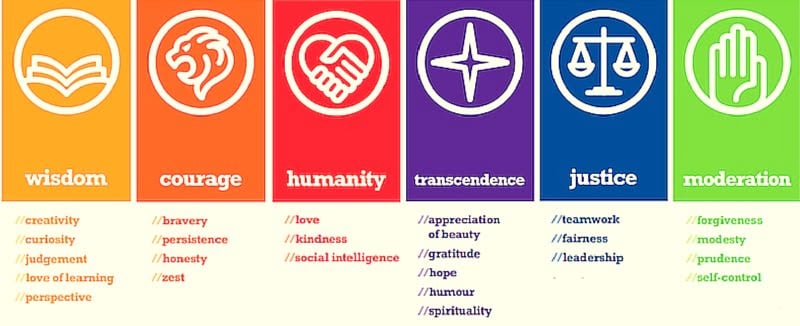
9 Playing to Your Strengths (and Interests)
Years of “education” condition us to perceive learning as uninteresting. Many people see learning as a chore they would rather avoid.
The reality is that when we follow our interests and lean into our natural strengths, development becomes fluid and enjoyable. It’s not actual “work.”
This doesn’t mean that self-development doesn’t take effort; it just means we don’t need to create unnecessary resistance.
This insight comes from Martin Seligman, the father of Positive Psychology and author of Authentic Happiness. Learning your “signature strengths” and finding ways of playing to them each day is a worthwhile skill anyone can learn.
See:
10 Learning to Say “NO”
Is learning to say “no” really a skill? Absolutely! And if you’re serious about self-development, it’s a skill you’ll want to practice.
Every time you say “yes” to something, you say “no” to many other things. Your time and energy are limited.
Hint: When you know what’s important to you—what you value (above)—it’s easier to “say no” to stuff.
Practicing the art of minimalism or essentialism is important for higher achievers, entrepreneurs, and anyone interested in internal cultivation.
Remember: if you don’t control your time and energy, someone or something else will.
See: Essentialism by Greg McKeown
11 Leaning into Discomfort
Comfort is the enemy of growth. This doesn’t mean you should be masochistic and sleep on a bed of nails. It simply highlights the fact that growth often triggers discomfort.
For example, it isn’t “comforting” to:
- Push through a personal limit,
- Become conscious of your incompetence, or
- Getting to know your shadow (disowned self).
In each case, you’re going from the “known” to the “unknown.”
If you cling to comfort, you forestall all future growth.
Sadly, many parents make this mistake with their children: they focus on making them comfortable instead of supporting their growth. And this tendency stays with the child into adulthood.
Healthy development requires psychological safety, not comfort. A focus on comfort leads to degenerative, addictive, and unsupportive habits and behaviors.
Maslow explained this dynamic in Toward a Psychology of Being:
We grow forward when the delights of growth and anxieties of safety are greater than the anxieties of growth and the delights of safety.
Like any skill, leaning into discomfort gets easier with practice.
See: A Definitive Guide to Self-Mastery
12 Improving Your Intrapersonal Communication
Intrapersonal intelligence is the ability to know oneself. It represents a series of imperative self-development skills for self-actualizing individuals.
Intrapersonal communication is a fancy term for internal listening. It’s the ability to gain inner feedback and dialogue with oneself.
This vital skill enables us to stay motivated on tasks, complete projects, master other skills, make effective decisions, manage our energy, say “no,” and regulate our emotions.
While there’s an unfortunate stigma around “self-talk,” it can be a powerful skill that supports self-development and self-healing.
See: A Definitive Guide to Intrapersonal Intelligence

13 Engaging in Self-Reflection
Self-reflection and introspection are also related to intrapersonal intelligence. Self-reflection means “looking back” to observe our behaviors, actions, feelings, and thoughts.
Self-reflection can be an enriching process, and in the context of self-development, it’s a powerful teaching aid that supports natural development.
We often increase our consciousness only in retrospect. Like with any skill, one’s ability to self-reflect improves with practice. This skill is associated with the Sage archetype.
See: The Sage Archetype: Knower of Wisdom and Seer of Truth
14 Using Active Journaling
A related skill to self-reflection is called active journaling. Active journaling isn’t like keeping a diary where you record what you did that day. Instead, you actively engage with parts of yourself on the written page, allowing your inner world to express itself.
In this form of spontaneous writing, you will often make new distinctions and discover personal insights. Active journaling is sometimes used in conjunction with maintaining a dream journal.
Active journalling is a supportive skill for exploring your inner world and getting to know yourself—especially in the earlier stages of your self-discovery journey.
See: A Practical Guide to Jung’s Active Imagination: How to Work with Archetypes
15 Regulating Emotions
Negative emotions are like weeds that, left unaddressed, can destroy your garden. Negative emotions trigger negative thoughts that create an endless feedback loop of suffering.
Learning to navigate our internal emotional landscape is an essential skill often associated with what psychologist Daniel Goleman calls Emotional Intelligence.
Fear and anger present perhaps the biggest roadblocks to one’s spiritual growth. Fear often hides behind the Fixed Mindset (covered above), which leads to the belief that we can’t learn and grow.
Anger about our past or current life circumstances also drains mental energy that we could otherwise constructively channel into ourselves.
See: Emotional Awareness: A Practical Guide to Understanding and Transforming Emotion
Cognitive & Integrative Skills
At advanced stages, self‑development becomes a synthesis of focus, creativity, and disciplined cognition.
These integrative skills refine how you think, learn, and act—linking critical thinking, problem‑solving, and inner parenting into adaptive wisdom.
The result is a steadier mind capable of sustained flow states and deliberate growth.
16 Adopting a Beginner’s Mind
A “Beginner’s Mind” is contrasted with the mind of an expert. The “I know” syndrome plagues many individuals on their self-development journey, hindering their ability to learn and develop.
With a Beginner’s Mind, the mind becomes empty and receptive. This receptivity allows you to suspend judgment and criticism (momentarily) to take in new information and alternative viewpoints.
Rigidity is replaced with emptiness or openness. A Beginner’s Mind supports both learning and creativity.
See: How to Adopt a Beginner’s Mindset to Accelerate Learning and Increase Creativity

17 Learning Active Reading
Active reading is a powerful skill that we should all learn early in life (but sadly, it’s not taught in our education system).
Most people read non-fiction books passively. That is, they sit back, read, and turn the page. Their subconscious goal is to finish the book.
In contrast, with active reading, you actively engage with the book and its author. For example, you might:
- Ask questions in advance.
- Scan the book before you read it.
- Clarify your purpose for reading the book before you start.
- Highlight key passages as you read and mark up the pages.
- Take notes.
Active reading improves your comprehension of the material. More importantly, it helps you engage in critical thinking, so your brain is more likely to make connections with other material to support the learning process.
See: 15 Best Personal Development Books for Self-Actualizing Individuals (includes Adler and Van Doren’s classic How to Read a Book)
18 Mastering Creative Problem Solving
Invariably, there will come times in your development when you hit a wall. George Leonard, author of Mastery, called it “hitting the plateau.” It will seem like no progress is being made. In these cases, you need to continue with your deliberate practice.
Other times, real problems do arise that need solving. We can improve our creative problem-solving skills with practice. Each time we “get stuck,” it provides an opportunity to practice.
Thankfully, there are many effective techniques and methods we can experiment with.
See: 12 Powerful Creative Problem-Solving Techniques That Work
19 Focusing on Results
Another essential self-development skill is the ability to focus on results, outcomes, or goals.
Decades of goal‑setting research confirm that specific, measurable targets enhance motivation and performance when paired with feedback and self‑monitoring (Locke & Latham, 2002).
In personal development, the same principle turns abstract intentions into structured growth systems.
It’s easy to get lost in a sea of activities and “to-dos.” Life is filled with distractions. If you’re genuinely committed to self-development, you need to be able to:
- Set goals for yourself,
- Block out external distractions, and
- Direct your energy, attention, and effort toward the results you want.
This results mindset is a function of becoming more self-reliant, a critical aspect of mature adulthood.
When working on a skill or a project, always clarify the result you’re after first. If you catch yourself getting distracted or going on a tangent, center yourself and re-focus on the outcome.
20 Navigating Self-Parenting
The younger generation likes to use the term “self-care.” Unfortunately, this term is imbued with narcissism and grandiosity. “Self-care” most often translates into making yourself more comfortable. (See Leaning into Discomfort above.)
In contrast, self-parenting is about self-regulation. It involves parenting the wounded child parts within your psyche and the unruly, tyrannical parts that arose as a consequence.
Most often, when growth is stalled, it’s because one of our childhood parts (archetypes) is in the driver’s seat.
A lot of “personal development” tries to get us to “push through” these parts or trick our unconscious. These techniques might work … in the short run. But eventually, our old patterns tend to stick because they were established during our formative years when our brains were developing.
In cultivating this potent self-development skill, we:
- Learn humility,
- Bring our childhood wounds to consciousness,
- Become more self-compassionate, and
- Access more naturalness from the Center.
Self-parenting is an important skill we learn on our path to psychological maturity.
See: An Introduction to Depth Psychology
21 Steadying the Mind
Finally, one of the most important self-development skills is learning to steady your mind.
An unstable mind is easily distracted and triggered by emotions. It jumps from one thought to the next without any deliberate intent.
The meditative traditions provide methods for steadying or stilling the mind. A steady mind can stay in the present moment.
With present-moment awareness, one has:
- Enhanced perception
- Greater sensitivity to sensory information
- Less reactivity
- Great focus and clarity
The benefits of cultivating a meditative mind are legion for one’s physical, emotional, mental, and spiritual health.
Research linking mindfulness and acceptance processes with emotional regulation is now robust.
Kashdan and Ciarrochi (2013) highlight how cultivating present‑moment awareness and self‑acceptance enhances adaptability, reduces reactivity, and enables steady‑mind practice — a cornerstone of psychological maturity.
Simply put, when the mind is steady, you naturally access more of your potential.
Steadying the mind is the first stage; stabilization is a more advanced stage.
See: 21 Powerful Meditation Training Tips to Improve Your Practice
Deep Practice: How Skills Become Automatic
Making improvements in our talent and developing skill mastery has two main components:
- Knowing where you want to grow
- Breaking the technique down into small chunks
In The Talent Code, author Daniel Coyle called this deep practice. He explains:
Deep practice feels a bit like exploring a dark and unfamiliar room. You start slowly, you bump into furniture, stop, think, and start again. Slowly, and a little painfully, you explore the space over and over, attending to errors, extending your reach into the room a bit farther each time, building a mental map until you can move through it quickly and intuitively.
Through conscious repetition of the technique or method (conscious competence), the darkness begins to subside (incompetence), and the light enters the room.
Applying These Skills in Everyday Life
If you’re new to this material, I realize the above list of self-development skills can be overwhelming.
However, keep in mind that learning and growth are natural. Oftentimes, we need to bring these skills to our conscious awareness. Then, we begin to make spontaneous progress.
Remember that changes most often happen slowly and deliberately. So focus on one thing at a time. Cultivate patience instead of demanding immediate results.
Also, remember to focus on your interests. If you feel like self-development is a chore, something is off. Most likely, you’re doing it for the wrong reasons (extrinsic motivation instead of intrinsic motivation).
The key is to find inner meaning for pursuing self-development skills. You’re developing for yourself, not because it’s something you should do.
Then, find your Center, learn to get out of your way, and enjoy!
Flow states, or what Maslow called peak experiences, start occurring more frequently. From there, the process takes on a life of its own…
This guide is part of the Self‑Coaching & Frameworks Series.
Apply structured self‑development models that unite awareness and action. Learn how feedback loops, values, and reflective tools support personal mastery.
Scholarly References
- Ryan RM, Deci EL. Self-determination theory and the facilitation of intrinsic motivation, social development, and well-being. Am Psychol. 2000 Jan;55(1):68-78.
- Ericsson, K. A., Krampe, R. T., & Tesch-Römer, C. (1993). The role of deliberate practice in the acquisition of expert performance. Psychological Review, 100(3), 363–406.
- Neff, K. D., Rude, S. S., & Kirkpatrick, K. L. (2007). An examination of self-compassion in relation to positive psychological functioning and personality traits. Journal of Research in Personality, 41(4), 908-916.
- Kashdan, T. B., & Ciarrochi, J. (Eds.). (2013). Mindfulness, acceptance, and positive psychology: The seven foundations of well-being. New Harbinger Publications, Inc.
- Locke EA, Latham GP. Building a practically useful theory of goal setting and task motivation. A 35-year odyssey. Am Psychol. 2002 Sep;57(9):705-17.