
For over three decades, I’ve explored hundreds of books on growth and transformation to identify those that deepen understanding rather than promise quick success.
Each book here offers usable frameworks you can live with: practices that help move the needle forward. They expand who you are becoming—the essence of personal development.
Let’s dive in …
Understanding the Psychology of Personal Growth
Personal development is the study and deliberate practice of how human beings expand awareness, competence, and moral maturity.
It’s the process of consciously strengthening one’s capacities—mental, emotional, and moral—to realize innate potential.
Psychologist Abraham Maslow called this movement “self‑actualization” —the desire to become everything one is capable of becoming.
Growth follows recognizable stages. We begin by meeting basic needs, progress through belonging and esteem, and ultimately strive for mastery and meaning.
Modern self‑determination theory confirms that lasting motivation arises from autonomy, competence, and purpose—not external reward.1Deci, E.L., & Ryan, R.M. (1985). Intrinsic Motivation and Self-Determination in Human Behavior. Perspectives in Social Psychology.
The books that endure guide readers through these layers.
The Difference Between Self‑Help and Personal Development
“Self-help” has the wrong connotation here, in my opinion. It implies that there’s something inherently wrong with us.
Also, many books within the self-help genre focus exclusively on how to achieve more. We might call this “success literature.”
Classic titles in this category include Napoleon Hill’s Think and Grow Rich, Og Mandino’s The Greatest Salesman in the World, and Dale Carnegie’s How to Win Friends and Influence People.
These books may be helpful as you start your professional life, as they might inspire you.
From my perspective, personal development books may include success but necessarily go deeper. Personal growth implies we’re all on a developmental path.
With the proper practices and methods, we can progress on this path, actualize more of our potential, and fundamentally transform ourselves.
From Knowledge to Being: What Makes a Book Transformative
Information can change your mind, but only practice can change your behavior.
A transformative book introduces patterns you can embody, not merely concepts to remember.
When we combine self-reflection with repetition, our cognition can rewire our biology—”synapses that fire together wire together.”
Neuroscience confirms that consistent mental rehearsal and active reading create lasting behavioral change.2Kandel, E. R., & Squire, L. R. (2000). Neuroscience: breaking down scientific barriers to the study of brain and mind. Science (New York, N.Y.), 290(5494), 1113–1120. https://doi.org/10.1126/science.290.5494.1113
Great books don’t just explain what to do—they shape how you perceive yourself as you do it. Transformation happens when new ideas migrate from our intellect to our instinct.
The Goal of Self-Actualization Books
The best personal development books should do the following:
- Provide actionable insights and clear methods you can apply right away
- Improve aspects of your behavior that support you through the stages of learning
- Address common roadblocks that hijack your progress
- Make clear distinctions that make it easier to develop and grow
Simply put, the best personal development books support your self-actualization.
When you apply what you read in these books, you make progress.
Personal Development Books That Inspire Real Change
In the classic How to Read a Book, Adler and Doren explain that there are two types of books: theoretical and practical.
An example of a theoretical book is Plato’s The Republic. It’s an important book that illuminates many insights into the virtuous life and the pursuit of justice.
But it doesn’t necessarily provide clear instructions on what we should do right now.
That’s the role of practical books. Practical books provide methods. These titles are sometimes referred to as “how-to,” “self-improvement,” or “self-help.”
Although I enjoy reading mind-expanding, theoretical books, I’ve come to appreciate the difference between what I know and what I am.
Knowledge (what we can know) comes relatively easily; beingness (what we can become) takes practice.
While theoretical books can inspire us, only practical books provide us with a means to actualize our potential. Of course, some books are both theoretical and practical.
So for the most part, in hand-picking a list of the “best personal development books,” I’ve focused mainly on practical titles for self-actualization.
Listed in no particular order, here are my picks for the best personal development books.
Disclaimer: affiliate links below.

1) How to Read a Book — Mortimer J. Adler & Charles Van Doren
If you’re a serious nonfiction reader, the classic How to Read a Book will up your game. It’s one of those books everyone should have read during their school years.
It’s unlikely that after reading this book, you’ll approach reading books in the same way again.
Although most people don’t realize it, reading a book effectively is a skill. How to Read a Book teaches you how to engage in reading in an active way that facilitates learning and the integration of ideas.
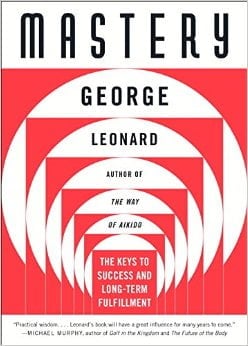
2) Mastery: The Keys to Success and Long‑Term Fulfillment — George Leonard
Leonard is one of the pioneers in personal coaching and the “human potential movement” (he coined the term). A third-degree black belt in Aikido, Leonard ran an Aikido school and was the president of the Esalen Institute.
In Mastery, Leonard demonstrates his knowledge and experience as someone walking the path toward self-mastery and self-actualization.
Leonard’s stage model parallels what’s now called neural consolidation; repetition stabilizes pathways while our enthusiasm steadies motivation.3Ericsson, K. A., Krampe, R. T., & Tesch-Römer, C. (1993). The role of deliberate practice in the acquisition of expert performance. Psychological Review, 100(3), 363–406. https://doi.org/10.1037/0033-295X.100.3.363
Mastery of any skill or aspect of development follows distinct stages, each with common pitfalls. If you understand this process up front, it makes development more fluid and enjoyable.
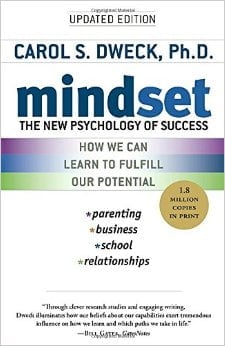
3) Mindset: The New Psychology of Success — Carol Dweck
Dweck’s modern classic in the success genre is both sobering and enlightening. Her multi-decade psychological study of mindsets—fixed vs growth mindsets—reveals the importance of understanding the true nature of our development and how learning works.
Mindset is sobering because it exposes how parents and teachers have installed a highly limiting fixed mindset in children for many generations.
The societal effects are showing. If you’re a parent, consider this book mandatory reading.
In my opinion, everyone should read Mindset because we’re all influenced, to varying degrees, by a fixed mindset that prevents us from realizing our full potential in our intelligence, behavior, or personality. The implications of Dweck’s research are far-reaching.

4) The Little Book of Talent — Daniel Coyle
Coyle’s first book, The Talent Code, broke down the basic ingredients of creating world-class talent and skill.
The Talent Code is a worthwhile read, but for practical, research-based tips on how anyone can improve their abilities, The Little Book of Talent is the answer.
This book contains so many little gems—awesome hacks you can apply immediately to accelerate your learning and skill development. It’s an excellent self-actualization book.
See how to silence the inner critic and accelerate skill development in Peak Experiences and Flow States.

5) The Power of Full Engagement — Jim Loehr & Tony Schwartz
Loehr and Schwartz published one of the most important books on personal performance back in 2003. I believe it’s still one of the best personal development books.
While many people are obsessed with “time management,” these performance experts illuminate that what we’re truly looking for is more energy.
Breaking energy into the four core categories of physical, mental, emotional, and spiritual, The Power of Full Engagement walks you through multiple ways of actualizing more of your potential in each area.
It isn’t easy to articulate how important it is to learn energy management skills if you’re self-actualizing and engaged in personal development. Managing your energy is itself a skill related to intrapersonal intelligence. This bestseller will change the way you work, train, and approach everything.
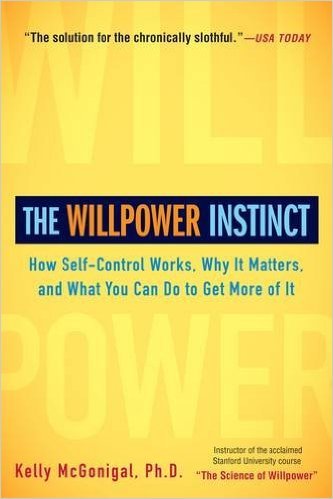
6) The Willpower Instinct — Kelly McGonigal
McGonigal taught the most popular course at Stanford University’s Continuing Studies program called “The Science of Willpower.”
The Willpower Instinct is essentially that course distilled into a single manual. It’s full of compelling research to support its insights. But more importantly, the book provides a litany of exercises and practices to cultivate a stronger will.
Willpower, self-control, and habit formation are essential topics for anyone interested in self-actualization. There are a host of personal development books that address this issue, and many of them—including this one—are worth the read.
I highlight many of the insights from McGonigal and other researchers in How to Make Positive Changes in Your Life.

7) Essentialism: The Disciplined Pursuit of Less — Greg McKeown
McKeown addresses a central concern in a culture that’s obsessed with doing more, faster, and bigger.
Every step you make from being what McKeown calls a non-essentialist to an essentialist is a movement toward a more fruitful way of being.
Self-actualization requires a tremendous amount of focus. The more distracted and scattered you are, the further you move away from your personal development goals.
Essentialism will help you learn to say “no” and focus on what’s most important to you.

8) Integral Life Practice — Ken Wilber et al.
Okay, so Ken Wilber didn’t actually write this book. He had a small team of people write it, and he reviewed the process.
If you’re not familiar with Wilber, he was considered by many to be America’s foremost philosopher and theorist. Decades of his research and writing led to the development of an Integral Model of human development.
But that’s all theory. Integral Life Practice builds on Wilber’s herculean efforts by creating a blueprint for personal development.
This integral framework is presented in modules like Body, Mind, Spirit, and Shadow. You can explore whichever module speaks most to you, then experiment with a litany of practices and methods to expand your sense of what’s possible as you grow your various lines of intelligence.
The reality is that most of us don’t have a conscious framework for personal development. Without a roadmap, we invariably fail to develop specific aspects of ourselves because of our blind spots.
See also: How to Create an Integrated Personal Development Plan: 7 Essential Steps
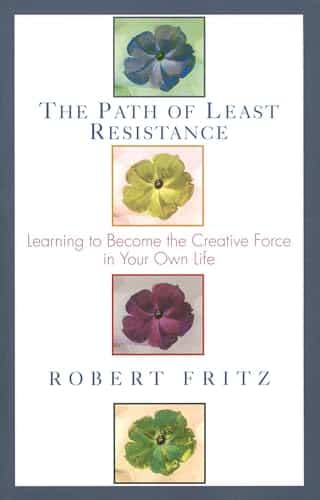
9) The Path of Least Resistance — Robert Fritz
Fritz reveals how behavior follows structure. When the inner architecture of your goals and beliefs conflicts, effort dissipates; align them, and flow emerges naturally.
Instead of fighting habits, he teaches “structural tension”—a principle drawn from music and systems theory that shows how clear vision plus current truth produce creative energy.
In practice, you design environments that make the desired action the easiest path to take. It’s one of the most underrated texts on conscious creation and psychological architecture.
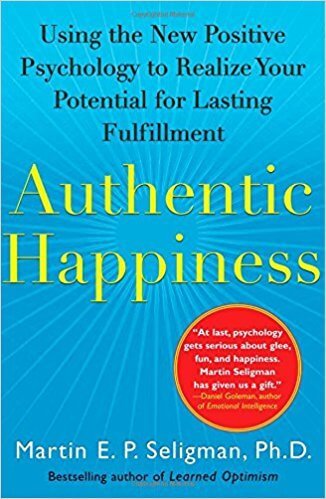
10) Authentic Happiness — Martin Seligman
Seligman is considered the father of the positive psychology movement. What I appreciate most about Authentic Happiness is that Seligman provides practical methods for increasing one’s happiness, grounded in decades of research in the field.
Seligman demonstrates that lasting fulfillment is found not in fleeting pleasures but in cultivating our natural strengths. Perhaps you’ve heard about the research on the benefits of maintaining a gratitude journal.
This personal development book is one of the first I’m aware of that highlights this research.
This book is about actualizing your potential to experience more contentment in your life. This book inspired my guide to character strengths.

11) The 7 Habits of Highly Effective People — Stephen Covey
Covey’s classic best-seller, The 7 Habits of Highly Effective People, clarifies the key behaviors necessary for consistent effectiveness.
It’s difficult to imagine a list of the best personal development books without this one. It has sold over 25 million copies for a reason.
The 7 Habits is highly accessible and easy to read, offering valuable insights into developing key habits that positively impact every aspect of your life.
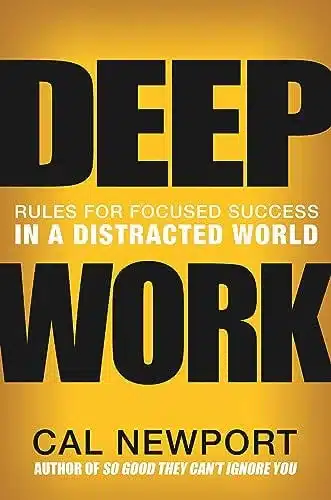
12) Deep Work: Rules for Focused Success in a Distracted World — Cal Newport
Newport defines “deep work” as cognitively demanding activity performed in full concentration.
Amid a world of perpetual notifications, he argues that focus is the new intellectual currency.
By designing boundaries—rituals of disconnection, scheduled creation, and intentional solitude—you recover the attentional depth necessary for mastery.
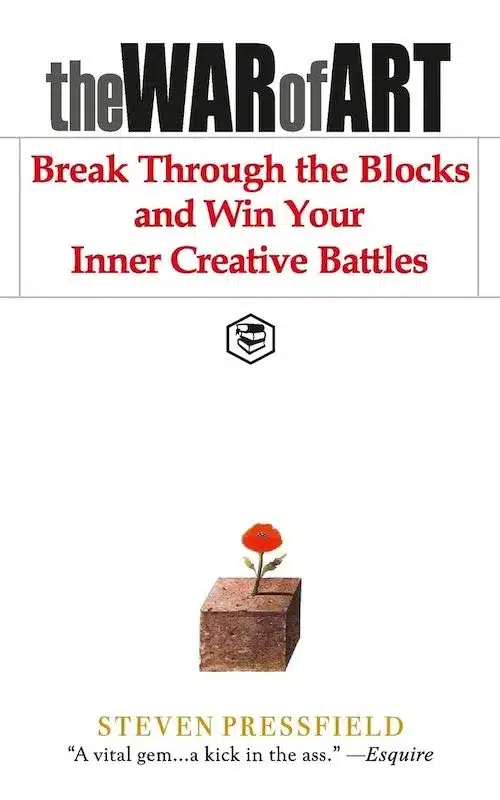
13) The War of Art — Steven Pressfield
Pressfield personifies the invisible barrier between intention and execution as “Resistance”—a force that blocks every creative or moral leap.
His remedy is neither hype nor positivity, but professionalism: show up daily, serve the work, detach from outcome.
This makes The War of Art a modern manual on discipline as a spiritual practice.
In the end, growth is not about ease but about meeting Resistance as a teacher—the final threshold before self‑actualization.
See also my classic Self-Mastery Guide for strategies for overcoming internal resistance.
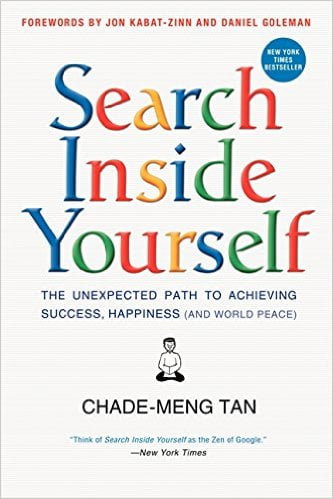
14) Search Inside Yourself — Chade‑Meng Tan
Chade-Meng Tan was one of the first engineers at Google. Years later, he helped launch the Search Inside Yourself Institute, a leadership program within Google.
The program synthesizes the work of psychologists Jon Kabat-Zinn and Daniel Goleman, neuroscientist Richard Davidson, and others.
At its core, Search Inside Yourself is a mind-training program in emotional intelligence, a critical factor in outperforming leadership.
Not only is this book an accessible, practical introduction to emotional intelligence with clear practices and methods, but it’s also an excellent summary of dozens of other great personal development books rolled into one.
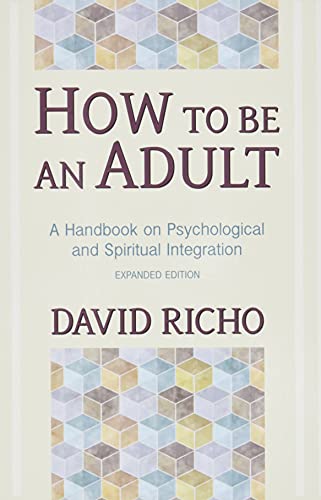
15) How to Be an Adult — David Richo
If you were going to read only one book about psychological development, consider this one. It truly is a “handbook.” It’s not beautifully written.
But this little book is jam-packed with useful insights and practices for psychological development. There’s no “fluff,” which is why it covers so much ground in only 120 pages.
In How to Be an Adult, Richo frames the development of our psychology within the hero’s journey framework, exploring the “challenges” we face as we approach adulthood.
These challenges take us into what we tend to resist the most: our grief, fears, anger, and guilt.
Richo’s handbook isn’t something you read once and set aside. You carry it with you, referring back often.
Don’t be fooled into believing that adulthood comes naturally with age. If everyone read this book—and lived the practices it contains—I’m confident we would live in a very different world. But that change starts with each of us.
How to Apply What You Read
Reading changes nothing until the lesson becomes behavior.
The Integration Process: Reflection, Practice, Embodiment
To simplify, think of the process in three stages:
- Reflection: For example, pausing before the next chapter to identify one core idea worth testing.
- Practice: Design one daily action that expresses that idea.
- Embodiment: Sustained repetition until the habit feels natural.
This three‑part rhythm mirrors how the brain’s neural circuits consolidate learning.
Each time you act on an insight, the brain shifts from awareness (“oh, I get it”) to a kind of initiation.
Common Pitfalls on the Path of Growth
It’s easy to mistake accumulating information for making progress. I did this for many years.
Collecting new ideas and methods without actively applying can disperse our focus—the opposite of what we want in our self‑mastery.
Another trap is comparison: measuring your pace against others instead of staying loyal to your current developmental edge. “Start where you are.”
The key is to establish your internal rhythm: read slowly, apply deliberately, rest consciously. Depth always outpaces speed in the architecture of our growth.
Designing Your Personal Development Roadmap
If you apply the lessons and insights from the best personal development books listed above, they can transform who you are in the process of becoming.
All of these personal development books are courses in themselves. You can return to them time and again, discovering new insights and strategies that apply to your current stage of self-development.
Building a Personal Development Roadmap helps you convert your inspiration into clarity and direction.
Use the Wheel of Life Assessment to map balance across domains, followed by a quarterly review.
Read Next
Best Psychology Books That Reveal Human Behavior
Best Carl Jung Books: Essential Jungian Psychology Reading Guide
Ultimate List of Habits—185 Good & Bad Habits By Category
Intrinsic Motivation: An In‑Depth Guide with Real‑World Examples
References
- Deci, E.L., & Ryan, R.M. (1985). Intrinsic Motivation and Self-Determination in Human Behavior. Perspectives in Social Psychology.
- Ericsson, K. A., Krampe, R. T., & Tesch-Römer, C. (1993). The role of deliberate practice in the acquisition of expert performance. Psychological Review, 100(3), 363–406. https://doi.org/10.1037/0033-295X.100.3.363
- Kandel, E. R., & Squire, L. R. (2000). Neuroscience: breaking down scientific barriers to the study of brain and mind. Science (New York, N.Y.), 290(5494), 1113–1120. https://doi.org/10.1126/science.290.5494.1113