Carl Jung didn’t write about psychology so much as he charted the terrain of the soul.
His works open doorways between science and symbolism, offering readers a language for what stirs beneath the surface of consciousness.
Yet newcomers soon discover: Jung wrote densely, philosophically, even alchemically.
This in‑depth guide distills his essential writings—and those of key Jungians who expanded them—so you can navigate the psyche’s territory with clarity and purpose.
If you’re exploring the Jungian Psychology Hub within the CEOsage Knowledge Center, this list is your map.
Let’s dive in …
Understanding Jung’s Approach to the Unconscious
Carl Jung viewed the psyche not as a collection of thoughts but as a living ecosystem.
The conscious ego represents only the surface—while submerged layers shape perception, choice, and destiny.
In every dream, slip of the tongue, or sudden attraction, the unconscious speaks through symbol and feeling.
He divided this inner territory into two domains:
- Personal unconscious: holding forgotten experiences and complexes; and
- Collective unconscious: the deep field of universal patterns that recur in myth, religion, and art.
These archetypal images—Mother, Hero, Shadow, Trickster—tie individual life to humanity’s ancient story.
Ego, Self, and the Dynamic of Transformation
Jung proposed that psychological growth unfolds through a dialogue between the ego (our conscious identity) and the Self, the organizing center of the whole psyche. Outer conflicts often mirror that inner conversation.
Individuation—the lifelong process of integrating the unconscious into awareness—is how a person becomes complete rather than merely adapted. The Self abides in wholeness, not perfection. Whenever we repress emotion or deny shadow traits, psychic energy gets trapped until it manifests as anxiety, projection, or fate.
Through dreamwork, active imagination, and symbolic reflection, the unconscious offers what consciousness lacks. Jung insisted that true healing requires relationship with the “Other Side” of the mind.
The goal is a balanced psyche—reason illuminated by intuition, order tempered by instinct, and individuality grounded in the universal.
Best Carl Jung Books to Begin With
Finding your way into Jung’s vast body of work can feel like entering an ancient library—a tangle of alchemy, myth, and clinical precision.
His early followers often noted that the best starting point isn’t necessarily his earliest books, but the ones where theory meets experience. Each title below introduces a distinct facet of depth psychology, anchoring abstract concepts in human story, symbol, and transformation.
These works reveal why Jung remains a bridge between psychology and spirituality, science and art, and why his language continues to shape modern shadow work, archetypal analysis, and self‑development.
Disclosure: This page includes sponsored Amazon links that help support this Knowledge Center at no additional cost to readers.
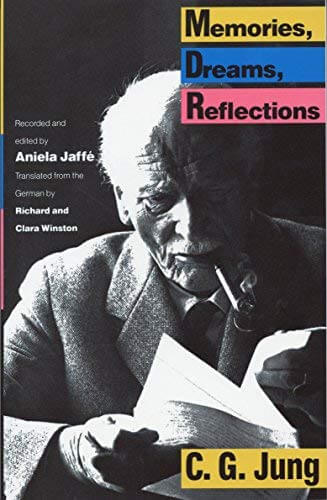
1. Memories, Dreams, Reflections
Explore Memories, Dreams, Reflections →
Jung’s posthumous autobiography reads like a case study in consciousness. More than a memoir, it’s a guided tour through his own descent and awakening—the foundation for all later concepts of the Self and individuation.
Readers encounter the moments that forged his theories: childhood visions, symbolic dreams, and dialogues with the inner imagination.
If I were going to suggest one book by Carl Jung, it would be Memories, Dreams, Reflections. Even if you don’t like reading biographies, this one is different as it’s more of a first-hand illustration of Jung’s work.
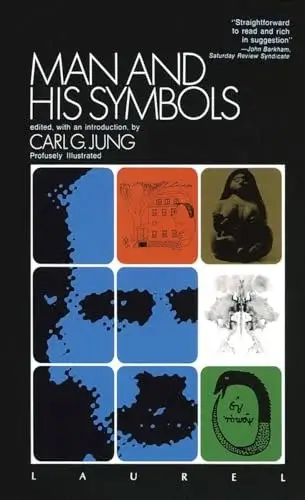
2. Man and His Symbols edited by Jung
Written for a general audience, this is Jung’s clearest introduction to the language of symbols. Each chapter decodes how dreams, art, and myths externalize unconscious processes.
For newcomers, it’s the ideal primer because it shows how symbolic life connects therapy, creativity, and culture. The collective authorship—Jung plus key collaborators—models how psychology becomes collaborative inquiry instead of isolated theory.
It’s easily one of his most accessible books for beginners.
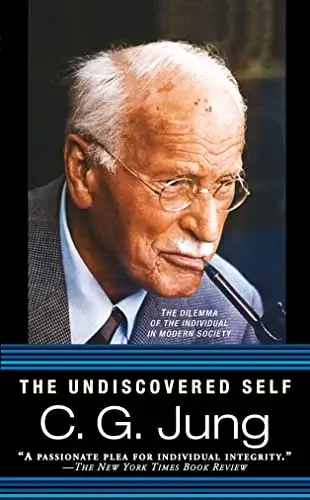
3. The Undiscovered Self: The Dilemma of the Individual in Modern Society
Review The Undiscovered Self →
A short but piercing work written during the Cold War, this book reads as both social commentary and spiritual manual.
Jung warns that psychological blindness fuels conformity and authoritarianism, urging the reader to build an inner stance rooted in self‑knowledge. The relevance today is unmistakable: in a world flooded by mass suggestion, cultivating the inner observer is revolutionary.
He wrote The Undiscovered Self toward the end of his life, specifically for individuals starting in this field. But unlike Man and His Symbols, Jung wrote this book for the next generation, hoping future psychologists would pick up the mantle and continue his work.
4. Modern Man in Search of a Soul
Read Modern Man in Search of a Soul →
Among Jung’s most influential collections, this text introduces the foundations of analytical psychology—including dream interpretation, psychological types, and the role of the therapist.
It’s denser than the previous entries, yet vital for understanding how Jung linked clinical insight with spiritual meaning. Many readers call it a map for reclaiming the soul in the modern age.
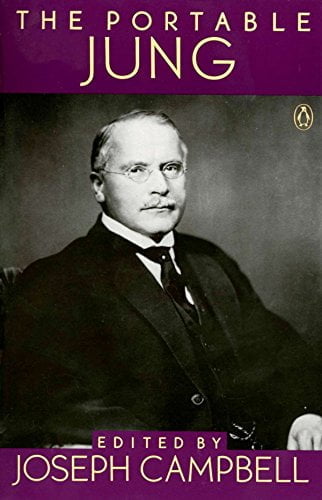
5. The Portable Jung (edited by Joseph Campbell)
This anthology selects pivotal essays across Jung’s Collected Works, curated by mythologist Joseph Campbell.
It reads like a symphony of ideas—synchronicity, archetypes, the shadow, the Self—showing the full range of Jung’s thought without requiring years of study. As a compact entryway, it’s perfect for those drawn to the crossroads of myth and psychology.
How to Approach These Texts
Start with the book that stirs curiosity rather than the one that seems “most important.”
Jung believed learning must involve the whole psyche—thought, emotion, image, and intuition. Read slowly. Note dreams, symbols, and emotional responses as you go.
Approach these volumes not as doctrine but as mirrors: each chapter reflects an aspect of your own unconscious asking to be seen.
Essential Jungian Authors and Interpretations
Jung opened the gateway; his students built the bridges. After his death, several gifted interpreters clarified his symbolic vision and translated it into practical maps for growth and therapy. Their work grounds analytic psychology in modern language while preserving its depth and mystery.
These authors—Stein, Robertson, and Edinger—show how Jung’s discoveries evolve beyond biography into methodology, illuminating the path from intellectual understanding to psychological experience.
For readers beginning to track their own individuation, these books function as companions rather than textbooks.
1. Jung’s Map Of The Soul: An Introduction By Murray Stein
Stein distills the architecture of Jung’s psyche model—ego, shadow, anima/animus, and Self—into a lucid overview. It’s often the first modern book scholars recommend because it translates archetypal theory into everyday relevance.
Readers grasp how psychic energy flows, how complexes form, and how conscious awareness transforms instinct into insight.
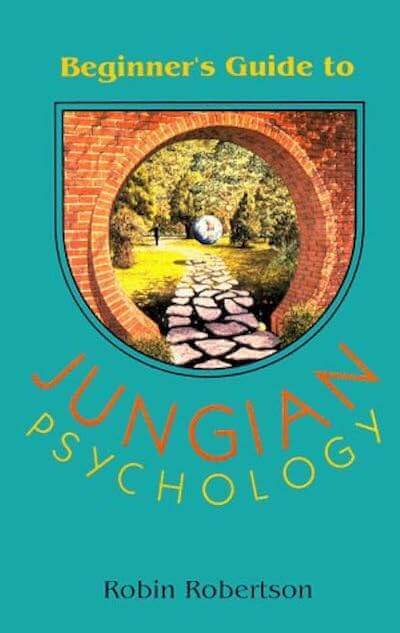
2. Beginner’s Guide to Jungian Psychology by Robin Robertson
Robertson offers the most accessible introduction to Jungian thinking for general readers.
Using narrative and case‑style examples, he traces how archetypes appear in relationship patterns, dreams, and creative expression. The tone is conversational while remaining exact—a hallmark of applied depth psychology.
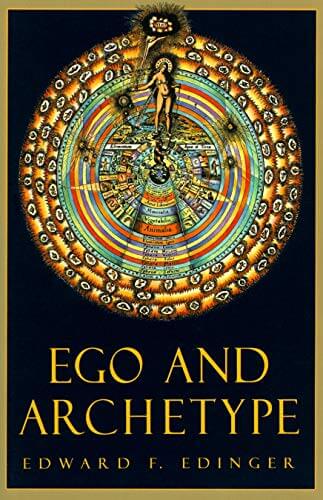
3. Ego and Archetype by Edward F. Edinger
Edinger explores the pivotal relationship between the ego and the Self—the living center of psyche.
He presents individuation as a rhythmic dance of separation and reunion: the ego must face the unconscious repeatedly to mature. Readers experience this as cycles of breakdown and renewal, the psychological analogue of mythic death and rebirth.
Edinger’s Ego-Self Axis is somewhat famous within Jungian circles.
Interpreting Jung for the 21st Century
Together, these authors make Jung’s complex system both intelligible and actionable. Their books clarify the language of symbols without diluting its depth, reminding readers that self‑realization is a participatory process—an ongoing dialogue between psyche, culture, and meaning.
When approaching their work, mark passages that trigger emotion or resonance; these moments often signal live archetypal material. Read them less as information and more as conversation partners guiding you toward your own analytic insight.
Robert A. Johnson’s Path to Personal Integration
Where Jung mapped the architecture of the psyche, Robert A. Johnson showed how to live it. His deceptively simple prose opened analytic psychology to everyday seekers.
Each of his short volumes unpacks a major Jungian theme—the shadow, anima and animus, love, and projection—using mythological storytelling as its interpretive lens.
Johnson’s enduring appeal lies in his practicality. He writes not for clinicians but for thoughtful individuals wanting to reclaim lost inner life.
Through elegant myths and clear methods, he transforms symbolic insight into daily practice—bridging psyche and behavior.
In my opinion, Robert A. Johnson is one of the best Jungian authors to read. His writing is simple, concise, and insightful.
1. Owning Your Own Shadow
This concise classic introduces the Shadow—everything about ourselves we repress or disown.
Johnson explains how unlived emotion, envy, and fear drive unconscious behavior until acknowledged.
Integrating the shadow is less moral cleansing than reclaiming energy: the vitality stuck in self‑denial.
For many readers, this book is the practical entry point into the deeper Jungian journey.
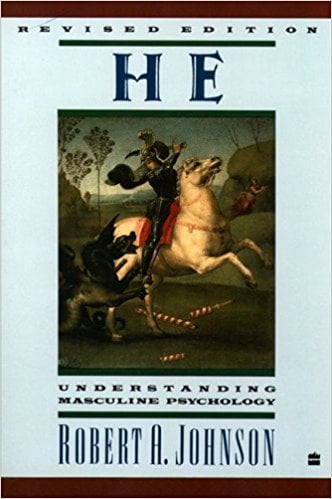
2. He: Understanding Masculine Psychology
Through the Grail legend and the trials of King Arthur’s knights, Johnson explores the masculine psyche’s search for purpose.
He reframes strength as embodied consciousness rather than domination. Each mythic episode mirrors a stage in male development—from impulsive heroism to mature stewardship of inner authority.
Women reading He also gain insight into the masculine principles within themselves.
I’m not sure I would have appreciated this book in my 20s. However, I read it at least six times in my 30s. I appreciated it more after each read.
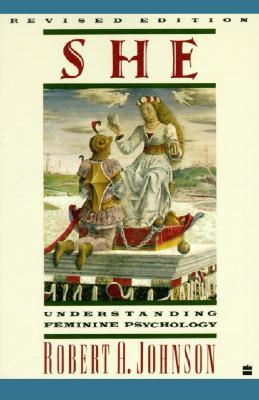
3. She: Understanding Feminine Psychology
In She, Johnson interprets the myths of Psyche and Eros to reveal the feminine principle of relatedness. The text illustrates how devotion, beauty, and discernment carry transformative power when balanced with autonomy.
Read alongside He, it illuminates the polarity modern culture often flattens—reminding us that inner masculinity and femininity must coexist in creative tension.
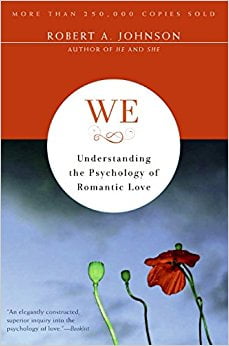
4. We: Understanding the Psychology of Romantic Love
Here, Johnson dismantles the cultural myth of “happily ever after.”
Using the story of Tristan and Iseult, he shows how idealized love projects divine qualities onto human partners, eventually collapsing under unmet expectations.
True relationship, he writes, begins the moment that projection dissolves. We is indispensable for anyone seeking conscious partnership grounded in wholeness instead of fantasy. Incredibly sobering and instructive.
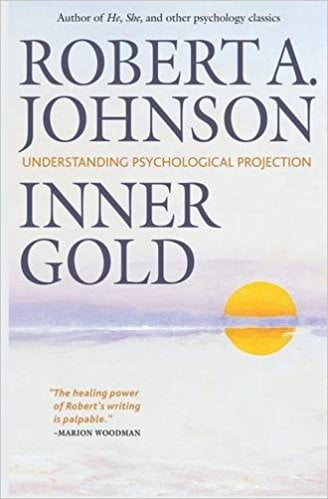
5. Inner Gold: Understanding Psychological Projection
Inner Gold deepens the insight begun in We. We project not only negative traits but also our greatness—talent, creativity, courage—onto others.
Johnson teaches how to re‑collect that “gold,” reclaiming latent potential without envy or inflation. The tone is invitational, guiding readers toward self‑ownership and gratitude for what mirrors awaken within relationship.
For a more advanced follow-up on this topic, see Marie-Louis von Franz’s Projection and Re-collection in Jungian Psychology.
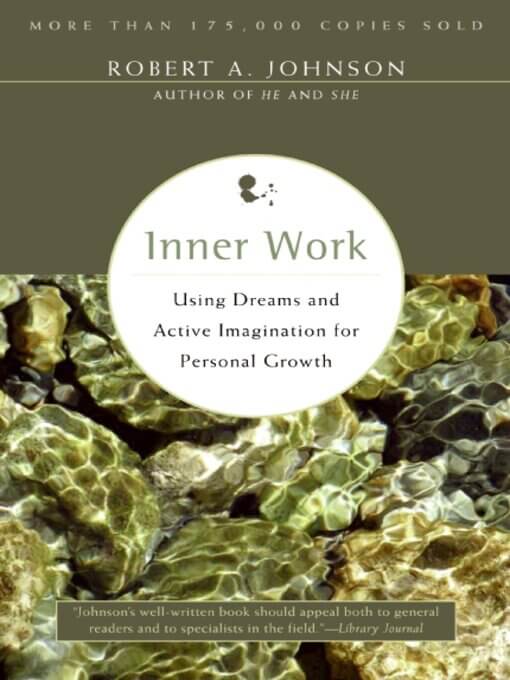
6. Inner Work: Using Dreams and Active Imagination for Personal Growth
Johnson’s most hands‑on book teaches methods for dialoguing with the unconscious through dream interpretation and active imagination.
Step by step, he outlines how to record dreams, identify recurring images, and interact symbolically with them. It transforms Jung’s abstract process into an accessible self‑coaching practice.
Executives, artists, and therapists alike use this text to kindle creative and spiritual renewal.
See my guide on inner work for a summary.
A Living Dialogue with the Unconscious
Together, Johnson’s writings offer a curriculum in personal integration—bridging shadow facing, anima/animus reconciliation, and relational maturity.
He makes individuation experiential: not an academic ideal but a rhythm of reflection and response.
Marie‑Louise von Franz and the Archetypal Language of Fairy Tales and Dreams
If Jung was the cartographer of the psyche, Marie‑Louise von Franz became its storyteller. His closest collaborator for decades, she mastered the art of translating fairy tales and dreams into psychological maps.
Where Jung saw symbols as universal patterns, von Franz demonstrated how those patterns reveal the step‑by‑step process of individuation.
Her analysis shows how story and dreams are not moral fables for children—they are encoded lessons describing how consciousness evolves. The heroes, witches, and kings we meet in folklore represent our own psychic functions struggling toward balance and wholeness.
von Franz did for fairy tales what Joseph Campbell later did for myths. Many of von Franz’s books are edited transcripts from her lectures. Yet, I found von Franz’s work enlightening and revealing of the psyche’s nature.
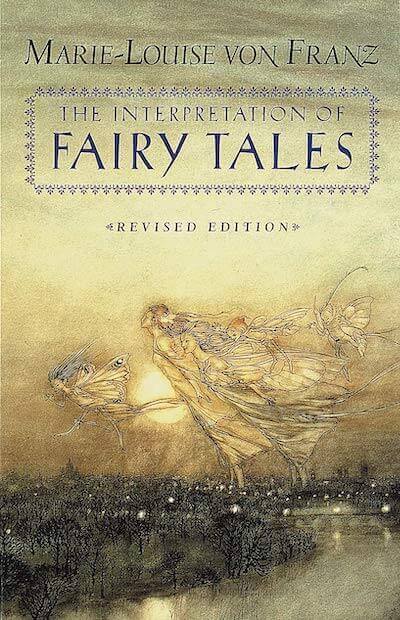
1. Interpretation of Fairy Tales
An excellent primer for newcomers, this book outlines how to decode symbolic narratives without reducing them to literal meaning.
Von Franz teaches readers to look for repeating patterns—transformations, opposites, and reconciliations—that indicate the psyche’s movement toward integration.
She presents fairy tale motifs as living metaphors that speak the unconscious language of transformation still operating in every dream.
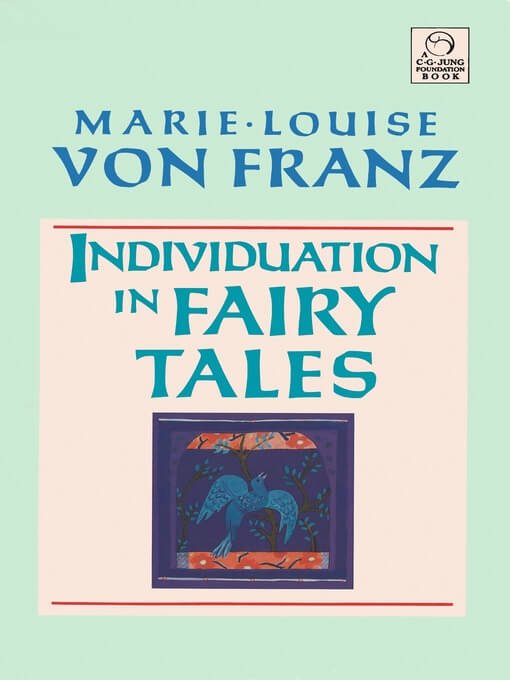
2. Individuation in Fairy Tales
Here, von Franz turns legend into laboratory. She unpacks the archetypal sequence of becoming whole, showing how ordeals, helpers, and revelations in folklore mirror inner stages of growth.
Readers see how abandonment or imprisonment represent ego limitation, while magical helpers depict Self‑guidance from the deeper unconscious. This book crystallizes the individuation process more poetically than any technical manual could.
In my opinion, this is definitely one of the best books on Jungian psychology.
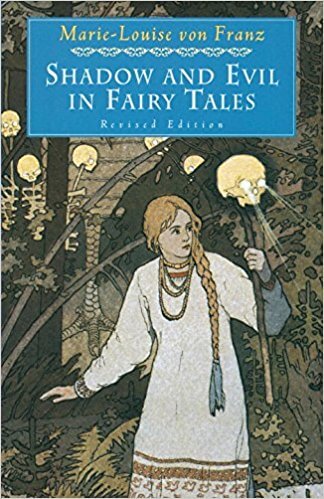
3. Shadow and Evil in Fairy Tales
Perhaps her most penetrating work, this volume explores the shadow archetype and its relationship to evil—the force of unconscious imbalance that surfaces in every psyche.
Von Franz shows that confronting darkness in mythic form allows ordinary people to confront it internally. She argues that only by integrating the destructive impulse can genuine morality and compassion emerge.
The monsters we most fear in myth reflect the emotional energies we most resist in ourselves. Meeting them transforms fear into consciousness.
4. The Way of the Dream: Conversations with Marie‑Louise von Franz
[Out of print – viewable on Internet Archive and YouTube documentary]
This rare book and film compile von Franz’s deepest teachings on dream interpretation.
Edited by Fraser Boa, it presents a series of dialogues moving from simple dream symbols to archetypal dramas—the shadow, the mother complex, the inner guide.
Each chapter shows how dreams mirror daily life with uncanny precision and how meaning emerges through symbol rather than analysis.
For many students, it remains the most accessible entry into Jungian dream work. (If I were going to recommend one Jungian book on dreams, it would be this one.)
Why Dreams and Fairy Tales Belong Together
Von Franz maintained that dream and myth are two edges of one symbolic sword: fairy tales show universal patterns across generations; dreams show those same patterns personalized each night.
By studying both, readers grasp how the collective unconscious communicates individually—guiding growth through images rather than instructions.
Jung’s Later Works on Alchemy and the Transformation of Consciousness
In his final decades, Carl Gustav Jung turned from clinical observation to the alchemy of mind—a symbolic science of inner transformation.
He recognized that the ancient quest to transmute lead into gold mirrored the psyche’s drive to refine instinct into insight.
These volumes reveal Jung at his most profound: uniting psychology, philosophy, and mysticism into a single vision of wholeness.
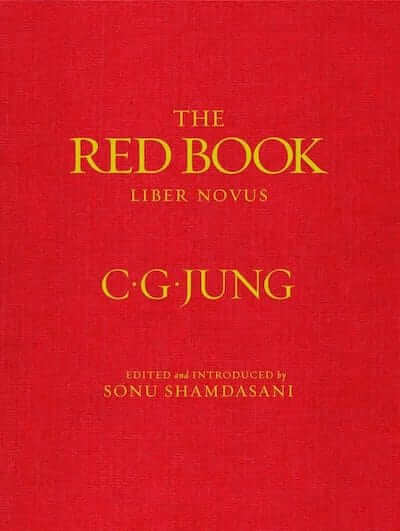
1. The Red Book: Liber Novus
Created between 1914 and 1930, this illuminated manuscript chronicles Jung’s confrontation with the unconscious.
Through active imagination and painting, he recorded a direct dialogue with archetypal figures that became the foundation of analytic psychology. It is both artwork and method, showing how creativity serves individuation.
The Red Book stands as a living example of how science meets symbol in personal revelation.
2. Archetypes and the Collective Unconscious (The Collected Works Vol. 9 Part 1)
Here Jung systematically defines the archetype—a universal pattern shaping myth, dream, and emotion. He illustrates how these internal blueprints organize behavior and culture alike.
This text cements the foundation of depth psychology and explains why identical motifs appear across civilizations. It’s essential reading for anyone exploring comparative mythology, symbolic art, or human creativity.
See also: Classic Jungian Archetypes: A Complete Guide to the Psyche’s Timeless Patterns
3. Aion Researches into the Phenomenology of the Self (Collected Works Vol. 9 Part 2)
Aion explores the evolution of the Self archetype through history and religion.
Jung reads the figure of Christ as a psychological symbol of integration—the reconciliation of opposites.
Drawing from astrology, alchemy, and mythology, he reveals how collective symbols mirror personal transformation.
Philosophically demanding yet luminous, Aion embodies Jung’s mature vision of consciousness crossing from matter to spirit.
4. Psychology and Alchemy (Collected Works Vol. 12)
In Psychology and Alchemy, Jung demonstrates that alchemical treatises mirror the dream sequences of modern patients.
The alchemists’ blackening, whitening, and reddening stages parallel the nigredo‑albedo‑rubedo phases of inner work.
The text translates artistic emblems into psychological operations, showing that matter and psyche speak the same symbolic language. It remains the cornerstone of Jung’s symbolic integration of science and spirit.
See my guide: Jung and Alchemy: The 4 Stages of the Magnum Opus
5. Alchemical Studies (Collected Works Vol. 13)
This companion volume expands the theme with essays on alchemical visionaries—Zosimos, Paracelsus, Gerhard Dorn—explaining how their images describe transformation long before psychology existed.
Jung links these texts to modern creativity, showing that the opus magnum continues in artists and seekers today. The book closes his alchemical trilogy, revealing consciousness as the ultimate laboratory.
___________
Jung’s legacy and analytic principles continue through the International Association for Analytical Psychology (IAAP), the worldwide organization founded to maintain standards of training and research in Jungian psychology. Its members—spanning more than fifty societies of analysts—carry forward the depth tradition that these texts began.
Other Notable Jungian Writers and Post‑Jungian Perspectives
After Jung’s death, a circle of incisive thinkers extended his ideas into new domains: mythic history, symbolic development, archetypal imagination, and the psychology of mature masculinity.
Each of these writers preserves Jung’s devotion to lived experience and symbolism while adapting it to the questions of modern life. Together they show that depth psychology is a continuing conversation, not a closed system.
1. The Origins and History of Consciousness by Erich Neumann
Neumann presents the grand narrative of consciousness arising from the Great Mother archetype through mythic and historical epochs. His synthesis unites anthropology, art, and psychology into a coherent model of psychic evolution.
Jung praised it as the most systematic continuation of his own work, and it remains foundational for comparative archetypal developmental psychology.
2. The Parental Image by M. Esther Harding
Harding, one of Jung’s early associates, interprets the Babylonian creation myth Enuma Elish to examine how parental imprints shape identity.
Her analysis of the parent complex reveals how children internalize both injury and potential, later integrating those forces through consciousness.
The book demonstrates that individuation extends beyond personal healing into re‑imagining ancestral patterns—turning inherited fate into creative freedom. Her insight redefines independence not as rebellion but as conscious renewal of origin.
It’s an important read for anyone moving toward genuinely mature adulthood.
3. Re‑Visioning Psychology by James Hillman
Hillman shifted depth psychology from clinical model to archetypal psychology—a discipline of imagination. He argues that psyche is plural and poetic, found in images rather than definitions.
This landmark work invites readers to think psychologically about art, politics, and love itself.
4. King, Warrior, Magician, Lover by Robert Moore and Douglas Gillette
A modern classic on mature masculinity, this book reframes Jungian archetypes into four central energies governing the male psyche.
Moore and Gillette explain how imbalance leads to shadow forms—the tyrant King, the Detached Manipulator (shadow Magician)—and how integration restores authentic strength.
Their synthesis blends myth, anthropology, and men’s development into a balanced model for psychological adulthood.
Its language resonates with both professionals and lay readers exploring personal leadership and depth psychology. The clarity of structure makes it one of the most practical post‑Jungian texts for personal transformation.
See my summary guide: King Warrior Magiain Lover: Four Foundational Masculine Archetypes
Reading Post‑Jungians as Dialogue Partners
These authors extend Jung’s foundation into diverse but complementary directions—mythic development (Neumann), generational healing (Harding), archetypal imagination (Hillman), and masculine integration (Moore & Gillette).
Their writings remind us that the psyche speaks in multiple dialects of symbol and story. Studying them keeps Jung’s work alive—as a living dialogue between mind, culture, and the timeless depths within.
Jung‑Inspired Novels and Mythic Fiction
While Jung’s primary language was psychology, his ideas quickly transformed literature.
Fiction became the stage where the archetypal drama of transformation played itself out in human form.
These novels evoke Jung’s insights more vividly than any theoretical essay—they show the descent into shadow and the struggle for individuality.
For readers attuned to meaning beneath plot, Jung‑inspired fiction acts as imaginative initiation: art that teaches consciousness through experience.
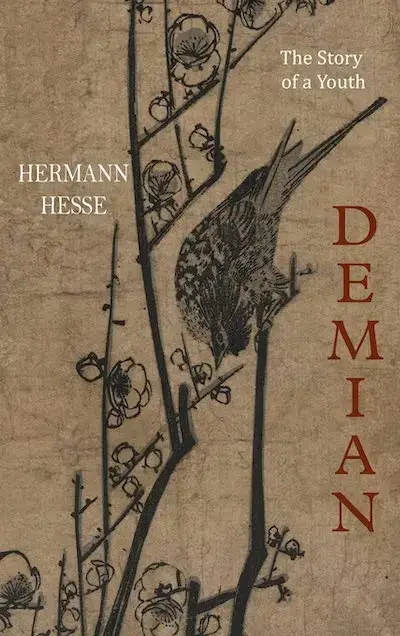
1. Demian: The Story of a Youth by Hermann Hesse
Hesse’s Demian is the quintessential Jungian novel. Written shortly after Hesse’s own analysis with Jung’s colleague J. B. Lang, it traces Emil Sinclair’s awakening from conformity to individuality under the mentorship of the enigmatic Max Demian.
The story dramatizes the journey of individuation—the uniting of light and shadow into a single self.
Archetypes of the Self, the Wise Guide, and the Shadow move quietly behind each character, portraying the pain and privilege of becoming conscious.
If I had to recommend just one novel by Hermann Hesse that communicates Jungian insights, it would be Demian.
2. Steppenwolf by Hermann Hesse
A darker counterpart to Demian, Steppenwolf dives into the split between civilized persona and instinctual wolf within.
Hesse captures the existential crisis of modern man who has lost contact with instinct and spirit alike.
The novel is an expansive vision of the shadow, self‑alienation, and the search for meaning beyond rationalism.
Its “Magic Theater” section visualizes dream logic—the very inner cinema Jung considered the unconscious talking to itself.
3. Siddhartha by Hermann Hesse
Though simpler in style, Siddhartha mirrors Jung’s map of the Self in Eastern terms. It follows a young man’s journey through asceticism, desire, disillusionment, and eventual unity with the flow of life.
The symbolism of river, mirror, and rebirth encapsulates what Jung called the transcendent function—the moment when all psychic opposites realign into wholeness.
For many years, I considered Siddhartha my favorite book—Jungian or otherwise.
4. The Lord of the Rings by J. R. R. Tolkien
Although Tolkien denied direct psychological motives, his epic perfectly illustrates Jungian archetypes in motion: the Shadow (Gollum), the Old Wise Man (Gandalf), and the individuating hero (Frodo).
The Ring’s temptation symbolizes inflation—the ego’s lust for power at the Self’s expense.
Beyond fantasy, it’s a myth of ethical integration and sacrifice that resonates deeply with the archetypal structure of initiation.
How to Read Jungian Fiction
These stories are not escapes from life but mirrors of it. Treat them like dreams: every character, light or dark, belongs to you.
Read slowly, underline the images that sting or stir—then reflect on what aspect of Self they represent.
The goal is not interpretation but recognition: to see that your story is always unfolding in symbolic language.
Where to Begin Your Own Inner Work
Knowing the maps is not the same as walking the terrain. The Jungian path comes alive only in direct relationship with your own psyche.
Reading these books plants the seeds of understanding—but the harvest arises from dialogue with your dreams, emotions, and relationships.
Start by recording your dreams as soon as you wake. They contain objective commentary from the unconscious about the state of your conscious attitude. (It’s okay if you don’t understand their meaning yet.)
Then, observe what repeats: images, motifs, feelings. As patterns emerge, link them to the archetypal themes you’ve read about—shadow, anima/animus, transformation, the Self.
Each symbol is a psychic handshake, inviting dialogue with the greater mind within.
Making the Work Experiential
Inner development isn’t achieved by intellect alone. It unfolds through creative acts that bridge consciousness and unconscious—art, writing, movement, silence.
Following what Jung called the transcendent function, these practices allow insight to cross into embodied life.
Integrate reflection with action: after reading a section on the Shadow, notice projection during conflict; after a chapter on dream symbols, paint an image from last night’s dream without analysis.
When you record and respond to your inner world consistently, the psyche begins to cooperate. Synchronicities increase, energy returns, and meaning sparkles through the ordinary. That’s the true reward of this work.
Integrating Learning Across the CEOsage Knowledge Center
This guide belongs to the Jungian Psychology Hub—one of eight core Knowledge Center domains devoted to psychological integration and human development.
Pair these book studies with sister guides on Shadow Work, The Individuation Process, and Inner Work. Follow these concepts organically, based on your interests, rather than sequentially. Growth rarely moves in straight lines.
Jung’s library can appear daunting, but its purpose is simple: to help you live as though your life were a myth in progress.
Study deeply, experience directly, and test everything against your own inner truth. That is the spirit of CEOsage—practical wisdom verified through your own transformation.
Read Next
Jungian Synchronicity Explained: The Psychology of Meaningful Coincidences
Classic Jungian Archetypes: A Complete Guide to the Psyche’s Timeless Patterns
The 3 Stages of Spiritual Growth: From Self‑Discovery to Self‑Realization
Feminine Archetypes: Decoding the Feminine Psyche Through Jungian Wisdom
This guide is part of the Jungian Psychology Series.
Explore in-depth frameworks on the unconscious, archetypes, and individuation—revealing how self-awareness transforms the psyche through Carl Jung’s analytical tradition.
Scholarly References
- Jung, C. G. (1963). Memories, Dreams, Reflections. New York: Vintage.
- Jung, C. G. (1953–1978). Collected Works (Vols. 1‑20). Princeton University Press.
- Von Franz, M.‑L. (1988). The Way of the Dream: Conversations with Marie‑Louise von Franz. Toronto: Windrose Films.
- Johnson, R. A. (1986). Inner Work: Using Dreams and Active Imagination for Personal Growth. Harper.
- Hillman, J. (1975). Re‑Visioning Psychology. Harper & Row.
- Moore, R., & Gillette, D. (1990). King, Warrior, Magician, Lover. Harper Collins.
- Hesse, H. (1922/1951). Demian and Steppenwolf. Penguin Classics.


Insightful book: June Singer (1973) “Boundaries of the Soul” – The Practice of Jung’s Psychology
Definitely recommend “This Jungian Life Podcast”. Just finished “Carl June and the Evolutionary Sciences: A New Vision for Analytical Psychology” by Gary Clark- a great exploration of the impact of early anthropology and paleo-archaeology on Jung’s thought and contextualizing his ideas in human and mammalian evolutionary development.
Several years ago I was 65. I visited a jungian bookstore in Manhattan. There was just by chance a used book sale upstairs. I had the once in lifetime opportunity to briefly talk to a jungian psychotherapist. At that moment she introduced herself I knew without a shadow of A doubt I had wasted my fuckin life! SHE WAS SURPRISINGLY…..OPEN!. SHE DIDNT EXCUDE THAT usual WHITE SUPRemist PATRONIZING outlook and behavior. SHE WAS DOWN TO EARTH. I SHOULD HAVE CONTACTED THEM YEARS AGO,!
Excellent guide to Jungian books. Very helpful. Thank you.
Hi Jeffrey,
I need your opinion on a book by a Jungian, Reno K. Papadopoulos, ‘The Handbook of Jungian Psychology: Theory, Practice and Applications’.
Would you recommend this book as a good read on Jungian Psychology.
Thank you,
Zaffar Jawaid
Hi Zaffar,
I haven’t read that one and I’m not familiar with the author, so I can’t comment on it.
Best,
Scott