
Across history, we’ve spoken of soulmates, muses, and divine unions.
Jung reframed these timeless myths as inner realities: the anima and animus.
He saw that every man carries an image of a woman, and every woman carries an image of a man—figures that live within the psyche and shape how we love, create, and suffer.
Understanding these archetypes is part of the initiation into Jungian psychology.
From Jung’s perspective, the work of engaging these inner figures leads us beyond personality toward the Self.
This in‑depth guide explores how to recognize, integrate, and live from this deeper conversation between the masculine and feminine within.
Let’s dive in …
What are the Anima and Animus?
In Jungian psychology, the anima is the unconscious feminine image in a man; the animus is the unconscious masculine image in a woman—each an inner bridge to the collective psyche.
Psychiatrist Carl Jung writes in The Development of Personality,1The Collected Works of C.G. Jung, Vol. 17.
Every man carries within him the eternal image of a woman, not the image of this or that particular woman, but a definite feminine image … The same is true of the woman: she too has her inborn image of man.
The Anima is Latin for Soul. It represents the feminine aspect of a man’s unconscious.
The Animus is Latin for mind or spirit. It represents the masculine component of a woman’s unconscious.
Again from Jung:2Jung, Conversations with C.G. Jung.
To a man the anima is the Mother of God who gives birth to the Divine Child. To a woman the animus is the Holy Spirit, the procreator.
Anima and Animus represent two powerful archetypes within the collective unconscious.
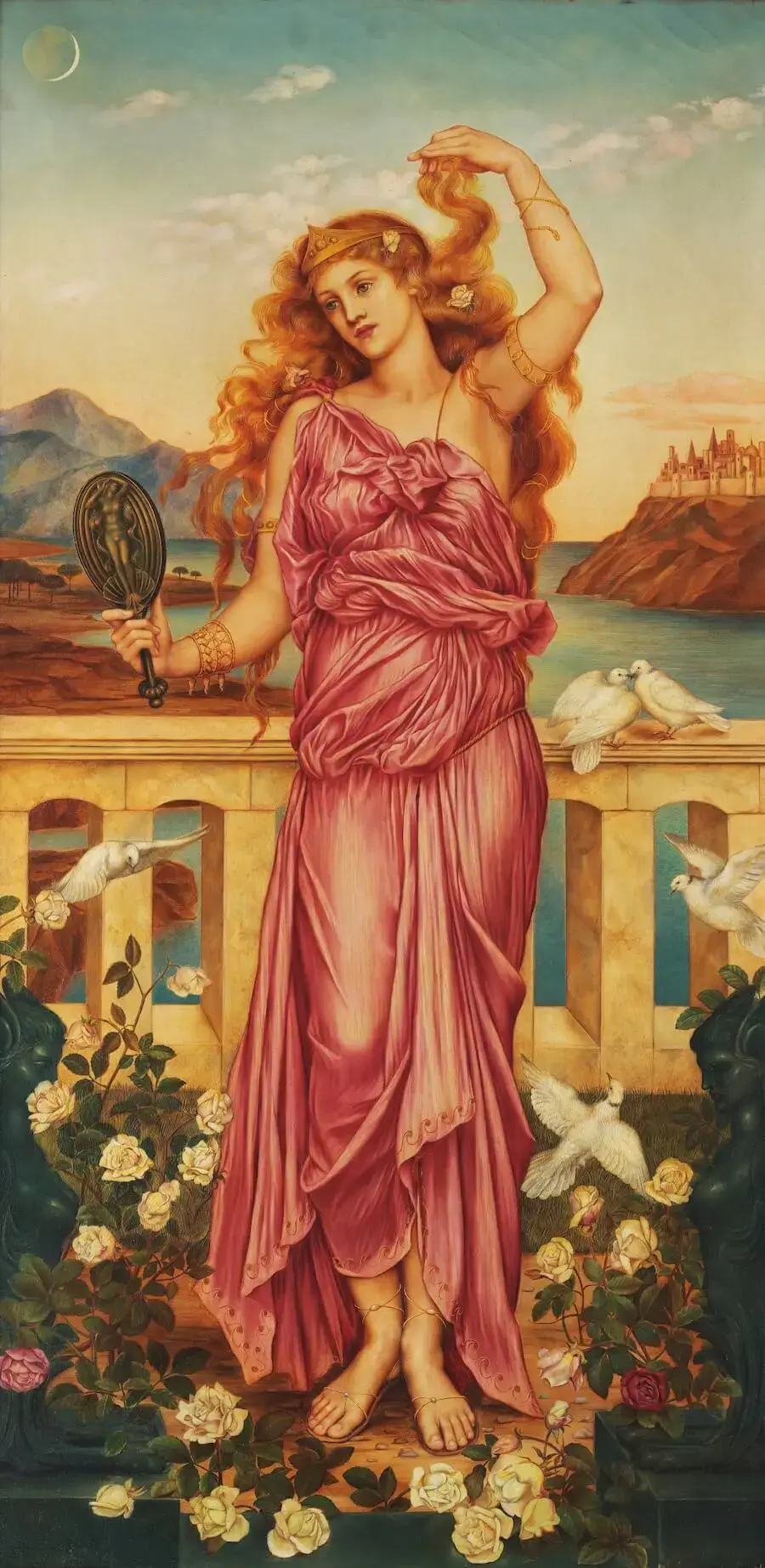
The Anima: Feminine Soul of the Masculine
The Anima animates and gives life. She is the source of life for men. She is the eternal image of woman carried within all men.
Jung wrote, “To a man the anima is the Mother of God who gives birth to the Divine Child.”3Jung, Conversations with C.G. Jung.
His Feminine Muse and Messenger
Creative geniuses have called her by many names: Muse, Guide, Poetic Voice, la femme inspiratrice (the feminine spirit).
In literature, the Anima is expressed as Helen, who inspired the epic battle at the city of Troy. And Beatrice, who was immortalized in Dante’s Divine Comedy.
The Anima is the home of the virtues residing in the heart of man. She is the gentle carrier of a man’s soul and the gatekeeper of his inner world.
For Jung, the Anima is the messenger between a man’s conscious personality and the collective unconscious—the universal repository of all archetypes.
The Mistress of His Power and Meaning
Without a connection to his Anima, a man is without a sense of meaning. She is the mistress of his power and strength.
As Jungian Robert A. Johnson writes in Lying with the Heavenly Woman:
Almost all of a man’s sense of value, worth, safety, joy, contentment, belongingness, and happiness derive from his inner feminine nature… Men, in their arrogance, generally think it is their strength, possessions, and dominations that bring them happiness. But it is not so. Happiness is feminine in a man, a feeling quality and generally mysterious to him.
A man hungers for validation in his masculine world, but this validation can only come via his feminine side. He searches for this validation to experience completeness.
This search for completeness initially drives him on a quest for a physical woman, but later on an inner journey to his own feminine nature—his Anima.
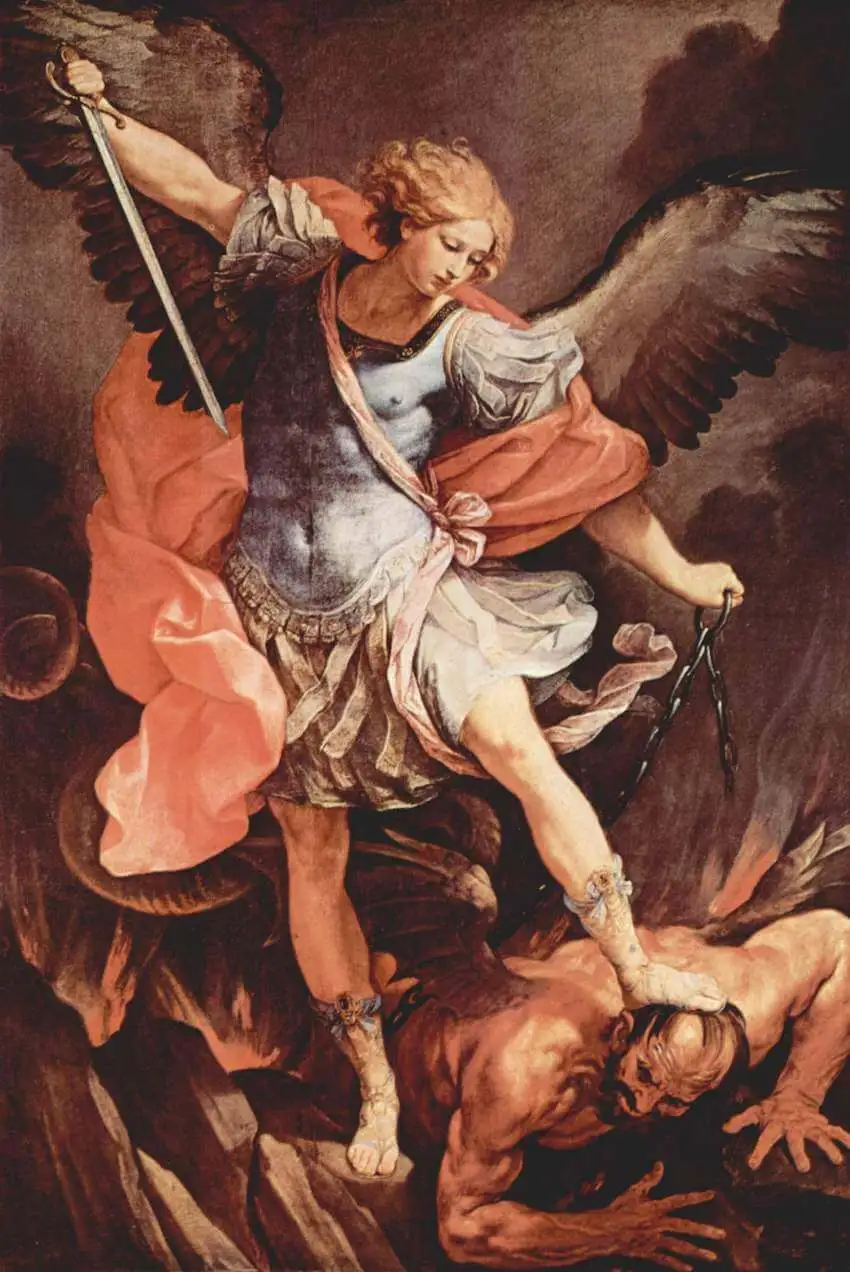
The Animus: Masculine Spirit of the Feminine
The Animus is the male aspect within both the personal and collective unconscious of women.
Jung wrote, “To a woman the animus is the Holy Spirit, the procreator.4Jung, Conversations with C.G. Jung.
The Gatekeeper of a Woman’s Spiritual Life
According to Jung, the Animus is a “psychopomp, a mediator between the conscious and the unconscious and a personification of the latter.”5Aion, “Phenomenology of Self.”
The Animus is the gatekeeper to the genuine spiritual life of a woman. He can seem so powerful and god-like that her conscious ego feels worthless and helpless by comparison.
The woman is often overwhelmed and shocked upon recognizing her Animus. As Jungian Robert A. Johnson explains,6Johnson, She: Understanding Feminine Psychology.
If she sees that she has a godlike element within, the result is exhilarating, much like a peak experience. She is now in great danger of “falling in love with himself.”
It is through her confrontation and differentiation with her Animus that she initiates the process of building consciousness.
Jungian Barbara Hannah calls the Animus the “spirit of inner truth in women.”7Barbara Hannah, The Animus, 2011.
How the Anima and Animus Shape Love and Shadow
When we “fall in love,” something ancient awakens inside us. The heart races not merely because another person is radiant, but because an inner image has suddenly stepped out of the unconscious and taken human form.
In Jung’s language, we project our Anima or Animus onto the beloved. The lover’s eyes mirror an interior secret: the qualities we’ve disowned within ourselves.
For a time, fascination feels divine—every glance charged with transcendence—until reality intervenes and the projection dissolves.
Falling in love is therefore one of nature’s most elegant psychological traps: it binds us to another so that we can rediscover the parts of our soul we’ve left in the shadow.
Authentic intimacy between a man and a woman can only develop after we reclaim our projection of our inner man or woman, and learn to relate to our partner as a human being.
As Jungian Robert A. Johnson beautifully highlights in We (1983), romantic love is archetypal and illusory. Romantic love represents Anima/Animus projection, while human love involves daily, mundane relating to one another.
Anima and Animus in the Process of Individuation
Jung categorized the process of psychological development into specific stages. The person starts off wearing various personas or social masks before initiating what he calls individuation.
Then, the person goes through three distinct phases:
- Getting to know and integrating the shadow
- Getting to know and integrating the Anima-Animus
- Arriving home at the Self
Each stage represents a fundamental archetype within the collective unconscious: the Shadow, the Anima-Animus, and the Self.
From Shadow Integration to Inner Union
Jung points out that, compared to confronting one’s shadow, encountering one’s Anima/Animus is an even more challenging matter.
He writes in Archetypes and the Collective Unconscious:
If the encounter with the shadow is the “apprentice-piece” in the individual’s development, then that with the anima is the “master-piece.”
Integrating one’s shadow challenges us to refine our self-identity. It forces us to accept many aspects of ourselves that we had cut off and disowned during our early development.
Then, if we enter the Anima/Animus phase, another layer of one’s shadow is revealed, representing aspects of the opposite sex.
The encounter with one’s Anima/Animus often leads to intense emotional turmoil. This turmoil presents an opportunity to develop greater consciousness and move toward wholeness (the Self).
Jung and the Search for the Soul
Much of Jung’s work focused on man’s search for the soul. He firmly believed that we each have an autonomous personality that structures our inner world.
He further believed that this autonomous personality is projected out onto the world, shaping how we experience external reality.
To Jung, this personality represented the soul. The challenge was that the term “soul” carries religious overtones and a different meaning. For example, to many Christians, the soul represents the individual’s eternal aspect that inhabits the physical body.
This classic understanding of the soul differed from what Jung attempted to elucidate, so he landed on the Latin terms Anima and Animus instead.
Jung’s experience analyzing dreams, fairy tales, and myths led him to conclude that women experienced this inner spirit (Animus) as masculine, while men experienced this Soul as feminine (Anima).
Reclaiming one’s soul was an integral part of Jung’s individuation process.
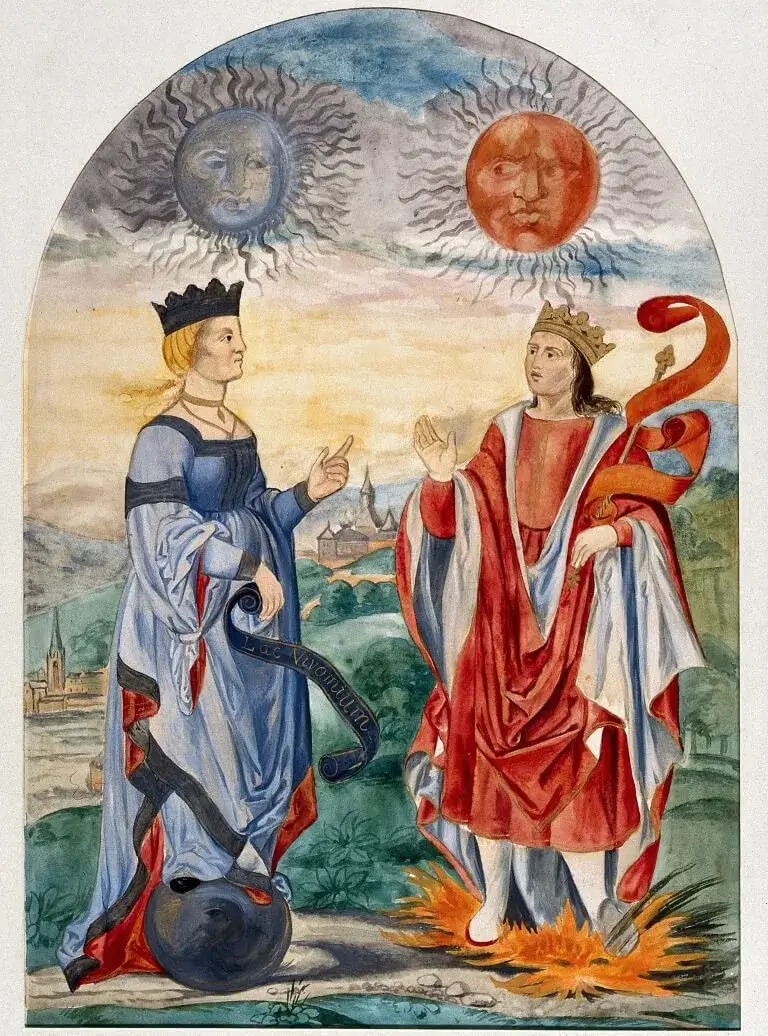
The Two Aspects of the Anima and Animus
There are two distinct aspects of the Anima/Animus:
- Personal: How we relate to qualities of the opposite sex via our Shadow
- Universal: How we relate to the collective unconscious: the archetype of Relationship itself
As one confronts various aspects of their Shadow, a substantial divide remains between the unconscious and the conscious mind.
Personal Aspect: Family Imprints and Projections
The later stage of shadow work also represents the initial stage of the Anima/Animus. That is, the individual begins to confront aspects of their shadow related to the opposite sex.
Jung linked this psychic material to the unconscious content of the Anima/Animus.
This first stage represents aspects of our personal unconscious that we’re bringing to consciousness.
Jung writes,8Jung, Archetypes of the Collective Unconscious, CW 9i, par. 66.
“The anima is both a personal complex and an archetypal image of woman in the male psyche. It is an unconscious factor incarnated anew in every male child, and is responsible for the mechanism of projection.”
The Anima and the Mother
In psychoanalytic language, a complex is like a bundle of emotions produced from one’s life experiences (memories).
The “personal complex” represents the psychic material that came from direct interactions with the boy’s mother and sisters. (And vice versa with the daughter and her father and brothers.)
According to Jung, the anima is initially identified with the personal mother and, if he has any, his sisters. (And vice versa with the daughter and her father and brothers.)
Later on, the anima is experienced in other women.
This internal image of “woman” is then projected out from his consciousness.
The Anima and Animus as Shadow Archetypes
As Jung points out in Psychological Types, we have different ways of processing information: thinking, feeling, sensing, and intuiting. We also each have a dominant function and an inferior function.
The dominant function represents our strengths and what’s comfortable and known to us.
Our inferior function represents our biggest blind spot. Because this function is our weakness, this way of processing information remains mostly unconscious to us until we begin integrating our Shadow (often out of necessity).
For example, for people who rely on thinking to interpret information, feelings represent their inferior function. For people who mainly trust their senses, intuition is their inferior function.
Our inferior function is the doorway to what Jung called our transcendent function—the entry point of the numinous experience of the collective unconscious.
Now, at this stage of the process, the unconscious, through our dreams and active imagination, presents us with images and figures of the opposite sex (representing our Anima/Animus).
Universal Aspect: The Archetype of Relationship
At the core of any personal complex is at least one archetype.
Even as you unravel all of your personal issues surrounding your mother, for example, there’s still a powerful emotional energy stored within you that has not been released.
The second stage of Anima/Animus integration represents the content of what Jung called the collective unconscious.
That is, to Jung, Anima/Animus represents impersonal and universal archetypes: namely, the archetype of Relationship itself.
This archetypal relationship is fundamental to our life experience. It’s the relationship between oneself and the world, both inner and outer.
How Masculine and Feminine Polarity Shape Personality and Identity
From humanity’s earliest stories, life arises through the meeting of two creative forces: the masculine and the feminine.
Every child, before understanding language, experiences these powers through the living presence of the Mother and Father.
In Jungian terms, these are not merely parents but the first archetypes that imprint the psyche’s structure.
During early development, a boy often models himself after his father and learns emotional relatedness through his mother. A girl typically mirrors her mother’s rhythm while discovering direction and independence through her father.
These observed patterns of polarity become the templates through which each person later expresses love, creativity, and authority.
Both as literal relationships and as inner images, Mother and Father serve as the foundational masculine‑and‑feminine polarities that organize the unconscious.
Over time, this original imprint internalizes. The boy carries within him a feminine image—his Anima—that influences imagination, feeling, and intimacy. The girl carries within her a masculine image—her Animus—that governs discernment, vision, and will.
Personality unfolds as a dialogue between these inner poles.
The Biological and Psychological Roots of Polarity
Modern neuroscience echoes what depth psychology intuited a century ago: sex is not only anatomical but also patterns the brain’s organization.
For instance, a recent study from Stanford Medicine used AI to distinguish male and female neural networks with 90 percent accuracy—confirming measurable, complementary differences in information processing and emotional regulation.9Ryali, S., Zhang, Y., Supekar, K., & Menon, V. (2024). Deep learning models reveal replicable, generalizable, and behaviorally relevant sex differences in human functional brain organization. Proceedings of the National Academy of Sciences, 121(9), e2310012121. https://doi.org/10.1073/pnas.2310012121
Yet these biological foundations do not confine us—they orient us.
Masculine energy tends toward focus, structure, and movement; feminine energy gravitates toward empathy, receptivity, and synthesis.
Every individual carries both currents in a unique proportion. Wholeness arises when we integrate these opposing forces rather than identifying with only one side.
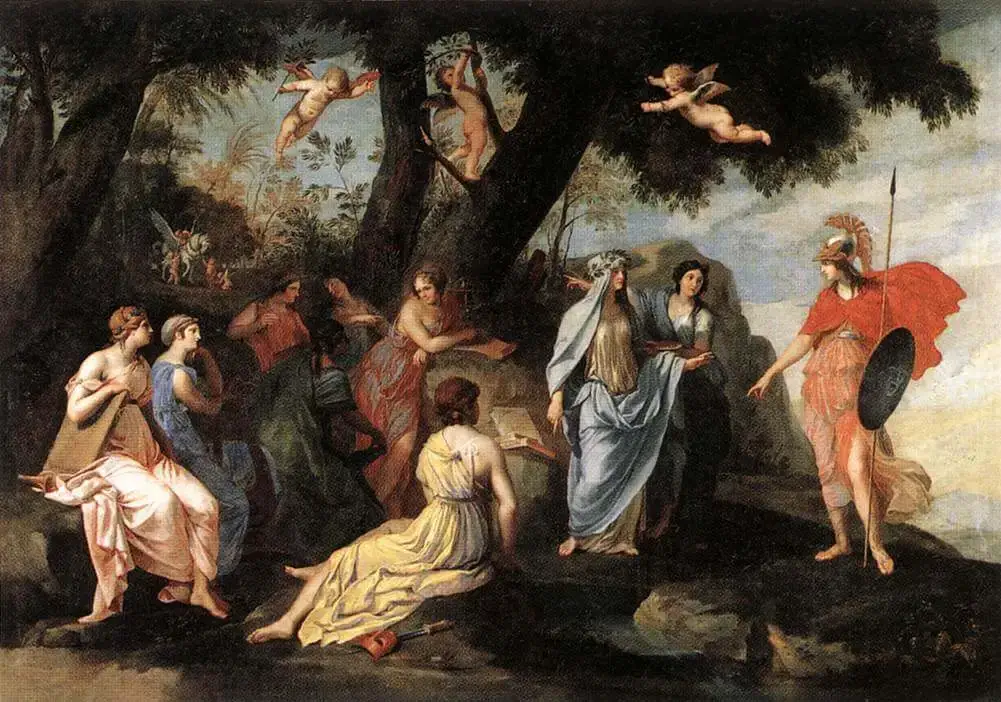
Two Ways of Approaching the Anima and Animus
One’s Anima/Animus can be brought to consciousness in two ways:
- Through one’s primary relationship with a flesh-and-blood spouse of the opposite sex, or
- Via direct inner work with one’s Anima-Animus
Oftentimes, we use a combination of the two.
1 – Through Relationship: Projection and Human Love
Following our psychologically deep-rooted interaction with Mother and Father, the next most meaningful interaction in a person’s life is with a person of the opposite sex: his or her spouse. One’s spouse represents the archetype of Husband or Wife.
For example, a man will subconsciously seek his femininity through the courtship of a woman.
Because a young man is unconscious of his Anima, he will, without being aware of it, find himself attracted to a woman with certain familiar qualities of his Anima—his “Anima projection.” A woman, too, will find herself attracted to a man with “familiar” qualities—her “Animus projection.” (See below.)
That is, the union of a man and a woman symbolizes the union of opposites. Your partner of the opposite sex represents a set of qualities that are largely unknown to you at the start of your relationship.
This symbolic marriage union provides an opportunity for you to bring to consciousness and integrate aspects of yourself that you may perceive in your mate (but that you presently do not perceive within yourself).
2 – Through Inner Work: Dreams and Active Imagination
Later, still feeling incomplete and seeking validation after marriage, a man, in particular, is likely to search for meaning.
This quest for meaning often occurs in mid-life, marked by a “mid-life crisis” or some existential angst.
He may try to find meaning in the outside world (more material possessions or a mistress), but ultimately, the meaning he’s searching for cannot be acquired from the outside.
Instead, he must turn inward to his Anima.
The traditional approach to integrating one’s Anima/Animus in depth psychology is done via dream analysis.
Male characters in a woman’s dream may represent aspects of their Animus. Likewise, female characters in a man’s dream may represent their Anima.
Through dream analysis and active imagination, one can bring to consciousness various aspects of one’s Anima/Animus.
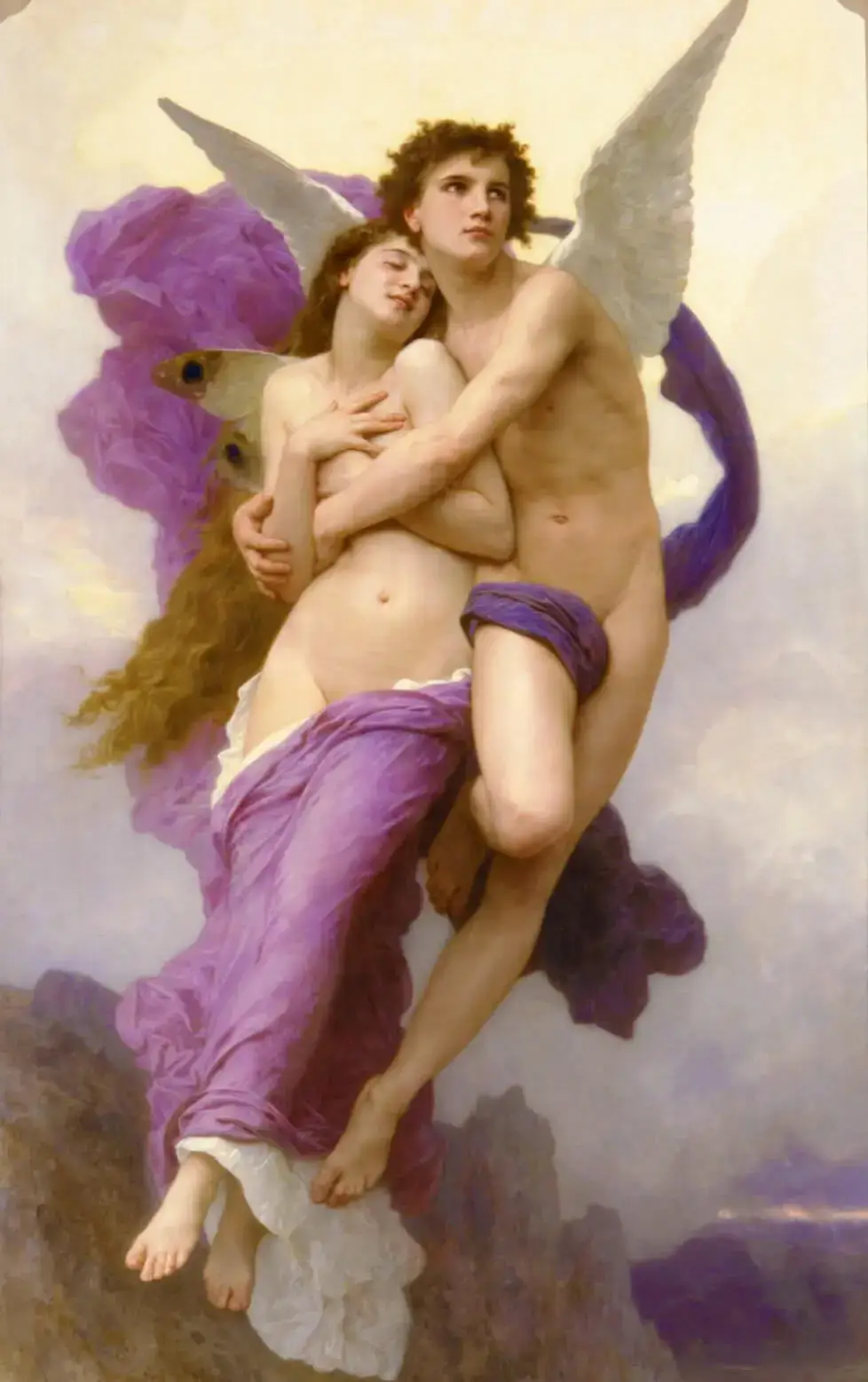
Anima and Animus Possession: Warning Signs and Real-World Examples
In the course of one’s development, the Anima is likely to possess the man at times, and the Animus will possess the woman. Let’s review some examples.
Anima Possession in Men: Key Warning Signs
When a man is said to be “possessed by his Anima,” he becomes very moody, emotional, and unstable. Masculine qualities like logic, reason, steadiness, and critical thinking fall away and are replaced by irrational behavior.
As Jung explains,10CW, 9i, Archetypes of the Collective Unconscious.
The anima is a factor of the utmost importance in the psychology of a man wherever emotions and affects are at work. She intensifies, exaggerates, falsifies, and mythologizes all emotional relations with his work and with other people of both sexes … When the anima is strongly constellated, she softens the man’s character and makes him touchy, irritable, moody, jealous, vain, and unadjusted.
The now all-too-common effeminate male is essentially fully possessed by his Anima. That is, his Anima is fully in the driver’s seat, running the man’s personality and ego consciousness.
A man possessed by his Anima is wishy-washy and dishonest. He is ruled by self-deception and, as a rule, lacks integrity.
An Anima-possessed man loves to argue, and he will do so in a “very womanish way.”11Aion, “Phenomenology of Self” He becomes vain, touchy, and irritable.
Animus Possession in Women: Key Warning Signs
Possessed by the Animus, a woman loses her innate softness. From Jung:12“Anima and Animus,” Collected Works 7, par. 337.
A woman possessed by the animus is always in danger of losing her femininity.
An Animus-possessed woman becomes obsessed with power that can manifest as “social justice” or some other ideology.
Again from Jung,13Richard Wilhelm, The Secret of the Golden Flower.
The animus of the woman consists in a plurality of pre-conceived opinions, and is therefore far less susceptible of personification by one figure, but appears more often as a group or crowd.
A woman possessed by the Animus can not be reasoned with—no amount of logic can overcome her position.
When possessed by her Animus, a woman is never satisfied. Jungian Marie-Louise von Franz explains:14Interpretation of Fairy Tales.
The animus contributes to her unrest so that she is never satisfied; one must always do more for an animus-possessed woman.
Similar to a man possessed by his Anima, an Animus-possessed woman is challenging to be around. Again, from von Franz,15 Ibid.
So we have a marvelous picture of the annoying and irritating side that a woman’s animus can produce. It shows how a grownup, intelligent woman can entangle herself in such a silly idiotic quarrel or discussion. The irritated animus loses his sense of humor and is ungrateful and full of power.
When Anima and Animus Collide: The Drama of Projection
The Anima-Animus wreaks havoc in relationships, for as Jung observed,16C.G. Jung, Aion, “Phenomenology of Self”
No man can converse with an animus for five minutes without becoming the victim of his own anima.
Jung continues,17Ibid.
When animus and anima meet, the animus draws his sword of power and the anima ejects her poison of illusion and seduction. The outcome need not always be negative, since the two are equally likely to fall in love.
In fact, the proverbial “love at first sight” occurs when Animus and Anima meet.
The challenge is that the Animus-Anima relationship, although marked by intense highs and lows, is also characterized by sentiment-driven animosity. The intense emotionality of this “union” often leaves the couple feeling spent.
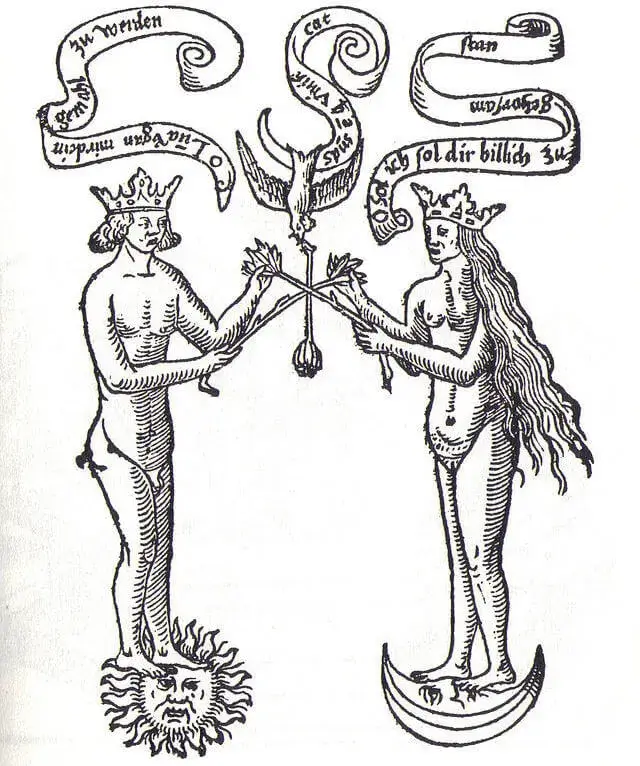
Integrating Inner Opposites
At their core, the Anima and Animus archetypes represent qualities that are distinctly associated with feminine and masculine energy, respectively.
For example, as integral philosopher Ken Wilber highlights in A Brief History of Everything (2001), the masculine seeks autonomy while the feminine seeks communion.
Masculine energy makes a man strong, practical, competent, and effective. But his inner femininity inspires his strength, meaning, and value. Because it is difficult for a man to seek these feminine qualities in himself, he most often identifies them externally in his wife, mother, sister, and daughter.
The feminine or Anima represents a man’s feeling function. As Jung often noted, society itself is suffering from a wounded feeling function. It’s understandable. Objectivity requires us to stand apart. Doing so instantly wounds the feeling function that is based on relatedness (subjectivity).
The masculine principle is driven by order and form. The feminine principle is driven by feeling and flow.
Integrating Feminine Energy for Men
For a man, integrating the Anima (feminine energy) doesn’t mean he becomes more feminine.
Instead, the man learns to cultivate certain qualities traditionally associated with women, such as sensitivity, warmth, relatedness, and receptiveness.
These feminine qualities must be integrated without a man losing his core masculinity. Otherwise, instead of becoming more complete and whole, he becomes more one-sided in the opposite direction.
Integrating Masculine Energy for Women
Similarly, for a woman, integrating the Animus (masculine energy) doesn’t mean she loses her feminine nature.
Instead, the woman learns to adopt the qualities associated with masculinity, including discernment (via reason), directedness, and assertiveness.
Jung explains in Alchemical Studies, “The animus is the masculine thinking in a woman.”18Jung, Collected Works 13, “The Philosophical Tree,” 267.
An integrated Animus provides women with clear thinking and the ability to take responsible action in the external world.
Integrating the Anima/Animus brings one’s personality closer to wholeness.
The Modern Crisis of Masculine and Feminine Energy
Given the nature of this topic of Anima and Animus and today’s political climate in the West, I feel compelled to address some common myths and distortions regarding masculinity and femininity.
Alpha, Beta, and the Shadow of the Warrior
I generally don’t use these terms (Alpha and Beta) because, from my perspective, they represent two sides of the same coin.
Both Alpha and Beta males represent opposing extremes of masculinity—neither represents healthy, integrated masculinity.
(To me, Sigma is the closest to healthy masculinity. The qualities of Sigma also most closely align with Maslow’s characteristics of self-actualizing individuals—i.e., positive mental health.)
Alpha, the active side, is driven by leading, competing, achieving, dominating, and winning (strong masculine energy).
Beta, the passive side, is driven by following, compliance, fitting in, and submissiveness (a lack of masculine energy).
Are Beta Males “More Evolved”?
In light of the above, the reader may innocently assume that the Beta male is more integrated with their Anima and therefore more developed. This, however, is most definitely NOT the case.
Beta males are more likely to be “Anima possessed” (as described above). Betas also more often have a Mother complex, where they haven’t psychologically separated from their mothers in adulthood. (Results include wanting/needing to be cared for by another person or the State.)
The Beta male is arguably in a FAR worse condition as he lacks the masculine “Warrior energy” necessary to begin his masculine development.
For a man to integrate his Anima, he must first constellate his internal power around his innate masculinity. Otherwise, he has no foundation from which to begin this “masterpiece.”
A Beta male is stuck in the passive shadow archetypes as described by neo-Jungian Robert Moore.19Moore and Gillette, King Warrior Magician Lover, 1991.
He is more prone to qualities like cowardice, groupthink, manipulation, and passivity. Beta males lack discipline and any semblance of internal structure or moral aptitude (lacking in integrity).
Are Alpha Males “Toxic”?
The current social order has vilified Alpha males as “toxic masculinity” and celebrates Beta males as more “modern and evolved” masculinity. This represents a pure inversion of truth.
Certainly, Alpha males are out of balance. An obsession with winning and achievement is a clear form of neurosis.
However, Alpha males are also more likely to have a strong moral code built on personal discipline. They are natural protectors and defenders.
Beta males, in contrast, are easily manipulated because they lack internal structure. There’s a reason why Beta males, for example, are “selected” for public office—especially in the West.
In the presence of an Alpha male, a woman can more easily access her innate femininity. The opposite is true in the presence of Beta males.
Why Femininity Was Lost and How to Reclaim It
It is not only the attack on strong masculinity that we must endure in our current world. True femininity has been targeted for generations as well.
Genuine feminine softness and nurturance are now perceived as a kind of weakness. Instead, women, especially in the Western world, are conditioned to compete with men. “Anything you can do, I can do better.”
Even simply stating this can get me labeled as “sexist” or a “misogynist.” Nothing can be further from the truth.
As I stated above, men and women are fundamentally different. These differences represent our strengths, not our weaknesses. And when women compete to be like men, it can only lead to the deterioration of society. It weakens both men and women.
Jungians offer extensive commentary explaining why femininity is lost in modern times.20See, for example, Robert A. Johnson’s Femininity Lost and Regained. In my opinion, all of this discourse, while insightful, clearly misses the mark.
See also: A Beginner’s Guide to Female Archetypes (Including a List of 55+ Examples)
Engineering Gender Confusion and the Collective Psyche
I have to be careful about what I say here, as this topic can anger the “search engine gods,” who can make this guide (and even this website) disappear into the ether.
But for those interested, for example, do you know who started the feminist movement?
Not the figureheads you can read about on a Wiki page, but who initiated and funded this movement, and why? That is, who are the puppet masters?
(Hint: Rockefeller family and their related NGOs like the Tavistock Institute funded by the oligarchs of the City of London.)
That is, the attack on both healthy masculinity AND healthy femininity is NOT a natural social or cultural phenomenon. It is NOT an expression of “progress” or “evolution.” It is an intentional, multi-generational psychological operation done with malice and contempt.
Although this may upset a select number of readers, virtually all of the “gender confusion” plaguing the Western world has been carefully socially engineered since before World War II.
A Direct Attack on the Human Psyche
As I’ve mentioned elsewhere, the world is run by the shadow of the Magician archetype—the Detached Manipulator.
Two different groups of people use the insights from depth psychology:
- Analysts and psychologists who attempt to help heal the individual’s psyche via private practice.
- N-G-Os and “think tanks” (run and funded by psychopaths) that co-opt these insights to manipulate the social order.
This has been the case even before the first wave of psychology (psychoanalysis).
The psyche of mankind has been under direct, intentional attack for centuries (if not millennia). The deterioration of the nuclear family is most definitely not accidental. It is the result of psychological warfare and the conscious manipulation of the collective psyche.
A careful understanding of how the psyche works illustrates how easy it is to create trauma and throw the psyche into chaos, especially for those in positions of power with endless resources.
What’s stated above is not difficult to prove. It is already well-documented. An earnest researcher will arrive at this conclusion. But sadly, I don’t see any Jungians or others in the field making these connections.
Going forward, restoring a man’s masculinity and a woman’s femininity is up to the individual.

Jung and The Secret of the Golden Flower: Eastern Roots of Inner Alchemy
Any Jungian or devout reader of Jung has likely come across Jung’s commentary in the Taoist classic, The Secret of the Golden Flower, translated by Richard Wilhelm. Wilhelm translated numerous Chinese texts, including the I Ching, to which Jung wrote the foreword.
When I first read Jung many years ago, I was taken aback by The Secret of the Golden Flower, which included Jung’s extensive commentary.
This commentary discusses the concepts of Anima and Animus and their relation to Taoist principles.
I recall reading this book numerous times. In fact, it was partly what got me interested in Taoist literature in the first place.
Three Points of Contention Highlighted by Thomas Cleary
Eastern scholar Thomas Cleary highlights three valid points of contention in his later translation and commentary on The Secret of the Golden Flower (1991).
First, Richard Wilhelm clearly didn’t have a solid understanding of Taoist or Buddhist concepts or philosophy. (It’s also likely that he had a cultic version of the Golden Flower manuscript.)
Second, Jung assumed that the ancient Chinese arrived at their psychology “only through abnormal psychic states.” This is absolutely incorrect. The Taoist system is a highly grounded and developed psychology designed to help the individual organize their psyche through stabilization practices rather than altered states of consciousness.
Third, Jung drew numerous parallels between his analytical psychology and the Taoist principles outlined in Wilhelm’s translation of The Golden Flower. Many of these parallels are not valid.
What Jung Thought the Higher Soul and Lower Soul Mean
As an illustration, let’s examine a passage from Thomas Cleary’s far more accurate translation of The Secret of the Golden Flower (1991):
“Then there is the higher soul, which is where the spirit is concealed. The higher soul resides in the eyes during the day and lodges in the liver at night. When it resides in the eyes, it sees; when it lodges in the liver, it dreams.
“Dreams are the roaming of the spirit. It traverses the nine heavens and nine earths in an instant. If you are dull and depressed on awakening, that is a sign of clinging to the body, which means clinging to the lower soul.”
Wilhelm used the term Anima for the lower soul and Animus for the higher soul. In his introduction, Wilhelm calls the Anima feminine and the Animus masculine.
Jung then exaggerates this distortion in his commentary on feminine and masculine psychologies, which have no connection with the source material.

Meaning of Higher Soul and Lower Soul in Taoist Thought
As Thomas Cleary explains in his commentary:21Ibid, 83.
The idea that the body is created by attention is typically Buddhist, but it is also found in the schools of Taoism influenced by Buddhism. In this text, the “lower soul” simply means the feeling of being a solid body physically present in the solid world. As long as this feeling persists, the state of the lower soul (which includes visceral emotions) is subject to random environmental influences. Therefore the text speaks of “interrupting consciousness” in the sense of withdrawing attention from the feeling of solidity in order to free it from the bonds of external influences …”
That is, this passage from the Golden Flower, and many others like it, do NOT refer to Jung’s concepts of the Anima and Animus. The Higher Soul and the Lower Soul do not equate to the Animus and Anima.
For any Jungians reading this, I highly recommend reading Thomas Cleary’s authoritative translation of The Secret of the Golden Flower to see just how confused both Wilhelm’s translation and Jung’s commentary are.
Why is This Relevant?
That there are inner feminine qualities in a man and inner masculine qualities in a woman is readily apparent to anyone who examines their psyche. I am not challenging this notion.
Also, without question, many aspects of one’s shadow relate to one’s parent of the opposite sex.
However, I also think there are many significant issues with Jung’s concepts of Anima and Animus. Perhaps that’s why this is one of the most complex and misunderstood concepts within Jungian lore.
Comparing Cleary’s translation with Wilhelm’s, plus Jung’s commentary, can be highly instructive.
Finally, I will point out that ancient Taoists and Chan Buddhists specifically warned against engaging with images (archetypes such as the Anima and Animus).
Their psychologies direct the individual to stabilize their energy and govern their mind from a position of neutrality. These ancient texts often speak of the importance of holding to the Center instead.
At the very least, these internal practices can greatly support one’s inner work.
From Inner Union to Self‑Realization
When the Anima and Animus are no longer rivals but partners, something larger than personality awakens.
This inner marriage—what Jung called the coniunctio—does not erase our differences; it allows them to work together in service of the Self.
Each time you reclaim a projection, integrate shadow content, or recognize the opposite within you, consciousness expands. You take one more step toward wholeness.
Through this ongoing dialogue between masculine and feminine, reason and feeling, we grow into the quiet strength of authenticity.
To realize the Self is to discover that the very forces once divided in us were always seeking reunion—so that the soul could know itself as one.
Related Books on the Anima and Animus Archetypes
Below are a few book recommendations on the anima and animus. For more related suggestions, see: 21 Best Jungian Books.
(Disclaimer: Amazon affiliate links below.)
The Archetypes of the Collective Unconscious
by C.G. Jung
Lying with the Heavenly Woman
by Robert A Johnson
He: Understanding Masculine Psychology
by Robert A Johnson
She: Understanding Feminine Psychology
by Robert A Johnson
Femininity Lost and Regained
by Robert A Johnson
Animus and Anima
by Emma Jung
Animus and Anima in Fairy Tales
by Marie-Louise von Franz
Interpretation of Fairy Tales
by Marie-Louise von Franz
Read Next
A Beginner’s Guide to Classic Jungian Archetypes
Jungian Synchronicity: Decoding the Psychology of Meaningful Coincidences
The Individuation Process: A Beginner’s Guide to Jungian Psychology
Jung and Alchemy: A Guide to the Alchemical Magnum Opus
References
- Barbara Hannah. (2011). The Animus. Chiron Publications.
- Cleary, T. (Trans.). (1991). The Secret of the Golden Flower: The Classic Chinese Book of Life. HarperOne.
- Johnson, R. A. (1976). He: Understanding Masculine Psychology. Harper & Row.
- Johnson, R. A. (1976). She: Understanding Feminine Psychology. Harper & Row.
- Johnson, R. A. (1983). We: Understanding the Psychology of Romantic Love. Harper & Row.
- Johnson, R. A. (1989). Lying with the Heavenly Woman: Understanding and Integrating the Feminine Archetype in Men. Harper & Row.
- Johnson, R. A. (1990). Femininity Lost and Regained. Harper Perennial.
- Jung, C. G. (1953). Collected Works of C. G. Jung, Volume 7: Two Essays on Analytical Psychology. Princeton University Press.
- Jung, C. G. (1959). Collected Works of C. G. Jung, Volume 9 (I): The Archetypes and the Collective Unconscious. Princeton University Press.
- Jung, C. G. (1969). Collected Works of C. G. Jung, Volume 9 (II): Aion—Researches into the Phenomenology of the Self. Princeton University Press.
- Jung, C. G. (1968). Collected Works of C. G. Jung, Volume 13: Alchemical Studies. Princeton University Press.
- Jung, C. G. (1954). Collected Works of C. G. Jung, Volume 17: The Development of Personality. Princeton University Press.
- Moore, R., & Gillette, D. (1990). King, Warrior, Magician, Lover: Rediscovering the Archetypes of the Mature Masculine. Harper San Francisco.
- Ryali, S., Zhang, Y., Supekar, K., & Menon, V. (2024). Deep learning models reveal replicable, generalizable, and behaviorally relevant sex differences in human functional brain organization. Proceedings of the National Academy of Sciences, 121(9), e2310012121. https://doi.org/10.1073/pnas.2310012121
- von Franz, M. L. (1974). The Interpretation of Fairy Tales. Spring Publications.
- von Franz, M. L. (1978). Animus and Anima in Fairy Tales. Spring Publications.
- Wilber, K. (2001). A Brief History of Everything (2nd ed.). Shambhala Publications.
- Wilhelm, R. (Trans.). (1931). The Secret of the Golden Flower: A Chinese Book of Life (C. G. Jung, Commentary; C. F. Baynes, Trans.). Harcourt Brace Jovanovich.