
Overview: This in-depth guide explores the practical application of archetypes in branding and marketing, providing numerous examples and illustrations.
______________
What are brand archetypes?
Can archetypes be used to build a stronger brand?
How can archetypes be used to inform your marketing efforts?
In this in-depth guide, we’ll explore these questions and much more.
Let’s dive in …
What Are Archetypes?
Plato referred to archetypes as Forms. Think of these Forms as pre-existing ideal templates or blueprints in the non-physical world.
Swiss psychologist Carl Jung referred to these forms as primordial images before coining the term archetypes.
Jung saw these ancient images as a kind of living system embedded with reactions, aptitudes, and patterns that exist within each human psyche.1C.G. Jung, The Structure and Dynamics of the Psyche, CW, Vol. 8, 1970.
Think of archetypes as pre-existing patterns that operate within us, often outside of our conscious awareness.
Archetypes are universal images that influence our behaviors, attitudes, emotions, and actions.
For a comprehensive examination of this topic, see The Psychology of Archetypes: Everything You Need to Know.
What Are Brand Archetypes?
A few savvy marketers have figured out ways to apply archetypal psychology to the business world.
Brand archetypes are universal images (a collection of character traits) that best capture the essence of a particular business or customer group.
Archetype from the Greek, meaning prime imprinter.
Is this not the essence of branding? To make a strong and lasting initial impression—to imprint this impression in the customer’s mind?
A brand archetype is akin to your business’s ethos—the character that best embodies its qualities, beliefs, purpose, and ideals.
The brand archetype strategy views your company as a distinct brand personality and seeks to attract customers who align with that personality.

12 Brand Archetype Wheel
12 Brand Archetypes Explained
Most often, when someone uses the phrase “brand archetypes,” they are referring to a specific set of 12 archetypes.
These 12 brand archetypes are:
| The Innocent | The Lover |
| The Everyman | The Creator |
| The Hero | The Jester |
| The Caregiver | The Sage |
| The Explorer | The Magician |
| The Outlaw | The Ruler |
Most articles online incorrectly label these brand archetypes as the “12 Jungian archetypes,” leading readers to assume that Jung created a list of 12 archetypes featured in his work. He did not.
As I explained elsewhere, Jung didn’t create a list of archetypes nor advocate doing so.

The Hero and the Outlaw
The “12 Archetypes” is a model developed mainly by Carol Pearson. This model was initially presented in her Awakening the Heroes Within (1991).
This model of 12 archetypes is known as the Pearson-Marr Archetype Indicator (PMAI) and was later popularized in books such as The Hero and the Outlaw: Building Extraordinary Brands Through the Power of Archetypes (2001) by Margaret Mark and Carol Pearson.
Books like The Hero and the Outlaw helped establish an interest in archetypes among entrepreneurs and marketers and consequently popularized the term “brand archetypes.”
The Myth of 12
Pearson’s model uses only 12 brand archetypes. However, the reality is that there are hundreds, if not thousands, of archetypal images.
In fact, according to Jung, every word in the dictionary is technically an archetype.
The benefit of using this model of 12 brand archetypes is that it dramatically simplifies the process. Pearson’s PMAI is akin to a personality type test, much like assessments like the Myers-Briggs and the Enneagram, which represent a set of personality archetypes for individuals.
These assessments can help you identify the personality patterns with which you’re most closely aligned.
The main drawback of using these 12 brand archetypes is that it’s highly limited. Not every brand will fully align with one of these 12 archetypes. In some cases, a brand or target customer group will be better represented by alternative archetypal images.
That said, for the average entrepreneur looking to apply brand archetype methodology, these 12 archetypes are likely sufficient.
Note: The Brand Archetype Wheel is explained below.
8 Benefits of Using Archetypes in Branding
Why would you want to apply an understanding of archetypes in your business?
Businesses, large and small, can use archetypes to:
- Dial in your brand strategy.
- Create more effective marketing copy and creative.
- Improve their brand identity (how customers perceive them).
- Strengthen the brand’s connection with its customers.
- Target specific types of customer groups.
- Influence specific consumer behavior (get people to take a desired action).
- Establish stronger brand consistency to be used across multiple marketing channels.
- Build longer-term relationships with your target customers (build trust).
There are many other related benefits to using brand archetypes—IF used effectively and consistently.
The 12 Brand Archetypes
Now, let’s quickly review the 12 brand archetypes outlined in Pearson’s work.
Long-time readers will be familiar with many of them as we’ve covered these archetypes in-depth in prior guides.
However, in the descriptions below, I will focus more on how Margaret and Pearson articulate these archetypes.
As you review these archetypal descriptions and examples, consider which ones best align with your business ethos.
After this review, we’ll examine the brand archetype wheel below.

The Hero | Brand Archetype
The Hero archetype is characterized by courage, strength, boldness, confidence, inspiration, and determination.
The Hero’s goal is to improve the world. This archetype often relies on external motivation and self-encouragement to propel itself forward.
Its primary desire is to achieve self-mastery.
The Hero’s primary fears are weakness, incompetence, injustice, and cowardice.
On the shadow side, the Hero can be arrogant or aloof.
Marketing messages associated with the Hero may include:
- Solving specific problems
- Inspiring others to achieve a particular aim
- Making a positive mark on the world
Famous brands like Nike, Under Armor, BMW, and FedEx may be associated with this archetype.
See The Hero Archetype: A Definitive Guide for a deep dive into this archetypal image, including 10 different types of Heroes.
Also, from a Neo-Jungian perspective, the hero archetype is technically the less psychologically developed expression of the Warrior archetype.

The Ruler | Brand Archetype
The Ruler is an organized, sophisticated, responsible leader.
The Ruler represents a dominant personality that is commanding and authoritative in their communication. Its communication style can come off as intimidating and potentially elitist.
The Ruler is driven by power, status, success, wealth, and prosperity.
Fears associated with this archetypal pattern include weakness, failure, poverty, destitution, and insignificance.
The Ruler tries to demonstrate superiority and exert themselves as a dominant leader.
Marketing messages for the Ruler may include restoring order in one’s life and establishing stability within a chaotic world.
Luxury brands such as Rolex, Mercedes-Benz, and Tiffany & Co. are often associated with this archetype.
The Ruler is associated with the King/Queen archetype.
See King Warrior Magician Lover: Four Foundational Masculine Archetypes for a deep dive into the King archetype.

The Creator | Brand Archetype
The Creator is creative, imaginative, inventive, nonconformist, and artistic.
This archetype desires the “new new.” It wants to create something that didn’t exist before and to produce something of enduring value.
The Creator is driven by novelty, self-expression, vision, imagination, and the creation of meaningful things.
This pattern fears becoming repetitive, which leads to stagnation, familiarity, and indifference.
The Creator aspires to consistently tap into the imagination and encourage the pursuit of originality.
Companies that help their customers create, such as Apple, Adobe, Crayola, GoPro, and LEGO, perhaps best embody this brand archetype.
See How to Harness the Four Stages of the Creative Process to explore the four archetypes of creativity.

The Magician | Brand Archetype
Who else but the Magician can make dreams come true? Who else can tap into the mystical to realize the future and create magical moments?
The Magician is charismatic, idealistic, insightful, and imaginative.
To the Magician, we are limited only by our imagination and limiting beliefs. This archetype is driven by transformation, vision, discovery, and the pursuit of knowledge.
The Magician fears stagnation, ignorance, uncertainty, doubt, and unforeseen consequences.
It seeks to create a vision for itself and to live by it.
One drawback of the Magician is that it can take risks that lead to poor results.
Messaging associated with the Magician may include something like “Make the impossible, possible.”
Companies that once aligned with this brand archetype may have included Disney, Dyson, and Polaroid.
See The Magician Archetype: The Knower and the Creator of Worlds for a deeper psychological look at this powerful archetype.

The Caregiver | Brand Archetype
The Caregiver is caring, compassionate, reassuring, nurturing, and warm.
This archetype desires to support, help, protect, nurture, and care for others. Helping others is its primary goal and the reason for its existence.
The Caregiver looks to be of service to others and to pursue the greater good.
This archetype fears being helpless and neglectful; it’s averse to instability, anguish, ingratitude, and blame.
The Caregiver could be overbearing at times and also be exploited or taken advantage of by others.
Brand messaging associated with this image may include “treating others as yourself.”
Brands once associated with this archetype may include TOMS, UNICEF, Johnson & Johnson, and Volvo.
The Caregiver is closely associated with the Mother archetype.
See A Beginner’s Guide to Female Archetypes for more on the Mother and other feminine archetypes.

The Innocent | Brand Archetype
With optimism, simplicity, and pure, youthful energy, the Innocent strives to be good.
The Innocent can be charming and loyal. Its core desire is to be positive and honest while providing happiness for itself and others.
It fears complexity, deceit, punishment, confusion, and depravity. It tries to avoid ill will toward others.
Within the Innocent’s shadow are qualities like naivety and ignorance.
The Innocent aims to showcase moral virtue and cultivate a positive atmosphere.
Companies aligned with the Innocent should project strong morality, reliability, and trustworthiness.
Brands that once personified this archetypal pattern include Dove, Whole Foods, Ben & Jerry’s, McDonald’s, Chick-fil-A, Coca-Cola, Zappos, and Nintendo.
The Innocent is synonymous with the Fool archetype. A hero often starts as the Fool at the beginning of the Hero’s Journey.

The Jester | Brand Archetype
The Jester is a playful, positive, fun, and humorous figure. Driven mainly by entertainment, it seeks to enjoy life, have fun, laugh, and accumulate new experiences.
It promotes having good times and does its best to make others laugh.
The Jester fears boredom, seriousness, negativity, loneliness, sadness, and misery.
The Jester’s shadow qualities include being perceived as frivolous and disrespectful.
Brand messages associated with this archetype might include, “Life is short. If you’re not having fun, you’re probably doing it wrong.”
Brands aligned with the Jester might include M&Ms, Dollar Shave Club, Old Spice, and Budweiser.
The Jester is a derivative of the Trickster archetype.

The Everyman | Brand Archetype
The Everyman, or Regular Guy/Gal, is friendly, down-to-earth, faithful, supportive, dependable, pragmatic, and inclusive.
This archetype’s trustworthiness enables it to connect with others easily (its primary desire).
The Everyman seeks connection, equality, fellowship, and togetherness. To achieve its goals, this archetype aligns with basic values and creates a welcoming sense of community.
The Everyman fears standing out, exclusion, hostility, separation, and isolation.
A potential drawback of the Everyman is that it can lack a distinct identity.
Marketing for this archetype often revolves around creating a strong sense of belonging (cult-like branding).
Brands once associated with the Everyman include IKEA, Ford, Levi’s, Home Depot, eBay, and Target.

The Outlaw | Brand Archetype
The Outlaw, also known as the Rebel, is rebellious, wild, iconoclastic, disruptive, independent, and sometimes confrontational.
This agent of change seeks disruption (dismantling old paradigms) while yearning for revolution.
The Outlaw resists rules, repetition, rigidity, dependence, complacency, and conformity. It hates and denounces the status quo, using disruption, shock, and combativeness to instigate change.
Are rules made to be broken? If you’re messaging for this archetype, they are.
Brands once associated with the Outlaw include Harley-Davidson, Red Bull, Diesel, and Virgin.
Virgin founder Richard Branson once personified this archetype.
Harley-Davidson’s “freedom of the open road” messaging initially helped the brand achieve a cult following by attracting many customers inspired by this archetypal image.

The Explorer | Brand Archetype
The Explorer desires freedom of discovery above all else.
This archetypal pattern is characterized by fearlessness, daring, adventure, independence, liberation, and a pioneering spirit. It embraces the unknown and loves self-discovery.
It fears conformity, safety, confinement, aimlessness, and limited thinking.
The Explorer is all about celebrating the journey and “making life count” (a key messaging point for branding).
Brands charged with this universal image play to those who identify themselves as risk-takers and as being authentic.
Brands that once personified this archetype include JEEP, The North Face, Subaru, National Geographic, and Patagonia.
When you think Explorer, think Indiana Jones.

The Lover | Brand Archetype
The Lover is passionate, empathetic, affectionate, sensual, romantic, committed, and often indulgent.
This archetype desires connection, closeness, and intimacy above all else.
Becoming desirable is its primary strategy. It reaffirms beauty and often provides the “red carpet” treatment, making it more inviting to others.
The Lover fears isolation, rejection, invisibility, loneliness, and being unloved.
Marketing messages aligned with this archetype may convey the idea that “love makes the world go round.”
Brands once aligned with the Lover include Godiva, Victoria’s Secret, and Alfa Romeo.
See King Warrior Magician Lover for a deeper look at the Lover archetype.

The Sage | Brand Archetype
The Sage provides wisdom, assurance, and expertise. This universal image is associated with guidance, intelligence, information, and influence.
The primary desire of the Sage is to find the truth. Its ultimate goal is understanding, which it achieves through lifelong learning and by showing the path to wisdom.
This archetypal pattern fears insanity, powerlessness, misinformation, lies, inaccuracy, ignorance, and stupidity.
Brands once aligned with this archetypal pattern include Google, TED, BBC, Discovery Channel, and many top-tier Ivy League universities.
(Ironically, virtually all of these brands have succumbed to their shadow. They now personify what they most fear.)
Jung often referred to this archetype as the Wise Old Man.
See The Sage Archetype: Knower of Wisdom and Seer of Truth for a deep dive into this archetype, which includes over 20 variations of this powerful archetype.
The Brand Archetype Wheel
The Brand Archetype Wheel
Working from the center of the brand archetype wheel, the 12 archetypes (outer circle) are broken into four main quadrants. Each quadrant represents a core motivation:
- Provide structure
- Connect to others
- Leave a mark
- Spiritual journey
For example, the Caregiver, the Ruler, and the Creator are all motivated by providing structure.
However, each universal image seeks to provide structure in a different way, represented by the middle layer of the brand archetype wheel.
For example, the Creator seeks to provide structure through innovation, creativity, and imagination.
The Ruler provides structure through power, confidence, and luxury.
The Caregiver provides structure by offering support, protection, and a sense of safety.
The Most Vital Element to Using Archetypes in Branding
Jung’s work highlights a basic formula for understanding archetypes:
Archetypes = Image + Emotions
That is, archetypal patterns within the psyche get activated when specific images trigger specific emotional responses.
In other words, in the context of branding, if your marketing efforts fail to elicit a desired emotional response in your target customer group, a brand archetype doesn’t come into play.

Most of the core emotions associated with the above brand archetypes are tied to basic human needs. These needs, as articulated by psychologist Abraham Maslow, are instinctive and universal.
Each of the 12 brand archetypes highlighted above is associated with a specific emotion or basic need/desire. For example:
| Archetype | Basic Need / Desire |
|---|---|
| Innocent | Safety and security (base-level human needs) |
| Everyman | Need to belong |
| Hero | Achieve mastery (self-actualization) |
| Caregiver | Serve others |
| Explorer | Freedom |
| Outlaw | Liberation |
| Lover | Intimacy (also a belonging need) |
| Creator | Novelty and innovation (higher level need for self-expression) |
| Jester | Enjoyment |
| Sage | Understanding (another higher-level human need) |
| Magician | Power (higher-level need associated with cognition) |
| Ruler | Control and order (a basic security need) |
If you’re going to use archetypes in branding, ensure that you’re marketing and business development efforts are aligned with the right desires and target emotions.
3 Limitations of Using Archetypes in Branding
There are inherent limitations to using the brand archetype wheel and related assessments as a branding strategy. Let’s run through three of them:
A Lack of Differentiation
First, if every business is supposed to align with one of the 12 archetypes on the wheel, doesn’t that suggest that most brands are the same?
And doesn’t the essence of branding revolve around differentiating your business from your competitors?
Is every athletic brand supposed to represent the Hero?
Is every moral-values-based brand representative of the Everyman?
Is this the best way to articulate your brand’s differences?
Archetypal Branding Requires Savvy Marketing
Effectively applying the knowledge of archetypes to your business is not a straightforward task.
It requires a bit of savvy and a more than cursory understanding of archetypes to use brand archetypes effectively in branding, marketing, and organizational development.
Identifying the brand archetype that best suits your company and target customer base is only 1% of the battle. The other 99% requires effective and consistent execution.
In my opinion, inexperienced marketers will likely find more functional utility in creating their “brand’s story” and developing a clear positioning statement.
Long-Term Time Horizon
The main benefits of using archetypes in your business are derived over a long-term time horizon.
Business owners who prioritize short-term profits and are fixated on the next sale or transaction are unlikely to succeed with this approach.
The benefits of using brand archetypes accrue over time, as they can help you attract the right customers and build longer-term customer relationships.
Like any solid branding strategy, using archetypes requires relentless consistency and accuracy in your messaging, copy, imagery, packaging, and other elements.
What Other Archetypes Can You Use in Branding?
As stated above, the pantheon of archetypal images is certainly not limited to the 12 in the above brand archetype wheel.
To expand your understanding of the archetypal patterns available, see:
Robust brands can use more than one brand archetype in their branding strategy.
Books Related to Archetypes and Branding
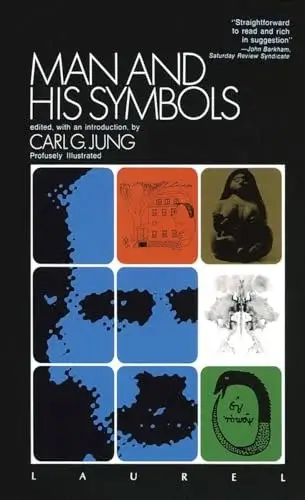
Man and His Symbols
by Carl G. Jung
The Hero and the Outlaw: Building Extraordinary Brands Through the Power of Archetypes
by Margaret Mark and Carol Pearson

Archetypes in Branding: A Toolkit for Creatives and Strategists
by Margaret Hartwell and Joshua C. Chen
(Contains 60 archetypes to use in branding)
Read Next
I hope you found this introduction to branding with archetypes useful.
If you would like to gain a better understanding of archetypes and have to leverage them in your personal development and/or your business, see:
What Is An Archetype? A Beginner’s Guide to Archetypal Psychology
A Beginner’s Guide to Classic Jungian Archetypes
The Individuation Process: A Beginner’s Guide to Jungian Psychology