
Every tradition whispers the same riddle: why do some people radiate strength well into old age while others fade early?
In Taoist alchemy, the answer is Jing—the condensed reservoir of life itself.
Modern physiology might call it the energetic foundation behind hormones, immunity, and repair. When Jing runs low, vitality drains; when it’s strong, life feels charged and stable.
So, what is Jing? What does it mean for your overall health and well-being?
In this in-depth guide, we’ll address all of these questions and much more.
Let’s dive in …
What is Jing?
Jing means “essence”—the densest form of life energy that shapes growth, fertility, and endurance in Taoist understanding.
Jing is an integral concept in the Taoist arts. Jing represents the primal essence and vitality in all living beings.
This vitality is ultimately a vibrational energy frequency. This frequency is less dense than matter (but just barely).
This essence is primordial, “gifted” to us at birth. It represents the blueprint of our physical design and the base-level fuel for our existence. To the Taoists, Jing is the primary determinant of our genetic potential for a long, healthy life.
A person brimming with Jing will be strong, resilient, and full of vitality, capable of achieving longevity.
Jing’s Role in the Body
From the perspective of Traditional Chinese Medicine (TCM), Jing supports and stimulates:
- Growth and development (through each stage of life)
- Healthy aging
- Sexual and reproductive functions (including puberty, fertility, and menopause in women)
- Bone health (including development of the bone marrow, spinal cord, and brain)
- Defense against illness (Jing is closely linked with guardian qi that protects the body from illness)
This life essence is associated with the reproductive hormones, the kidneys, and the adrenal glands. Jing is said to be mainly stored in the kidneys (as well as other organs highlighted below).
This life essence is depleted throughout life. Jing depletion is correlated with aging.
Many factors can rapidly and prematurely deplete one’s level of Jing. When this vitality is prematurely depleted, it leads to rapid aging, illness, and eventually, death.
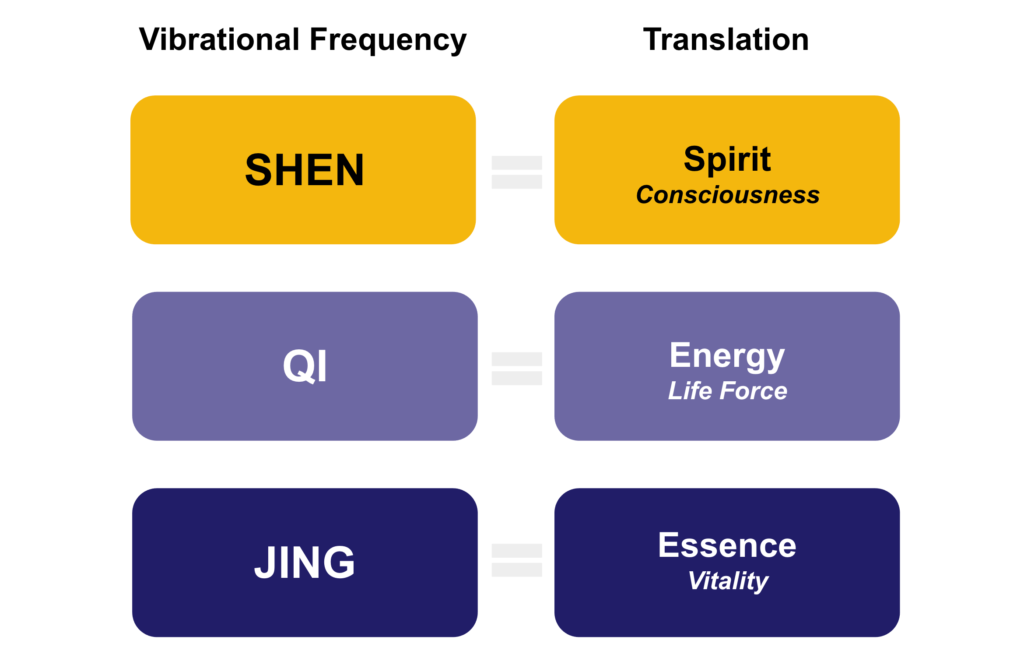 The Taoist Three Treasures (San Bao) and their Meaning
The Three Treasures
Jing is best defined in the context of what the Taoists call the Three Treasures (San Bao). The Three Treasures are:
- Jing (Essence)
- Qi (Energy)
- Shen (Spirit)
The Three Treasures represent three vibrational frequencies that make up the “energy of the Tao.”
These three frequencies are likened to the three states of water: ice, liquid, and gas. Similar to these three states of water, the three treasures ultimately represent one substance, but in different expressions.
Think of Jing as the battery, Qi as the electrical current, and Shen as the light those currents produce. Together, they form the living triad that connects body, mind, and spirit.
1 – Jing: The Physical Blueprint
Stored primarily in the kidneys and reproductive system, Jing represents our inherited vitality. It governs cell regeneration, hormonal balance, and the body’s structural strength.
In its densest state, water is solid ice. This dense condition is similar to Jing essence.
Jing is the lowest vibration of the Three Treasures. Like ice, it’s always on the verge of reverting to water (Qi).
Many people mistakenly think Jing is synonymous with sexual energy or seminal fluid. While Jing does include sexual energy, it’s not technically the same thing. However, this vital essence is concentrated in the sperm and ova.
Jing most closely translates to “Life’s Essence” or “Vitality” in English.
2 – Qi: The Moving Force
When essence is metabolized, it becomes Qi—the dynamic energy that circulates through the body’s meridians.
As the steam cools, it condenses into a liquid state. Water is like Qi energy.
The Jing Essence of the body converts to Qi, which most closely translates to “energy.”
Qi is a higher vibration than Jing, and it transports information throughout the body’s energy system.
The food we eat and the air we breathe also convert to Qi energy.
3 – Shen: The Luminous Mind
When Jing and Qi are healthy, Shen shines clearly as mental focus and serenity.
Water is steam in its most ephemeral state. Steam is akin to Shen.
Shen, the highest or most refined vibration of the three treasures, is the energy of consciousness itself. Many schools of Taoism consider the Shen to be the individual’s spirit.
In Western integrative psychologies, Shen is akin to the higher self or higher consciousness.
Shen manifests as a bright white light, and its frequency is closest to “Heaven.” In its purest expression, Shen is nondual (impersonal).
Ancient Taoists instructed: “Guard Jing to stabilize Qi, refine Qi to brighten Shen.” Energy conservation literally clarifies consciousness.
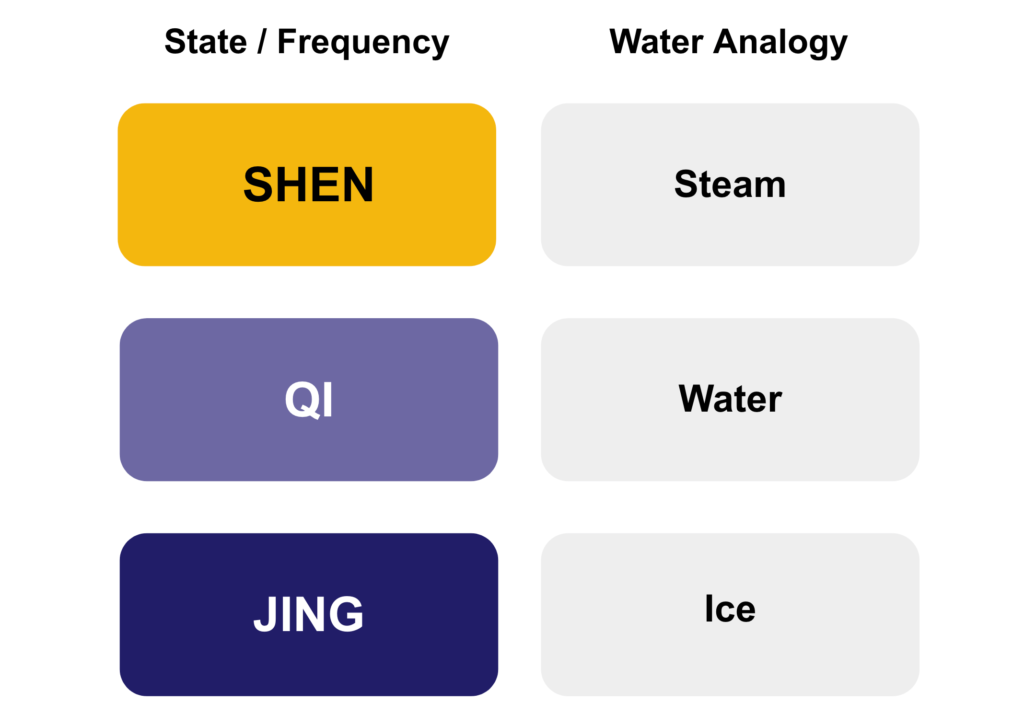
The Three Treasures — Water Analogy
The Relationship Between Jing and Qi
If you’re new to this Three Treasure framework, it’s easy to get confused between Jing and Qi.
To clarify, this automotive analogy is often used:
Jing represents the car’s battery, and Qi is the fuel. When the battery is fully charged and the tank is filled with gas, the car runs.
However, if the battery (Jing) is dead, even with fuel (Qi) in the tank, the car won’t run.
To extend this analogy, consider a hybrid vehicle that utilizes both batteries and gasoline to run.
In this case, as the car runs using gasoline, it can simultaneously charge the batteries, which helps extend the fuel mileage.
So, essence and energy have a symbiotic and integral relationship with each other, as we’ll see below.
 Prenatal vs Postnatal Jing
Two Kinds of Jing: Prenatal and Postnatal
There are said to be two basic types of Essence:
- Prenatal (Congenital) Jing
- Postnatal (Acquired) Jing
Most concepts within the Taoist tradition have two basic components: one we’re born with (congenital) and another we build through the external world (acquired).
Prenatal Jing is finite—our genetic “battery pack.” Postnatal Jing, however, can be strengthened through disciplined living, conscious rest, and energy‑building practices.
Prenatal Jing (Congenital)
Prenatal or Congenital Jing is gifted to us at birth. We inherit this essence from our parents and family lineage.
The health of our family line, astrological circumstances, and previous births are factors that help determine the quality of our vitality.
The prenatal Jing becomes the energetic potency that sustains us throughout our lives. This essence is the building block of our overall constitution. Congenital Jing is said to be stored in the kidneys.
Postnatal Jing (Acquired)
Postnatal or Acquired Jing is developed through proper nutrition, correct breathing, rest/relaxation, internal cultivation, and one’s overall lifestyle.
By maintaining a healthy reserve of Acquired Jing, we ensure that the body doesn’t need to depend too heavily on its congenital essence.
Referring back to the automotive illustration, hybrid vehicles use gasoline (Qi) to charge the batteries (Acquired Jing) to extend the mileage.
| Type | Meaning | Influence |
|---|---|---|
| Prenatal Jing | Inherited vitality from parents and ancestral line | Determines basic constitution |
| Postnatal Jing | Built through lifestyle, rest, food, and breathing | Maintains health and replenishes reserves |
A Third Jing Layer: Kidney Jing
Some sources say there’s a third type of vital essence called Kidney Jing. This would be the Jing used to create Qi in the body.
However, I suspect this “Kidney Jing” is just another way of expressing Wei Qi (guardian qi) or Yuan Jing (congenital essence).
We’ll address this topic further under “Can Jing Be Replenished?” below.
Signs of Jing Depletion
With a full reserve of Jing, the body is strong, vital, vigorous, energized, and youthful.
When this essence is depleted, either through imbalance, excess, or illness, many symptoms manifest.
When Jing begins to wane, the body sends early signals: fatigue, greying hair, low libido, poor memory, cold extremities, or lower‑back pain.
Common symptoms of Jing depletion (weak Kidneys) include:
- Stiffness (bones/joints)
- Pain in lower back & knees
- Impotence
- Greying hair
- Hair loss
- Low libido (sexual vitality)
- Weak immunity
- Forgetfulness (cognitive issues)
- Chronic miscarriages
- Feeling cold (hands/feet)
- Premature aging
- Hearing difficulties (tinnitus)
- Low sperm count
- Hot flushes (in women)
- Increased susceptibility to illness
- Chronic inflammation
- Infertility
- Dizziness
- Poor concentration/memory
- Macular degeneration
Chronic fatigue, knee pain, and lower back pain are common physical symptoms of kidney weakness. Many individuals, especially in midlife, think it’s “normal” to experience these symptoms.
However, they are often just a sign of internal weakness (depletion) or a Yin-Yang imbalance in the kidneys. In most cases, these imbalances and deficiencies can be corrected with Traditional Chinese Medicine.
“Healthy” Jing Depletion
Ultimately, our level of Jing naturally declines as we age. Jing begins to decline rapidly around midlife.
On average, women’s essence starts to rapidly decline around age 42, while men experience a substantial decline around age 48.1Mitchell, D. (2014). White moon on the mountain peak: The alchemical firing process of Nei Dan. Singing Dragon.
Regardless, there are many things we can do to slow this natural decline and maintain healthy Qi reserves in the body.
Common Causes of Jing Leakage
In the context we’re using here, “leakage” means a loss of energy and vitality that should otherwise be stored.
Numerous common causes and factors lead to Jing depletion and leakage, including:
- Sex (especially for men)
- Menstrual cycle for women
- Pregnancy
- Childbirth
- Overworking
- Excessive media consumption
- Serious illnesses
- Excessive rumination
- Poor sleep habits
- Non-native EMF
- Stimulants like coffee
- Chronic stress
- Bad relationships
- Physical trauma (accidents)
In general, stress, overexertion, inflammation, sex (especially for men), and excessive behaviors rapidly deplete Jing.
To extend the vehicle analogy: What happens to your vehicle when you leave the interior lights on while it’s not running?
Eventually, the battery will die and need to be recharged using external methods.
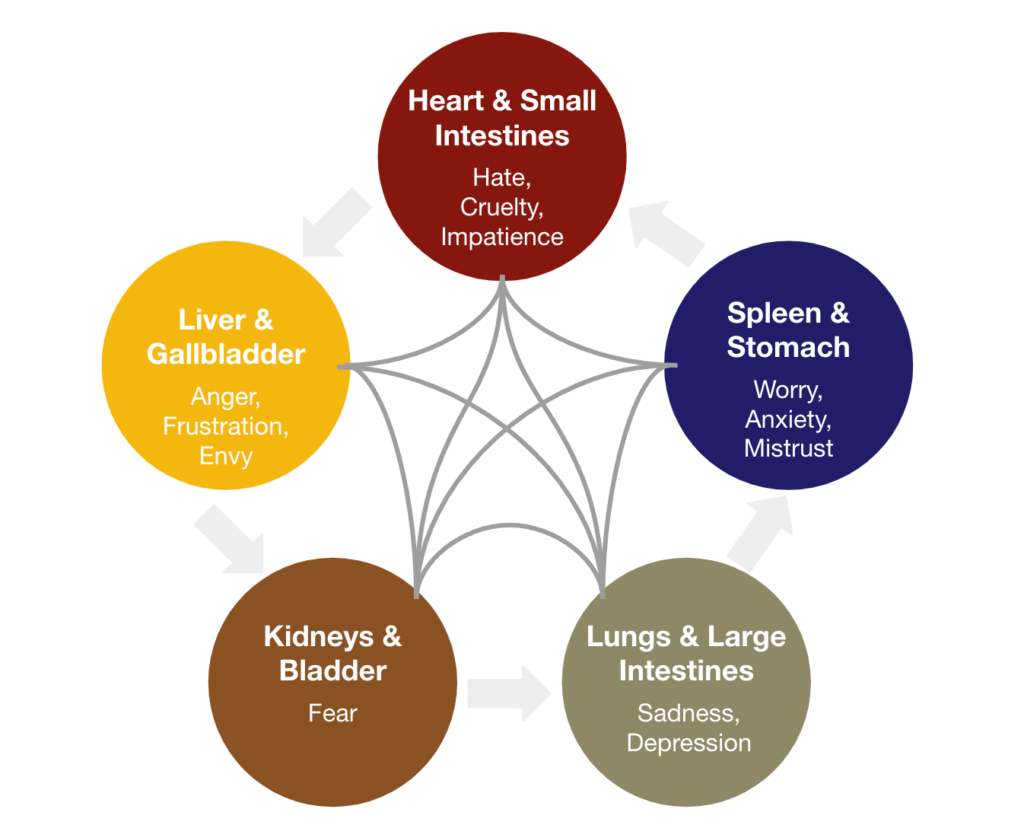
Five Organ Qigong Theory
Negative Emotions Disrupt Jing
In Chinese organ theory, Yin Jing is stored in the kidneys, liver, lungs, heart, and spleen. Each of these organs can leak Jing, and they often do.
The kidneys are considered to be the chief storehouse of essence for the entire body.
In the context of Chinese medicine, related kidney functions and structures include the adrenal glands, reproductive glands, associated hormones, bone marrow, and much more.
Interestingly, in Qigong theory, each organ is also associated with specific emotions.
For example:
| Organ | Related Emotion |
|---|---|
| Kidneys | Fear |
| Liver | Anger |
| Lungs | Grief |
| Heart | Hatred |
| Spleen | Worry |
So consider what we’re doing to our life essence if we’re constantly:
- Living in anxiety and fear (kidneys)
- Repressing our anger and rage (liver)
- Not processing our grief (lungs)
- Holding onto hate and resentment (heart)
- Worried about the future (spleen)
Persistent negative emotions deplete Jing.
Conversely, a healthy reserve of life essence helps restore and strengthen these vital organs.
Learning how to work with repressed emotions and develop greater emotional awareness is highly practical in the context of Jing maintenance.
Sex Rapidly Depletes Life Essence
According to the Taoist tradition, sex is the number one way men (in particular) rapidly deplete their Jing. Sexual activity taxes the kidneys, and as we saw above, the kidneys are the primary storehouse of Jing.
Many new-age and quasi-cultish Qigong books suggest that men only lose Jing via ejaculation. While men certainly do lose Jing via ejaculation, sexual activity of any kind also depletes one’s essence.
Sexual activity becomes a bigger issue at midlife, when one’s essence naturally starts to deplete rapidly.
As such, moderation is recommended. For more on this topic, see A Beginner’s Guide to Sexual Energy Transmutation. Men who experience Jing depletion will benefit significantly from a period of abstinence.
For women, the primary way women deplete their essence is through their menstrual cycle (as well as pregnancy and childbirth). In fact, female Taoists developed energetic methods to reduce and stop menstruation at a young age to avoid this Jing depletion.
Coffee Indirectly Depletes Jing
Coffee doesn’t deplete essence directly. Instead, coffee can, in some individuals, overstimulate kidney energy, leading to the depletion of one’s life essence over time. According to an acupuncturist I knew years ago, “Coffee squeezes the adrenal glands.”
Concerns about coffee, however, are primarily for individuals already experiencing signs of depletion (as highlighted above). Signs such as knee weakness, lower back pain, cold hands, or premature aging are common symptoms of kidney deficiency.
This article offers additional suggestions from a TCM perspective to help you mitigate the adverse effects of coffee consumption. To be “fair and balanced,” this article highlights the potential energetic benefits of coffee from a TCM perspective.
But, given the noticeable effects coffee/caffeine has on the body and brain, I find it difficult to argue in favor of this beverage—from a strict “vitality” perspective.)
Environmental Factors That Disrupt Qi
Common environmental factors include:
Non-Native EMF
While you won’t find this comment in any ancient Taoist or TCM text, man-made EMF can weaken our Qi and lead to essence depletion. Radiation from our devices, Wi-Fi, and the alternating current (AC) in our homes and power lines disrupt our Qi flow and weaken our Guardian Qi.
As a consequence, excessive exposure to harmful EMF can deplete our essence over time. For this reason, it’s beneficial to ground yourself outside (also called “earthing) as often as you can.
Non-native EMF creates inflammation in the body. Inflammation depletes our Jing. Grounding has been proven to reduce inflammation.
Artificial Blue Light
The same caution applies to artificial blue light from our devices, which can cause mitochondrial dysfunction in our cells. Learning how to block blue light is essential for those interested in preserving their vitality.
Impure Water
Modern research confirms that pollutants in water—including antibiotics and endocrine‑disrupting compounds—can interfere with human hormones and nervous‑system balance, diminishing overall vitality.2Eapen, J. V. et al. (2024). A review of the effects of pharmaceutical pollutants on humans and aquatic ecosystem. Exploration of Drug Science, 2, 484–507. https://doi.org/10.37349/eds.2024.00058
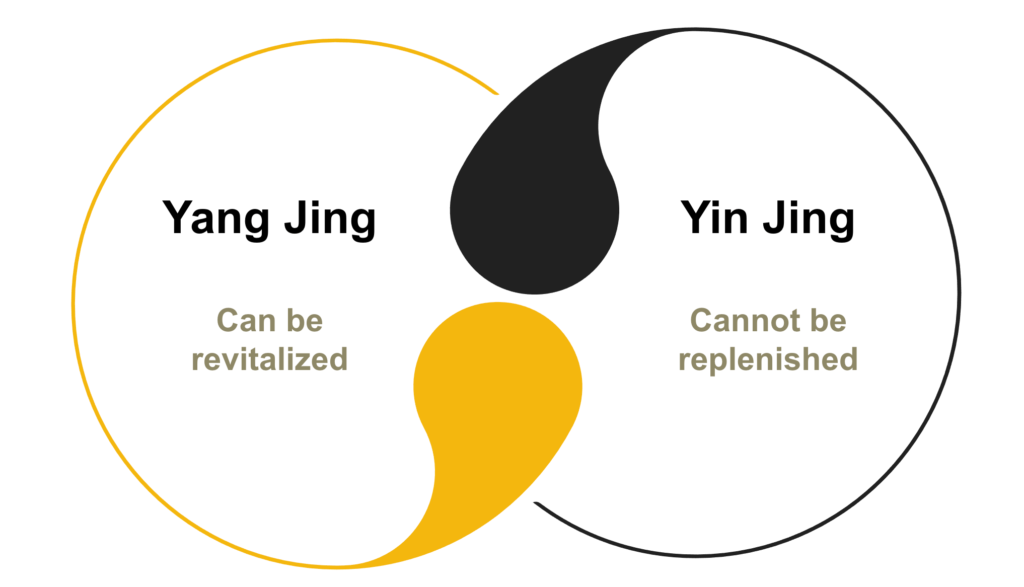
Can Jing Be Restored?
So here’s the BIG question: Can you get back lost Jing?
The short answer is: I don’t know. I’m not an expert Chinese medical doctor nor a master energy cultivator.
And even if you meet one of the two, the answer you get will largely depend on who you ask.
Let’s briefly highlight the complexity of this question.
Congenital Jing vs Acquired Jing
Most experts seem to agree that Congenital Jing can not be replenished. This makes sense: what you have at birth is what you get for your lifetime.
But what about your postnatal or Acquired Jing? Can this be replenished?
Some Chinese medical practitioners say that Acquired Jing can be restored by taking specific herbs. Some adept internal energy practitioners say that this Jing can be replenished through specific advanced cultivation practices.
The answer to this question may also come down to nuance and semantics.
Yin Jing vs Yang Jing
For example, in the Taoist and TCM lexicon, they differentiate between Yin Jing and Yang Jing.
It’s said that Yin Jing (stored in the organs) cannot be replenished, while Yang Jing can be revitalized.3https://acupuncturetoday.com/article/32900-replenishing-and-restoring-jing
Jing vs Yuan Qi
To complicate matters further, Chinese medicine divides the Three Treasures—Jing, Qi, and Shen—into Yuan Jing, Yuan Qi, and Yuan Shen. Yuang Jing translates to “original essence.”
In most cases, when people discuss Jing and “restoring” methods, they are referring to ways of strengthening Yuan Qi. (Again, there are a lot of nuances and subtleties here.)
Yuan Qi represents the energy and vitality stored in the kidneys.
Why It Doesn’t Matter What We Call It …
Ultimately, whether or not you can replenish lost Jing likely won’t matter to most individuals.
Why? Because either way, you CAN:
- Stop leaking Jing,
- Strengthen the functioning of organs that store our essence, and
- Restore a noticeable level of one’s vitality and Yuan Qi.
Consequently, cultivating longevity is a viable goal in most cases.
How to Stop Leaking Jing
First, if you’re dealing with the low Jing symptoms highlighted above, you might consider finding a qualified Chinese herbalist, acupuncturist, or medical practitioner.
I went through a period of depleted Jing (Yin deficiency/kidney weakness) in my late 30s. I experienced persistently cold feet (even in the hot summer) and weakness in the knees.
Working with a trained practitioner, I took specific Chinese herbal formulas and went to weekly acupuncture for months. It took a while to reverse and repair the issue.
To Stop the Leakage, First …
In general, if you’re experiencing severe depletion symptoms, consider experimenting with the following:
- Stop having sex for a while (complete, but temporary abstinence).
- Do whatever you can to reduce any signs of chronic inflammation (covered below).
- Avoid drugs and alcohol (including stimulants like coffee).
- Reduce your usage of technology (especially in the evening before bed).
- Avoid taking over-the-counter drugs that can damage the kidneys and liver (see below).
- Rest, nap, and sleep to restore your natural energy level.
Remember, stress, chronic inflammation, negative emotions, poor eating habits, and an overall unbalanced or destructive lifestyle can all drain our essence.
Also, be aware that many over-the-counter drugs like ibuprofen can weaken and damage the kidneys and liver.4https://www.drugs.com/medical-answers/ibuprofen-bad-kidneys-liver-3574924/

Medicinal Herbs to Help Preserve Jing
For thousands of years, medicinal herbs, roots, and mushrooms have been used to preserve vitality in Chinese medicine.
Two classes of herbal remedies can help preserve Jing:
- Adaptogenic herbs
- Jing tonics
Let’s run through some powerful examples from each category.
Adaptogenic herbs
Adaptogens can help reduce stress and inflammation while slowing down Jing depletion.
Adaptogenic herbs used in Chinese medicine include:
- Schizandra berry
- Ginseng root
- Reishi mushrooms
- Licorice root
- Cordyceps
- Rhodiola
- Turmeric
- He Shou We (Fo-ti)
- Ginko Biloba
- Gynostemma leaf
- Goji berries
- Eleuthero root
Adaptogens can help enhance the body’s response to stress and to preserve one’s essence.
A comprehensive list of adaptogens can be found here.
Jing Boosting Herbs
A related class of herbs, known as “Jing tonics” (or tonifiers), can potentially help you restore Jing. These tonics include:
- He Shou Wu (Polygonum multiflorum root)
- Shu Di Huang (Rehmannia root)
- Hei Zhi Ma (Black sesame seeds)
- Sha Yuan Ji Li (Astragalus seeds)
There are many others available to explore and experiment with. (Consult a Chinese medical practitioner for specific recommendations.)
Five Keys to Preserving Jing
Many of the practices to stop leaking Jing also help preserve, nourish, and replenish one’s life essence, too.
The five ways we will discuss below are:
- Rest, recover, and recharge
- Eliminate chronic inflammation
- Cultivate willpower and good habits
- Engage in inner work
- Use energy cultivation practices
Not surprisingly, most of these methods and practices also help you protect and nurture all three treasures.
From Taoist master Ancestor Lu:5Cleary, T. (Ed. & Trans.). (2009). Vital energy, spirit: A Taoist sourcebook. Shambhala Publications
The Three Treasures are taken care of by taking care to not agitate the Jing, not letting it leak, so that it abides peacefully in its original home, true to reality as it is, circulating three hundred and sixty-one times in a day and night, returning to its original home, true to its own nature, immutable, forming the stabilizing ingredient in the elixir of immortality.
Now, let’s see what we can do to avoid agitating the Jing and to maintain healthy reserves of Qi.
1 – Rest, Recover, Recharge
Chronic anxiety and overexertion lead to Jing depletion. So if you want to stop leaking essence, it’s critical to learn how to rest and recover.
Proper recovery means settling and stabilizing the body’s energy to achieve a state of renewal. Napping, wandering, resting, mindful walking, and calm sitting are all ways to foster renewal.
Concepts like “burning the candle on both ends” and “giving 110%” are code phrases for rapid Jing depletion. The key is to learn to operate from the Middle Way, or what the Taoists call Wu Wei, to maintain healthy energy reserves.
- Pay attention to your level of energy throughout the day.
- Learn to notice when you feel overexerted or overextended.
- Take breaks and relax as needed to stay recharged.
Also, setting the conditions for restorative sleep is a must if you want to preserve your essence.
As longevity science advances, researchers are rediscovering what Taoists articulated millennia ago: our lifespan depends as much on environmental resonance as on genetics.6Mesnage, R. (2025). Environmental health is overlooked in longevity research. Antioxidants (Basel), 14(4), 421. https://doi.org/10.3390/antiox14040421
2 – Reduce Inflammation and Overstimulation
Chronic inflammation is a prevalent issue in the modern world. Inflammation is the precursor to most major diseases, and it’s a substantial way that many individuals deplete Jing.
Addressing chronic inflammation is a must if you want to stop leaking vitality. There are many solutions for inflammation, including:
- Practice ground/earthing
- Rest and recovery to trigger the relaxation response
- Eat anti-inflammatory foods like dark, leafy greens and berries
- Consume herbs and spices like turmeric, cumin, cinnamon, basil, and parsley
- Take various adaptogenic herbs and mushrooms (highlighted above)
- Avoid processed foods, refined sugars, and seed oils
- Exercise and stretch regularly
- Practice Zhan Zhuang (standing meditation)
- Block blue light and restore your circadian rhythm
All of the above can help you significantly reduce and eventually eliminate chronic inflammation. These practices also help promote internal nourishment and vitality.
Strengthen Will and Habits (Zhi)
Your quality of Jing is dependent on your Zhi, or willpower. Your willpower is used to establish and maintain life-supporting habits that promote vitality and energy.
Evaluate whether you …
- Eat in excess or moderation.
- Eat mindlessly (by force of habit) or consciously.
- Consistently give in to various drug, alcohol, and sugar addictions, or regulate them.
- Live a mostly stagnant and stationary life, or balance stagnation with movement, stretching, and exercise.
- Excessively focus on work and/or entertainment, or balance them with rest and meditation.
- Repress or suppress emotions, or pay attention to your feelings, acknowledging and processing them.
- Have excessive sex and mental stimulation, or are mindful of potential energy loss, and apply moderation.
- Ruminate on past decisions, or learn from mistakes, and let them go.
Practical, common-sense type stuff, right?
Jing-Replenishing Habits
Positive, essence-replenishing habits include:
- Nourishing life essence with specific eating habits (discussed below)
- Maintaining healthy relationships
- Breathing properly (somatic breathing)
- Avoiding excess use of drugs like alcohol, weed, sex, television, the Internet, etc.
- Maintaining correct posture
- Performing daily stretches and movements (Qigong, Yoga, etc.)
- Aligning with your values to experience inner fulfillment (intrinsic rewards)
Generally, most people intuitively know how they are depleting their reserves. Avoiding extremes is essential for Jing restoration.
How to Eat to Restore and Nourish Jing
Limiting the consumption of processed foods, refined sugars, seed oils, and alcohol will help your body function properly and reduce inflammation.
To restore one’s essence, consider eating only whole foods (organic and local, if possible) and a lot of organic leafy greens to build and maintain healthy blood.
While there may be specific foods and herbs to help restore and nourish Jing, what’s arguably more important is how we eat.
Eating for Energy vs Pleasure
The key principle for Jing and Qi-related eating is to shift the focus from eating for pleasure to eating for energy.
When we eat for pleasure (the most common way), we ultimately turn food and drink into a drug, and then become addicted to that drug. When we eat for pleasure, eating becomes a form of entertainment that isn’t generally nourishing or energy-building.
Alternatively, when our focus is on energy cultivation, we pay more attention to how the body feels during and after eating. Eating itself becomes a kind of mindfulness exercise.
Eating for Energy Cultivation
For example, energy cultivators and Taoist adepts often:
- Eat in silence (no company, no noise; no TV, computer, phone, or music)
- Eat fruits separately on an empty stomach as they digest the fastest.
- Focus on the experiential conversion of food into energy as they eat.
- Eat one whole food at a time.
One of the best ways to build Qi from the food we eat is to consume only one whole food at a time. Advanced Neigong practitioners will often have a meal with three separate small bowls; for example, a bowl of peas, rice, and prepared meat. (Some adepts avoid meat while others do not.)
The practitioners will eat and finish one bowl at a time to maximize the Qi conversion from the whole food.
If you’re sensitive to your body’s energy and you eat following the above guidelines, you will likely notice the difference.
4 – Emotional Integration (Inner Work)
As we saw above, our emotions play an integral role in the health of our organs and, therefore, our Jing.
Additional healthy habits for conserving our essence and stabilizing our energy involve regular inner work, paying attention to our thoughts, feelings, attitudes, and behaviors.
For example:
All of the above can help you cultivate a greater sense of lightness and neutrality. These often elusive qualities help us maintain healthy levels of life essence into old age.
Additionally, by bringing to consciousness our childhood traumas and working through them as best we can, we can reconnect with that sense of joy and wonder (not pleasure or excitement) we may have experienced in our youth.
5 – Internal Cultivation Practices
Internal cultivation, or inner alchemy, generally refers to an advanced set of systems and practices designed to help circulate, consolidate, stabilize, and transform the energies within the body (the Three Treasures).
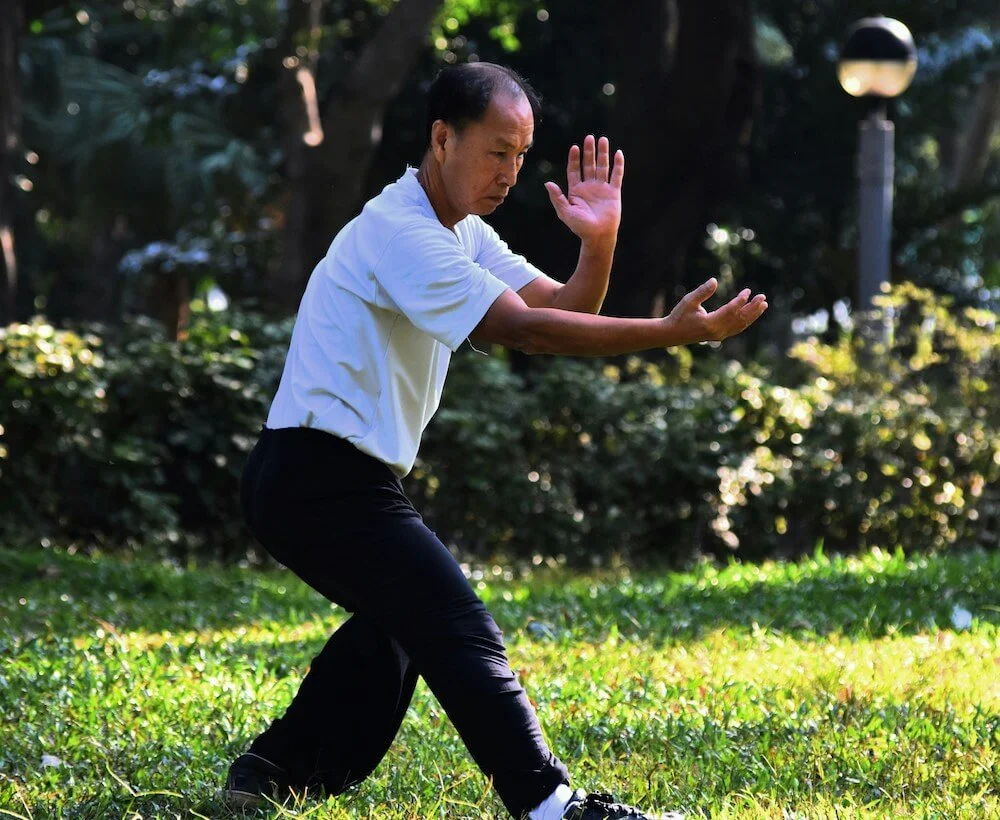
In the Yogic arts, Kundalini Yoga is best known as this type of system. In the Chinese system, there are Qigong, Neigong, and Neidan (each representing increasingly higher levels of skill and attainment). Practicing internal martial arts, such as Tai Chi and Bagua, can also be highly beneficial.
Advanced Jing cultivation methods, like bone marrow washing, are obviously beyond the scope of this guide.
For readers interested in exploring these topics further, see Damo Mitchell’s books, including Daoist Nei Gong, White Moon on the Mountain Peak: The Alchemical Firing Process of Nei Dan, and A Comprehensive Guide to Daoist Nei Gong.
Jing Nourishing and Qi Cultivation Exercises
But technically, even practices like breathwork and meditation fall under the category of internal cultivation.
To nourish Jing:
- Follow the four principles of proper breathing.
- Develop the “observing mind” in meditation.
- Practice Zhan Zhuang daily (standing practice).
- Practice the Six Healing Sounds (you can find illustrations online).
- Cultivate cardinal virtues (considered essential for qi cultivation by various Qigong masters).
In particular, developing the Observing Mind and practicing proper breathing are essential.
Proper breathing:
- Triggers the release of nitric oxide (relaxation response),
- Reduces stress and inflammation, and
- Helps the body efficiently regulate all its complex systems.
The Observing Mind helps us detach from our thoughts and feelings while still being aware of them.
Once anchored within our consciousness, the Observing Mind enables us to:
- Reduce emotional reactivity (triggers),
- Build greater self-awareness, and
- Quiet the mind.
Jing, Longevity, and Taoist Logic
Remember, preserving Jing is an entirely practical matter.
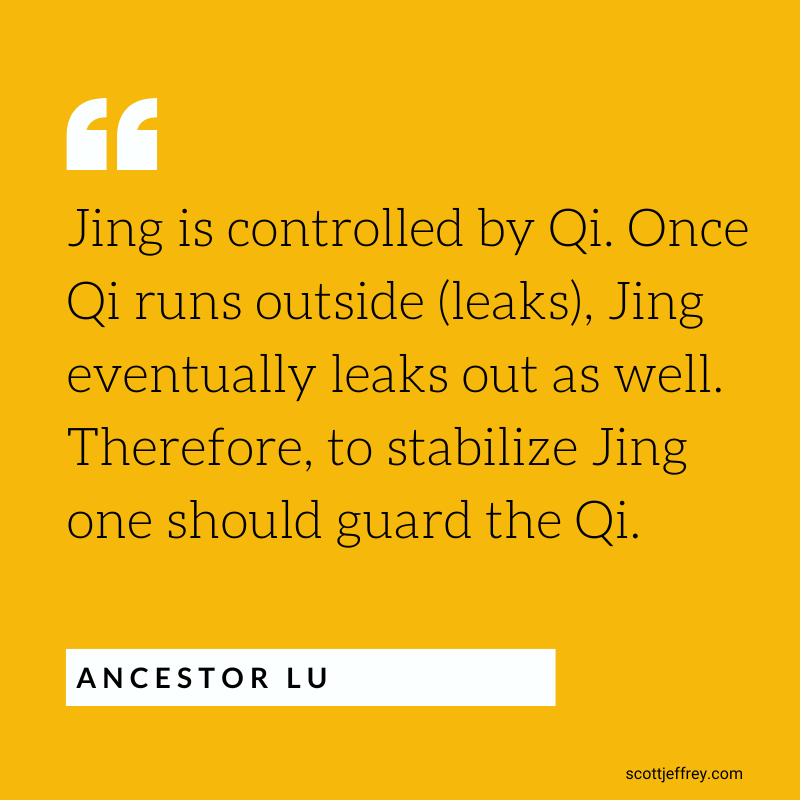
The great Taoist sage Ancestor Lu said
Jing is controlled by Qi. Once Qi runs outside (leaks), Jing eventually leaks out as well. Therefore, to stabilize Jing one should guard the Qi.”
The science may modernize the language, but the principle endures: energy leaks, life declines; energy conserved, life extends.
By guarding your Qi, you are necessarily protecting the Jing. (We covered many ways to guard and cultivate the Qi above.)
So, the key elements of practicing Taoist life cultivation for longevity are to:
- Stop leaking the Jing and Qi.
- Protect and guard against future leakage.
- Restore the Jing to fullness.
- Cultivate the Qi to establish radiant vitality, health, and longevity.
Remember the vital role negative emotions play in Jing depletion. Learning how to manage and regulate our emotions is absolutely critical for the successful protection of our life essence.
Cultivating positive, life-supportive habits and reducing stress will also support one’s efforts to achieve longevity.
Good luck!
Read Next
What Is Chi Energy? A Modern Taoist Guide to the Life Force Within
Sexual Energy Transmutation: Transforming Life‑Force Into Creative Power
The Ultimate List of Time-Tested Spiritual Practices (200+)
The Ultimate Guide to Self-Healing
References
- Cleary, T. (Ed. & Trans.). (2009). Vital energy, spirit: A Taoist sourcebook. Shambhala Publications.
- Drugs.com. (2025, August 12). Is ibuprofen bad for your kidneys and liver? https://www.drugs.com/medical-answers/ibuprofen-bad-kidneys-liver-3574924/.
- Mitchell, D. (2014). White moon on the mountain peak: The alchemical firing process of Nei Dan. Singing Dragon.
- Eapen, J. V., Thomas, S., Antony, S., George, P., & Antony, J. (2024). A review of the effects of pharmaceutical pollutants on humans and aquatic ecosystem. Exploration of Drug Science, 2, 484–507. https://doi.org/10.37349/eds.2024.00058
- Mesnage, R. (2025). Environmental health is overlooked in longevity research. Antioxidants (Basel), 14(4), 421. https://doi.org/10.3390/antiox14040421