
OVERVIEW: This in-depth guide explores numerous female archetypes illustrated in ancient literature, mythology, fairy tales, and Jungian psychology.
______________
What are the archetypes within the feminine psyche?
Are there definitive female archetypes?
Do female archetypes represent specific personality profiles of women?
In this guide, we’ll answer the above questions and more.
Also, after highlighting female archetypes from numerous sources, we’ll review a comprehensive list of over 50 feminine archetypes.
Let’s dive in …
What is an Archetype?
In psychology, an archetype is a universal image.
Plato called these universal images Forms. Psychiatrist Carl Jung originally called them primordial images before adopting the term archetypes.
Archetypal images exist across cultures, time, and geography.
In a practical sense, archetypes represent set patterns of behaviors, attitudes, and actions.
What are Female Archetypes?
In the context of archetypes, we must be careful regarding gender labels. Why?
The psyche is contrasexual. This means an “inner man” exists within a woman’s psyche. Jung called this inner man the Animus. (And vice versa for men.)

Illustration of Contrasexual Archetypes from Robert Moore (Covered Below)
As such, every archetype—female or male—potentially exists within each of us.
However, certain archetypes are associated with gender.
For example, definitively female archetypes include the Mother, the Queen, and the Maiden.
Plus, there are also feminine counterparts to every masculine archetype. For example:
| Female Archetypes | Masculine Archetypes |
| Heroine | Hero |
| Matriarch | Patriarch |
| Huntress | Warrior |
| Wise Old Woman | Wise Old Man |
| Medicine Woman | Medicine Man |
| Seductress | Seducer |
| Priestess | Priest |
But ultimately, most archetypes can be either feminine or masculine.
For example, archetypes such as the Magician, the Tyrant, the Trickster, and the Lover can be associated with both feminine and masculine energy.
Archetypes versus Personality Profiles
One common point of confusion needs clarification.
When many first learn about archetypes, they ask, “What is my archetype?”
The assumption behind this question is that archetypes represent personality structures.
While this is partly true, it’s still incorrect (and reductionistic) to assume that your personality constellates around one or even a few specific female archetypes. Why?
Just as Greek mythology is filled with a pantheon of gods and goddesses, the individual psyche is home to many archetypal images.
While individuals can become “possessed by an archetype” where they identify with the image, that particular archetype still doesn’t reflect their total personality.
Check out personality systems like the Enneagram or Myers-Briggs (I suggest the former) if you want to learn about your personality type.
Jung’s Three Archetypes of Development
Before we dive into distinctly female archetypes, let’s briefly review Jung’s “archetypes of development.”
Jung outlines three distinct stages of the individuation process that feature three powerful archetypes:
- The Shadow
- The Anima/Animus
- The Self
Let’s quickly look at each one:
The Shadow
The shadow represents everything we are unconscious of—everything we cut off from ourselves during our formative years. The first stage of individuation is bringing whatever we’re cut off from back into consciousness.
We’ll discuss some common shadow elements of female archetypes below.
The Anima/Animus
As stated above, the Anima is the feminine aspect of a man’s psyche, while the Animus is the masculine aspect of a woman’s psyche.
Animus is Latin for mind or spirit.
The animus archetype acts as a gatekeeper to the spiritual life of a woman. Jungian Barbara Hannah calls the Animus the “spirit of inner truth in women.”1Barbara Hannah, The Animus, 2011.
Integrating the Animus is the second stage of the individuation process.
The Self
The final archetype of development in Jungian psychology is the Self.
The Self, or higher Self, represents the organizing principle within the psyche. The Self is neither masculine nor feminine.
Integrating the Self is the final stage of individuation, representing completeness or psychic wholeness.
Four Classic Jungian Female Archetypes
Okay, now let’s look at some classic female archetypes from depth psychology.
These female archetypes represent many of the predominant behavioral roles associated with women. In this section, we’ll cover:
- The Mother
- The Maiden
- Sophia
- The Hetaira
Let’s start with the most foundational female archetype: the Mother.
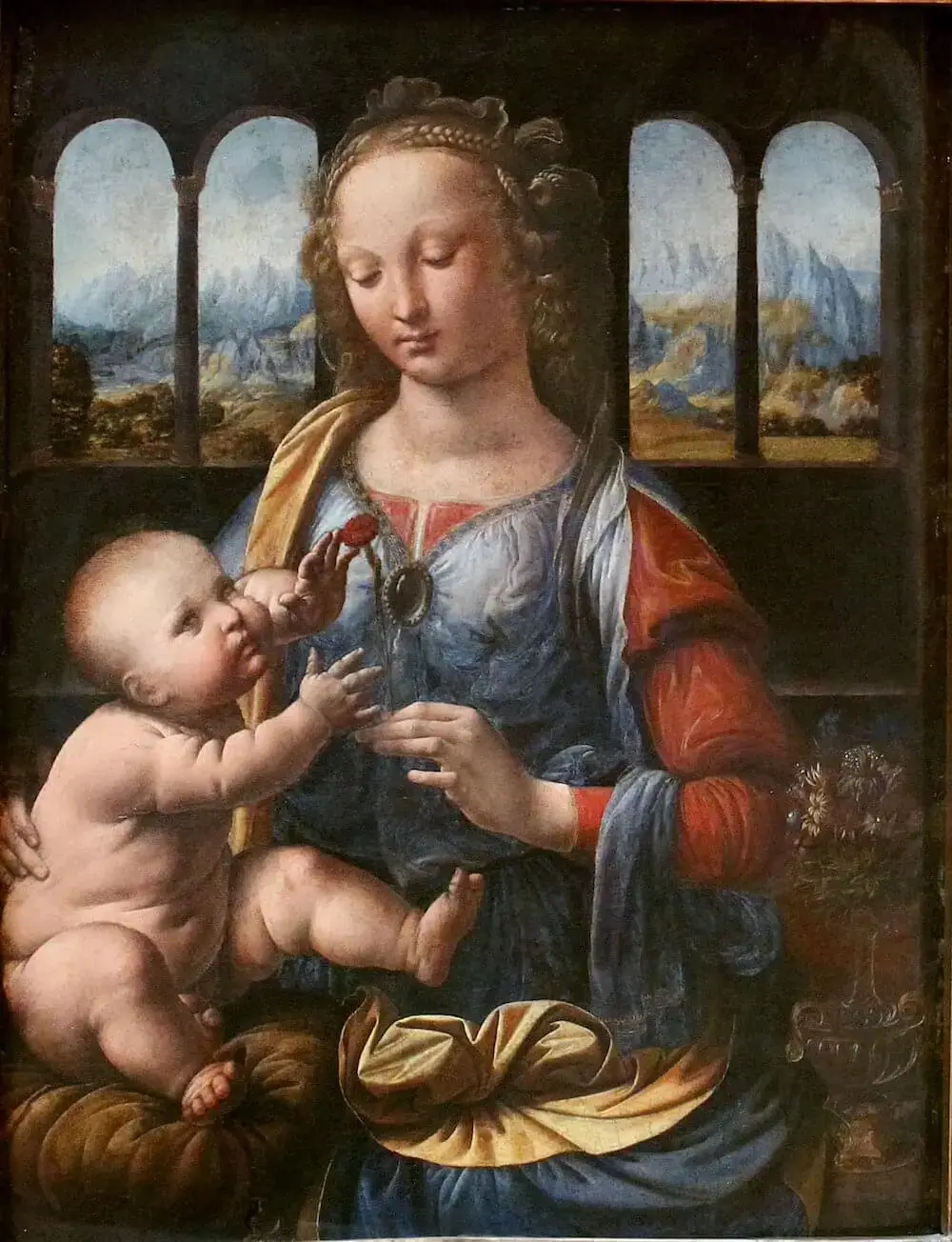
Madonna of the Carnation, Leonardo da Vinci (1478)
The Mother | Feminine Archetype
This all-powerful archetype is the giver of life.
From a classic Jungian sense, most female archetypes are derivatives of the mother archetype.
Jung writes,2Jung, Four Archetypes: Mother, Rebirth, Spirit, Trickster
First in importance are the personal mother and grandmother, stepmother and mother-in-law; then any woman with whom a relationship exists—for example, a nurse or governess or perhaps a remote ancestress. Then there are what might be termed mothers in a figurative sense.
Jung also includes the goddess, the Mother of God, the Virgin, and Sophia (Goddess of Wisdom) as aspects of the Mother archetype.
According to Jung, mother symbols include redemption and things that arouse feelings of awe or devotion. Fertility, fruitfulness, and a garden are also common mother symbols.
Jung writes in Archetypes and the Collective Unconscious:3“Psychological Aspects of the Mother Archetype” in CW 9, Part I, p. 172.
This is the mother-love which is one of the most moving and unforgettable memories of our lives, the mysterious root of all growth and change; the love that means homecoming, shelter, and the long silence from which everything begins and in which everything ends.
Anything that symbolizes protection like a magic circle or a mandala is also an expression of the mother archetype—as are vessels and ovens (symbolic of the uterus).
Shadow or “evil” expressions of the mother include the witch, the dragon, the grave, and death itself.
Anything that devours or entwines like a large fish or serpent is also mother-related. (We’ll address the Devouring Mother archetype below.)
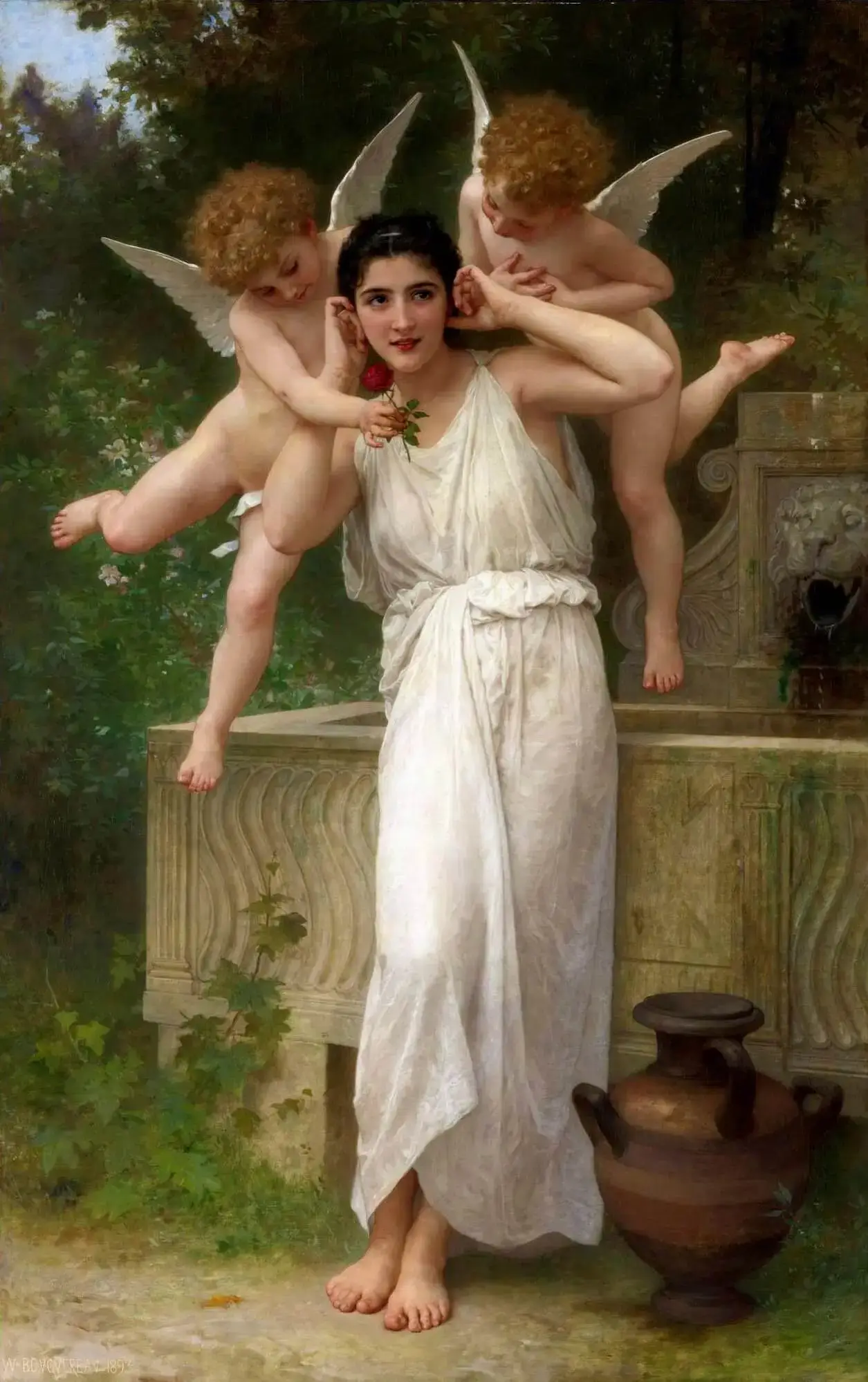
Youth, William-Adolphe Bouguereau (1893)
The Maiden | Feminine Archetype
The maiden is the quintessential young woman. Feminine. Delicate (“fair lady”). Simple. Innocent. She is unwed and, classically, a virgin.
The fair maiden is Blanche Fleur—a classic character in mythology and ancient literature who represents purity and idealized beauty. She gives meaning and texture to one’s life.
Illustrations of the fair maiden in literature include:
- Dulcinea in Don Quixote
- Beatrice in Dante’s Commedia Divina
- Blanchefleur in Perceval, the Story of the Grail
The maiden is also the interior companion of man’s life—Jung’s Anima.
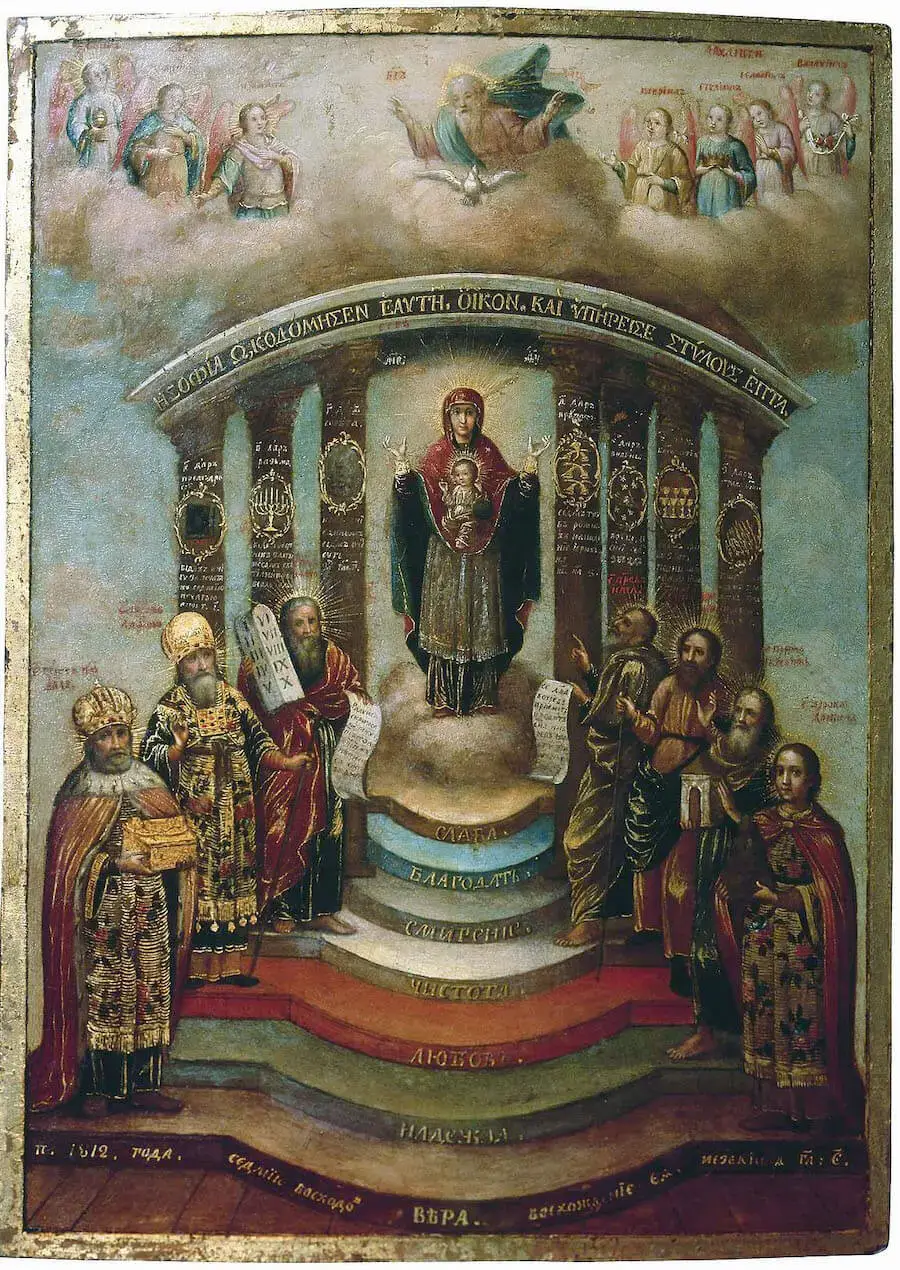
Sophia, The Holy Wisdom (1812)
Sophia | Feminine Archetype
Sophia is the Goddess of Wisdom from the Gnostic and other traditions. Sophia expresses the “eternal feminine,” sometimes called the “divine feminine.”
Jungian Robert A. Johnson writes,4Johnson, Lying with the Heavenly Woman, 53.
She is vast, impersonal, always with an aura of ancientness about her. She is the carrier of the luminae natura, that specific wisdom found only in earth or lunar representation.
The sun gives the solar masculine wisdom and light, but it is the moon or the lamp fed by the oil of the earth that gives the soft, human, warming light of Sophia.
Sophia is the summation of feminine virtue. She is the great reconciler.
In Goethe’s Faust, she was Sapientia Dei. She bears the “image of God.”
Sophia represents a timeless wisdom that is soft (not harsh) and provides a guiding light to one’s consciousness.
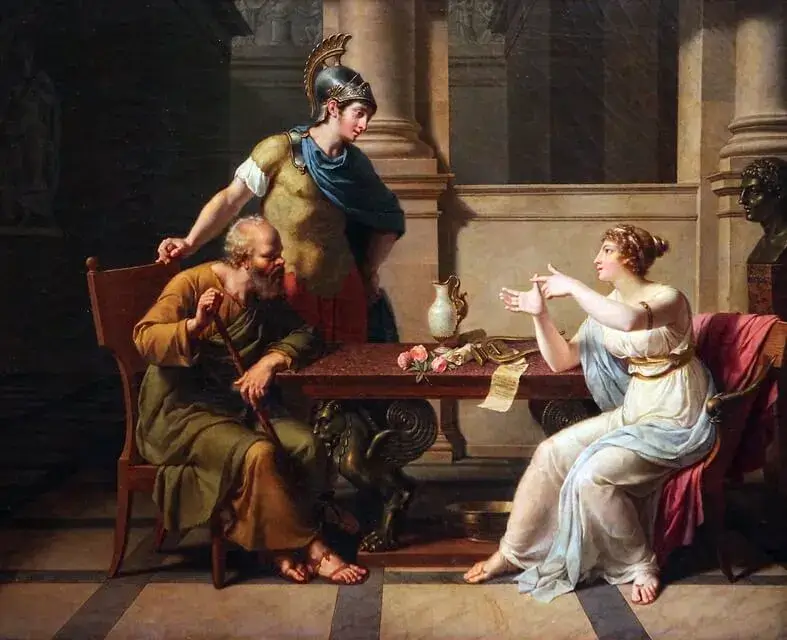
The Debate Of Socrates And Aspasia, Nicolas-André Monsiau (1801)
The Hetaira | Feminine Archetype
The Hetaira was a kind of woman in ancient Greece. Hetaira (ἑταίρα – “aitéra”) in ancient Greek meant “girlfriend” or “companion”.
She would be invited (or hired) to a social gathering to provide beauty and grace.
The Hetaira were immaculately dressed, well-educated, conversant on current events, courteous, and charming to dialogue with.
The Hetaira was a companion, an intellectual partner, and a source of inspiration. She was never a prostitute (another feminine archetype) and was always treated with dignity.
The Hetaira archetype is an aspect of all women, although it’s a dominant part of some women’s personalities.
However, our modern culture lacks the necessary language to articulate this important female archetype. And this lack of understanding comes at a cost. Johnson explains:5Johnson, Lying with the Heavenly Woman, 56.
Many women with a finely developed hetaira quality lead miserable lives—both in their own self-deprecation and in the eyes of other people. We have no forms for the expression of the hetaira quality it either lives guiltily in disguised form or dies under the heavy hand of repression.
Johnson points out that the geisha in Japan used to be an expression of the hetaira, but they have lost their dignity and descended into expensive prostitutes.
See also: A Beginner’s Guide to Classic Jungian Archetypes for more in-depth discussion.
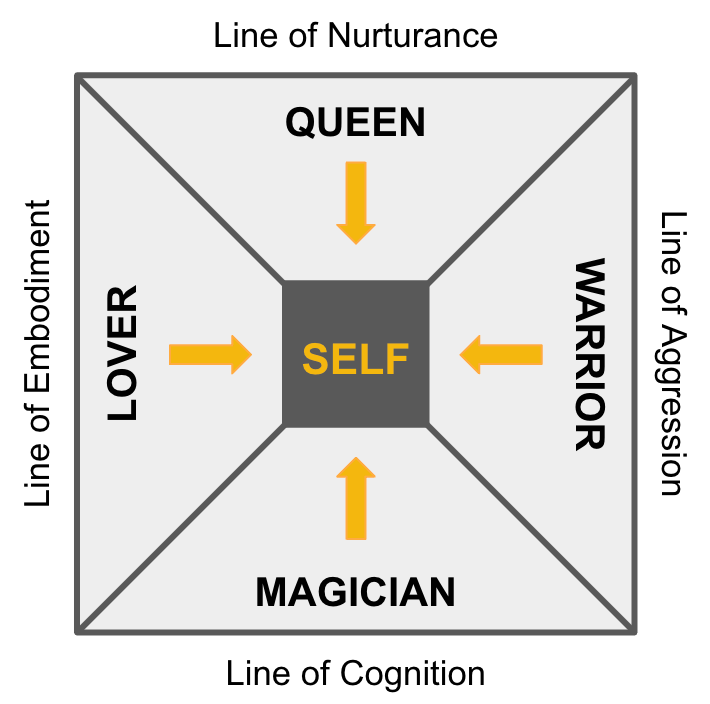
Moore’s Model of the Feminine Psyche
Four Neo-Jungian Feminine Archetypes
Neo-Jungian Robert Moore’s comprehensive model of the psyche was focused on masculine archetypes; however, he did adapt it to the feminine psyche as well.
These four archetypal energies exist in both men and women.6https://robertmoore-phd.com/index.cfm?fuseaction=page.display&page_id=34
In Moore’s model for the feminine psyche, we have four archetypes:7Robert Moore and Douglas Gillette, King Warrior Magician Lover, 1992.
- The Queen
- The Warrior/Huntress
- The Magician
- The Lover
In summary, these four archetypal energies are:
The Queen
The Queen is the generative and ordering principle within the feminine psyche, responsible for nurturance and maintaining balance.
The Warrior (Huntress)
The Huntress is the active archetypal principle that enables a woman to constellate her energy, establish clear direction, and take action.
The Magician (Sage)
The Magician is the archetype of cognition that enables her to cultivate knowledge, critical thinking, and the perception of truth.
The Lover
The Lover is the archetype of embodiment that activates the energy of intimacy, joy, play, sensuality, instincts, and affiliation.
Both genders must discover how to access these energies in healthy ways and bring them into balance.
In Moore’s model, balancing these four energies enables one to access what he calls the Cohesive Self.
For more on this topic, see: King Warrior Magician Lover: The Four Masculine Archetypes.
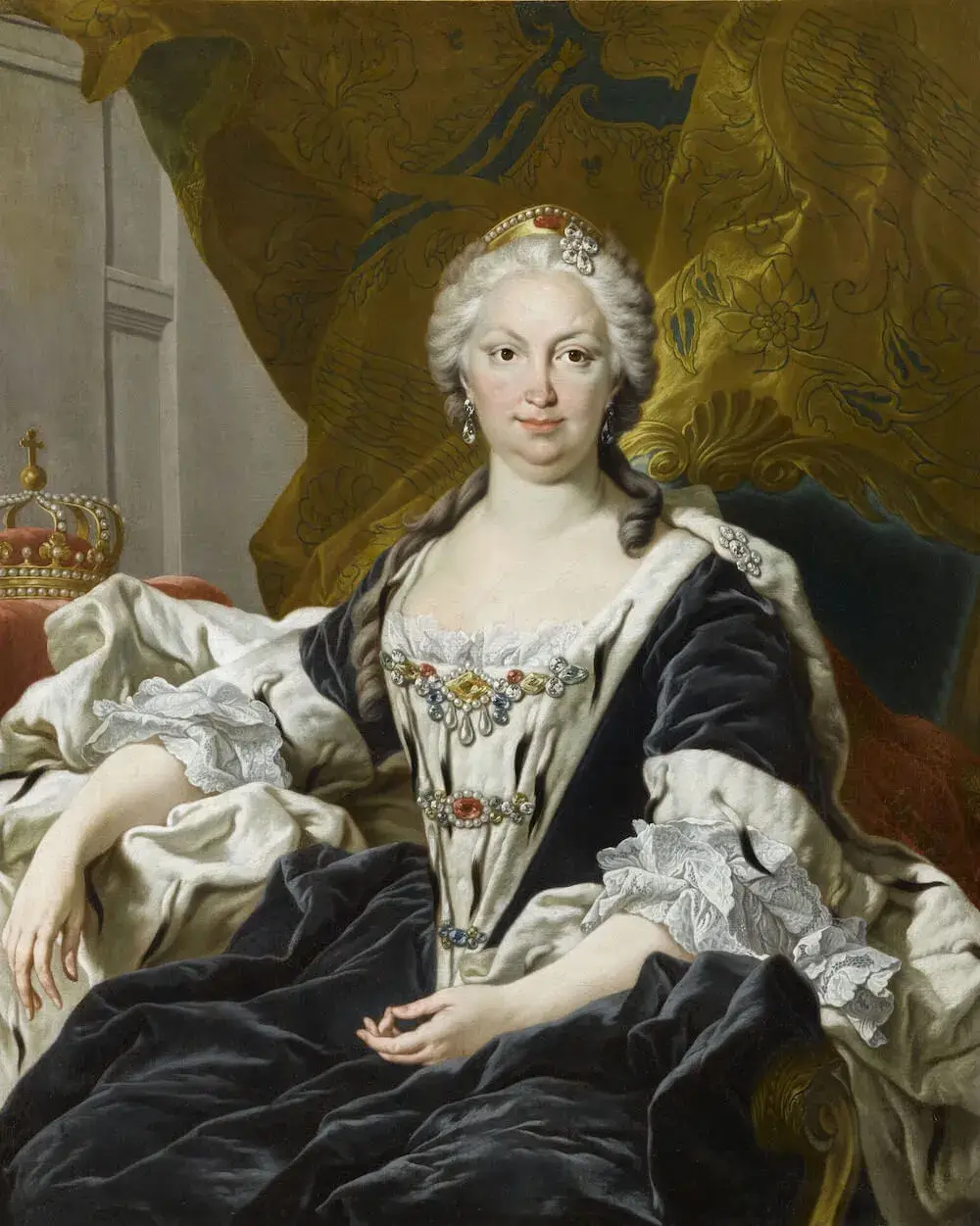
Queen Isabel by Louis Michel van Loo (1740)
Seven Feminine Archetypes
The Greek pantheon of gods and goddesses provides an excellent framework for understanding archetypes.
Jungian Jean Shinoda Bolen highlights seven female archetypes in Goddesses in Everywoman (1984) based on her analysis of the Greek goddesses.
These seven female archetypes are:
- The Mother
- The Queen
- The Lover
- The Maiden
- The Huntress
- The Wise Woman
- The Mystic
We’ve already covered most of these archetypes above, but let’s summarize each of these archetypes again—especially since Bolen uses some of these archetypes slightly differently than expressed above.
The Mother
The Mother is loving, nurturing, and compassionate. She’s caring, supportive, empathic, and loyal.
On her shadow side, the Mother can sometimes put others’ needs above her own, leading to personal neglect.
The Queen
The Queen is confident, ambitious, and outgoing. She knows how to take charge.
On the shadow side, the Queen easily becomes jealous and controlling when she feels insecure.
The Lover
The Lover archetype represents a woman’s sensuality, attractiveness, and ability to enjoy life.
On the shadow side, this female archetype can be highly emotional and insecure, seeking external validation.
The Maiden
The Maiden archetype is intuitive, idealistic, playful, adaptive, and innocent. She maintains a youthful outlook on life, open to learning new things.
On the shadow side, she becomes overly naive and becomes a Puella Aeterna (eternal child).
The Huntress
The Huntress is the feminine expression of the masculine Warrior. She is independent, self-reliant, free-spirited, fierce, and courageous. She can effectively take on life’s challenges.
On the shadow side, she can be divorced from her feelings, lacking feminine softness and vulnerability.
The Sage
As a feminine archetype, the Sage represents truthfulness, insight, and internal power. The Sage is also known as the Wise Old Woman. She guides a woman on her journey to inner growth and self-development.
On the shadow side, she can lack empathy and struggle to maintain present-moment awareness.
The Mystic
The Mystic is the female archetype associated with calmness, centeredness, and introversion. She is focused inward, self-aware, and tranquil.
On the shadow side, she can become isolated, making it challenging to cultivate meaningful relationships.
Female Shadow Archetypes
Wherever there is light, a shadow is cast. The shadow represents the often repressed “dark side” of a person’s psyche. For every “light” archetypal image, there’s a shadow component.
In the case of the feminine psyche, Robert A. Johnson called this “contamination of the feminine elements.”8Johnson, Lying with Heavenly Woman.
The split in the psyche that creates the shadow is caused by trauma. Trauma gets stored within the body as repressed emotional energy.
We address this trauma via inner work.
Below, we’ll examine three common shadow archetypes within the feminine psyche:
- The Devouring Mother
- The Seductress
- The Daddy’s Girl
Let’s take a deeper look …
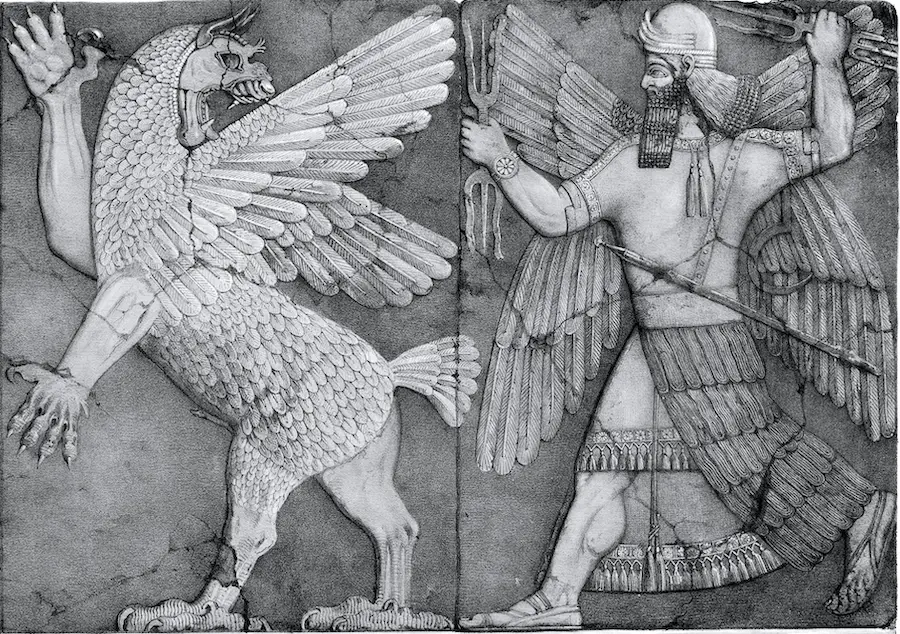
Tiamat vs Marduk (story from Enūma Eliš)
The Devouring Mother
The Devouring Mother is perhaps the most powerful archetypal force within the psyche.
Jungian M. Esther Harding highlighted the Devouring Mother in The Parental Image (2003).
In the Babylonian creation myth, Enuma Elish, she was Tiamat—the ultimate expression of maternal chaos.
Tiamat was so powerful that the other gods combined could not defeat her.
This primitive mother goddess is promiscuous and lives only by emotions.
Tiamat took her son, Kingu, as her husband. Being driven exclusively by emotions, the Devouring Mother has no boundaries, morality, or sense of order.
The Devouring Mother can become active in women who are wronged or abused by a man (especially her father or husband).
The son of a Devouring Mother will struggle to reach psychological maturity in adulthood.
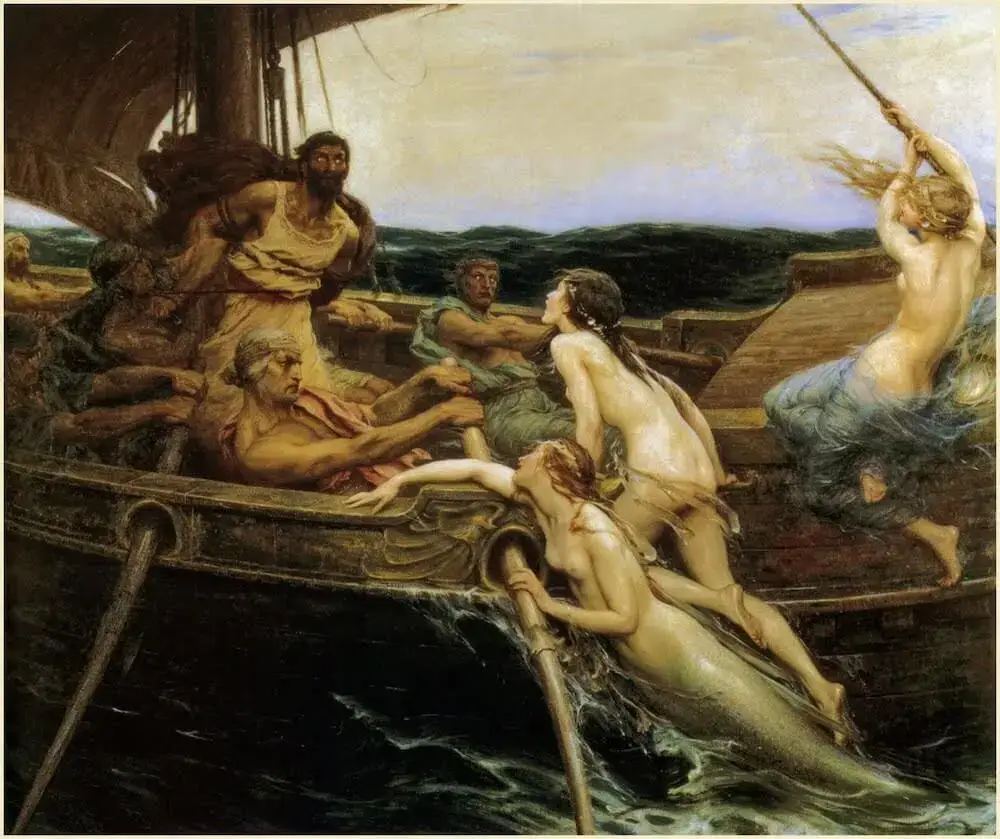
Ulysses and the Sirens, Herbert James Draper (1909)
The Seductress
On the etheric level, the Seductress steals energy from others, especially men.
One of the first expressions of this shadow archetype in literature was Lilith in the Zohar.
Lilith was Adam’s first wife (before Eve). She leaves Adam and later becomes the queen of the demons.
In Greek mythology, she was a siren who seduced sailors, causing their boats to crash on the rocks.
In folklore and medieval legends, she’s known as the succubus. The succubus enters the dreams of men and drains their life force energy (and Jing essence) during a sexual act.
The Seductress is also known as a Temptress or Enchantress. This female archetype is also closely related to the Femme Fatale and the Black Widow. This shadow archetype is also an energy vampire (which can be feminine or masculine).
The Seductress gets activated in girls and women who strongly desire sexual attractiveness and the attention of men. Deep insecurity and strong desire can cause women to invite this female archetype in.
In our current society that prizes images and attractiveness, the Seductress is a pervasive archetypal pattern that possesses many women (and some men).
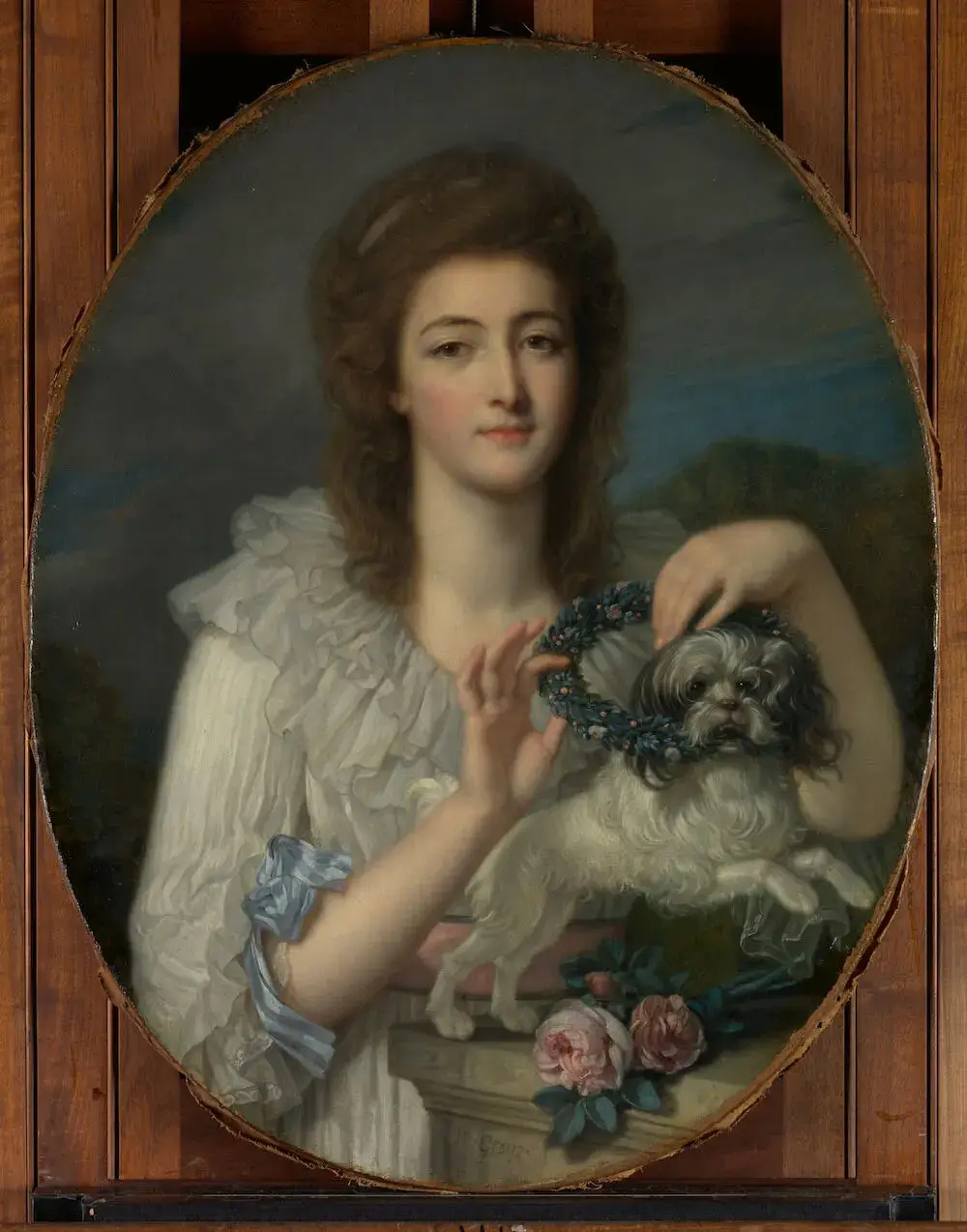
Princess Varvara Nikolaevna Gagarina by Jean-Baptiste Greuze (1780-1782)
The Daddy’s Girl
The Daddy’s Girl can seem innocent enough at first glance.
This female archetype is born when the father projects certain qualities onto his daughter. She becomes his “little princess.”
The little princess appears sweet and innocent as long as she gets what she wants.
However, when the Daddy’s Girl doesn’t get her way, she morphs into the Tyrannical Princess, becoming outwardly demanding and unreasonable.
The Tyrannical Princess hides behind the sweet, innocent Daddy’s Girl. She becomes an excellent manipulator of her father (and later her husband and other men).
The Daddy’s Girl needs to control others and expects them to serve her.
We might call a “healthier” version of this shadow archetype the “Father’s Daughter.” Instead of being a princess, this archetype is more self-reliant, intelligent, and introverted.
Another variation of this archetype is the Tomboy (also not necessarily a “shadow archetype”).
A Comprehensive List of 50+ Female Archetypes
Now we come to a list of 56 female archetypes, including those discussed above.
Just remember that most archetypes can be feminine or masculine.
For example, in the feminine psyche, the Lover, the Sage, and the Magician exist, just as they do in the masculine psyche. So these universal and non-gender-specific archetypes are omitted from this particular list.
Also, many of the female archetypes listed below are derivatives of the same archetypal image. (For example, the Witch and Baba Gaga or Lillith and Seductress.)
Listed in alphabetical order:
| Amazonian | Librarian |
| Anima | Lilith |
| Attila | Matriarch |
| Baba Gaga | Medicine Woman |
| Beatrice | Midwife |
| Black Widow | Mother Nature |
| Blanchedleur | Perfect Mother |
| Caregiver | Persephone |
| Crone | Priestess |
| Daddy’s Girl | Princess |
| Damsel in Distress | Profane Prostitute |
| Daughter | Queen |
| Death Mother | Sacred Prostitute |
| Demeter | Sacred Wife |
| Devouring Mother | Seductress |
| Earth Mother | Sister |
| Enchantress | Sophia |
| Fairy Godmother | Step-Mother |
| Father’s Daughter | The Muse |
| Femme Fatale | Tom Boy |
| Goddess | Tyrannical Queen |
| Great Mother | Virgin |
| Handless Maiden | Whore |
| Helen | Wife |
| Heroine | Wild Woman |
| Hestia | Wise Old Woman |
| Hetaira | Witch |
| Huntress | Working Mother |
Of course, this is not an exhaustive list. For a more complete list of over 300 archetypes, see The Ultimate List of Archetypes.
How to Use Female Archetypes for Healthy Development
First, keep in mind that no single archetype defines you.
You are not any particular archetype.
I understand the ego’s impulse to identify with specific archetypal patterns. However, this type of self-identification doesn’t serve our development.
Identifying with specific feminine archetypes often leads to either ego inflation (grandiosity) or ego deflation (insecurity).
Instead, use the understanding of archetypes to build consciousness.
Learn about these different images and behavioral patterns and begin to see these patterns operating in yourself and others.
If it helps, begin to dialogue with these images. Jung called this process active imagination.
This is how you build consciousness—by differentiation. As soon as you observe and identify an archetypal pattern, you’ve already created some distance between you and the image.
The more this differentiation occurs through self-observation, the less possessed by archetypes you become.
And as a consequence, you move one step closer to the Self.
Books Related to Feminine Archetypes
Here’s a list of books that discuss female archetypes in greater detail:

Goddesses in Everywoman by Jean Shinoda Bolen
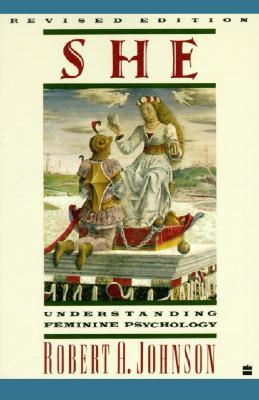
SHE: Understanding Feminine Psychology by Robert A. Johnson
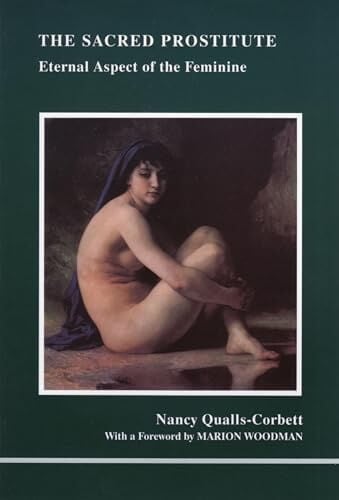
The Sacred Prostitute by Nancy Qualls-Corbett
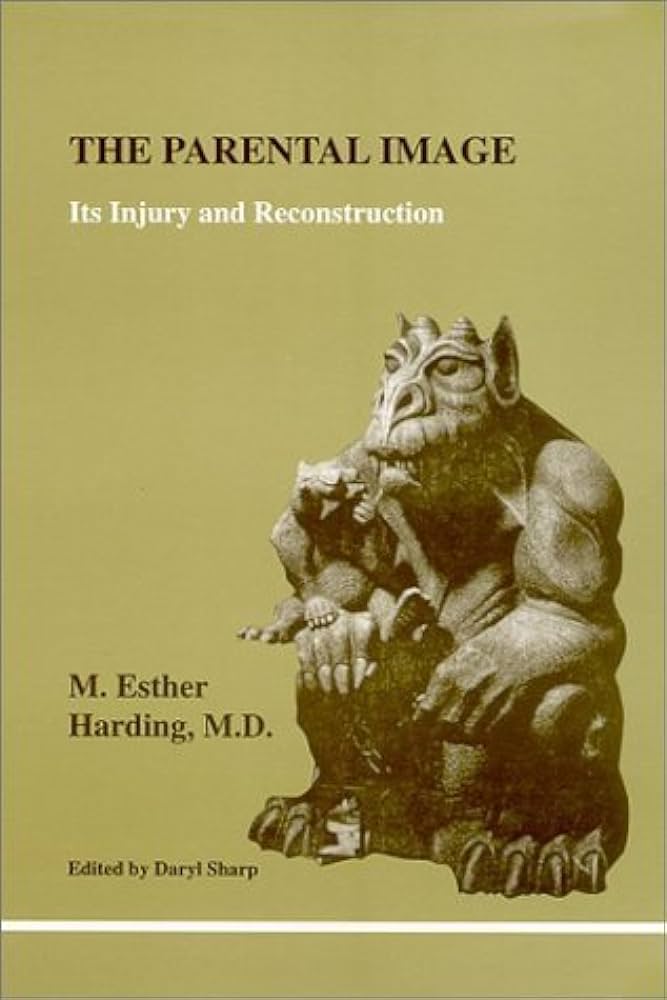
The Parental Image by M. Esther Harding
The Great Mother by Erich Neumann
Lying with Heavenly Woman by Robert A. Johnson
Read Next
What Is An Archetype? A Beginner’s Guide to Archetypal Psychology
Feminine Energy and Masculine Energy Explained: Integrating the Opposites