
Most people chase more “productivity hacks,” but the real frontier of performance isn’t caffeine or dopamine surges—it’s neural clarity.
Over the last decade, nootropics have shifted from Silicon Valley curiosity to a legitimate field of cognitive self‑care. Yet most online lists recycle the same substances without context or nuance.
This in‑depth guide revisits the science and direct experience behind five natural cognitive enhancers that align with the body’s bioelectrical intelligence.
If you’re exploring Energy Science & Environmental Physiology, this is where biology meets focus and vitality.
Let’s dive in …
What Are Nootropics and Why They Matter
Romanian scientist Corneliu Giurgea coined the term nootropic in the 1970s. Noos, from the Greek meaning mind, and tropos, meaning turn.
Giurgea saw nootropics as drugs that:
- Enhance memory and learning abilities,
- Improve muscle control, and
- Protect the brain from physical or chemical injury.
In essence, a nootropic is a substance that improves mental functioning, like increased information processing, concentration, memory, or some combination of cognitive benefits.
The original intended use for nootropics was to treat cognitive illnesses like Alzheimer’s disease. However, healthy individuals now use nootropic supplements and drugs to increase their focus and productivity.
True nootropics amplify function gently. Synthetic smart drugs often excite circuitry while depleting reserves. Natural nootropics balance excitation with regeneration—attuning the nervous system rather than overclocking it.
Natural vs Synthetic Cognitive Enhancers
While I was fascinated with the potential of the drug NZT-48 in the 2011 film Limitless, as illustrated in the movie, synthetic drugs have side effects and harmful, long-term consequences.
So I didn’t explore nootropics more deeply for this reason.
Most popular smart drugs, like Modafinil, Racetams, Adrafinil, and Noopept, are synthetic substances.
Synthetic “smart drugs” like Modafinil or Noopept can create spikes in alertness but often at a metabolic cost.
But at the time, I failed to make the distinction between smart drugs (synthetic) and natural nootropics supplements (derived from substances found in nature).
Natural nootropics—plants, amino acids, and mushroom extracts—work by restoring neurochemical balance and supporting long‑term plasticity. They feed the mitochondria, calm the adrenal cascade, and harmonize brain waves associated with creative flow.
Depending on how you define nootropics, substances like caffeine, nicotine, and even Omega-3 fatty acids can qualify as well.
Do Natural Cognitive Enhancers Work?
The quick answer is “yes.” But a more accurate answer is “it depends.”
Even in the drug class of nootropics, when you read customer reviews, you’ll find that some smart drugs work for some and not for others. Some people experience more of the side effects of these drugs than others.
Chemically speaking, all synthetic substances are derived from an ingredient found in nature. There are substances in nature that can:
- Increase communication between neurons
- Help balance neurotransmitter levels
- Promote brain cell health
- Improve energy metabolism in neurons
- Support neuroplasticity
- Stimulate growth of new neurons and synapses
Any substance that accomplishes these features is a “cognitive enhancer.”
The trick is that we’re all a little bit different. As I said in the pineal gland detox guide, we’re each a random sample of one. So what works for some, may or may not work for you.
That said, the best nootropic supplements do work to a degree (see the section below on what I believe is “the” single strongest nootropic supplement).
The key is to figure out what works for you. And the only way to accomplish this is through experimentation.
The Five Best Natural Nootropic Supplements
Instead of presenting you with a long list of substances, I’ve selected what I consider the five best nootropic supplements based on available research:
I haven’t found negative side effects from any of these supplements in the literature or my experience.
Disclaimer: There are affiliate links in the review below.

1. Lion’s Mane — Neural Regeneration & Growth
An ancient Chinese medicinal mushroom, Lion’s Mane (Hericium erinaceus) enhances cognitive function and protects nerve cells. Ancient physicians used Lion’s Mane to treat neurodegenerative diseases because it can activate the growth of damaged nerves and restore brain function.
Nerve Growth Factor (NGF) is an essential protein for the proper functioning and survival of nerve cells. Lion’s Mane increases the amount of NGF in the brain, enhancing cognition by encouraging neural growth.
This 2009 double-blind study of Japanese men and women over 50 diagnosed with mild cognitive impairment saw improvement in cognitive function on Lion’s Mane. (But conditions worsened again after stopping the treatment.)
This 2014 study demonstrates Lion’s Mane’s significant potential for nerve regeneration in rats. And this 2017 study suggests that Lion’s Mane improves memory (also in rats).
If you read The Talent Code, you know that as we perform a task repeatedly, the myelin sheath between related nerve cells gets thicker and stronger. This 2003 study found that Lion’s Mane stimulates nerve myelination.
Finally, this human study suggests that Lion’s Mane can help reduce depression and anxiety symptoms within four weeks.
Lion’s Mane Benefits
A summary of the nootropics benefits of Lion’s Mane:
- Improves brain function
- Regenerates nerves and stimulates NGF
- Enhances memory
- Promotes remyelination
- Reduces depression and anxiety
Lion’s Mane is a powerhouse substance—one of the best nootropic supplements, ideal for nootropic stacking.
How to Take Lion’s Mane
→ Lion’s Mane from Lost Empire Herbs. Dual extract 8:1. Powdered form. 100% organic.
Starting Dosage: 1 to 2 grams (1/4 to 1/2 tsp per day of the powder).

2. Bacopa Monnieri — Learning and Memory Integration
A perennial shrub native to the wetlands of Northern India, Bacopa Monnieri is used in Ayurvedic medicine to improve cognition, memory, and perception.
Bacopa is an adaptogen (it helps the body adapt to stress). This 2011 study found that Bacopa Monnieri increases levels of serotonin while decreasing levels of dopamine (which has positive implications for memory enhancement, stress reduction, and mood elevation).
This important 2011 study shows that Bacopa increases communication between neurons in rats, suggesting that this powerful substance can help improve learning ability.
Studies also show that Bacopa improves memory recall in healthy adults. This 2008 study of 54 participants 65 years or older found that Bacopa substantially increases recall, attention, and mood.
Bacopa Monnieri Benefits
A summary of the nootropics benefits of Bacopa Monnieri:
- Boosts memory
- Elevates attention and focus
- Increases serotonin levels
- Promotes communication between neurons (learning ability)
- Improves mood
- Supports brain health
- Reduces anxiety and stress
Bacopa is a workhorse as one of the best nootropic supplements.
How to Take Bacopa Monnieri
The memory-enhancing effects of Bacopa Monnieri often aren’t experienced until after four weeks of daily use.
Bacopa is used in many pre-formulated nootropics supplements, but usually with an insufficient amount. The suggested daily dose is 750 mg.
→ Bacopa Monnieri from Lost Empire Herbs. Powdered form. 100% organic.
Starting Dosage: 750mg or 1/8 tsp once or twice daily

3. L‑Theanine — Calm Alertness
L-Theanine is an amino acid found in green tea leaves (especially those grown in the shade).
Studies show that L-theanine reduces stress and promotes relaxation. It even slows down heart rate variability.
These 2008 studies show that L-Theanine increases alpha brain waves associated with mental alertness and arousal.
But perhaps the most intriguing properties of L-Theanine come into effect when you combine it with caffeine. This double-blind study shows that combining L-theanine with caffeine increases reaction time, memory, and endurance.
If you’re a coffee drinker, taking L-Theanine can mitigate many of the adverse effects of caffeine like jitteriness and increased blood pressure.
L-Theanine Benefits
A summary of the nootropics benefits of L-Theanine:
- Promotes relaxation and stress reduction
- Increases reaction time
- Enhances mental alertness and concentration
- Improves learning ability
- Reduces negative effects of caffeine
L-theanine is an excellent supplement for nootropic stacking.
How to Take L-Theanine
Of the five natural, best nootropic supplements listed in this guide, you’ll likely notice the effects of L-Theanine the fastest.
Starting Dosage: 2 capsules per day (200 mg per day)
A Quick Heads Up About L-Theanine Supplement Brands
Note: You’ll find a lot of products on the market with “Suntheanine,” claiming that it’s superior to L-Theanine.
Even though patent owner Taiyo International claims the product is safe and non-toxic, I recommend avoiding it as it’s not a naturally-occurring substance derived from green tea.

4. Rhodiola Rosea — Mental Endurance and Stress Adaptation
While Bacopa and Lion’s Mane increase cognitive ability, Rhodiola Rosea primarily serves to preserve cognitive function. However, clinical research suggests it boosts cognitive ability too.
Rhodiola Rosea is a high-altitude herb native to the Arctic regions of Europe and Asia. Traditional Chinese, Scandinavian, and Russian medicine use it as a remedy for fatigue and restoration.
Research continues to demonstrate how this adaptogenic herb can increase our mental performance and reduce the adverse effects of stress. (There are over 160 published studies on this herb.)
This 2012 study shows that Rhodiola reduces many physical symptoms of fatigue including muscle soreness, sleepiness, and headaches.
Rhodiola has proven to increase the brain’s capacity for mental work in the face of stress and fatigue.
In one double-blind, placebo-controlled study, a group of 56 healthy physicians on night duty took Rhodiola daily for six weeks.
While the researchers were studying the effects of Rhodiola on stress-induced fatigue, they found that compared to the placebo group, the physicians who took this nootropic supplement outscored the control group on a range of cognitive aptitudes including short-term memory, concentration, calculations, and overall mental fatigue.
Finally, this double-blind study of students taking exams shows that Rhodiola increases well-being, reduces mental fatigue, and improves test-taking ability.
Students taking Rhodiola scored an average of 8.4% higher on exams than those in the placebo group.
Benefits of Rhodiola Rosea
A summary of the nootropics benefits of Rhodiola Rosea:
- Combats fatigue
- Reduces stress
- Restores energy
- Elevates mood
- Increases mental alertness
- Enhances cognition
- Alleviates depression
Rhodiola is a well-rounded herb—one of the best nootropic supplements, great for stacking or individual use.
How to Take Rhodiola Rosea
Take Rhodiola Rosea in the morning, preferably before eating.
→ Rhodiola Rosea from Lost Empire Herbs. 6:1 Dual Extract. Powdered form. 100% organic.
Starting Dosage: 1/8 – 1/4 tsp daily or 337.5 – 675 mg (100 mg for cognitive enhancement; 300+ mg to relieve stress and anxiety)

5. Cordyceps — Cellular Energy & Enduring Focus
For centuries, Tibetan and Chinese herbalists revered Cordyceps as a tonic for stamina, lung capacity, and vitality.
Modern research shows that this rare fungus—now ethically cultivated rather than harvested from alpine caterpillars—operates as a metabolic nootropic: it increases the body’s ability to generate and sustain energy at a cellular level.
Cordyceps enhances the brain’s adenosine triphosphate (ATP) production—the molecule that powers every neuron’s firing cycle—and improves oxygen utilization throughout the body.
In essence, it strengthens the electrical and biochemical “wiring” that supports focus under pressure.
For the everyday achiever, this makes Cordyceps less of a “stimulant” and more of a bioenergetic teacher—showing the body how to make energy cleanly, sustainably, and in harmony with its natural rhythms.
Research Highlights
Modern research has finally caught up with what ancient herbalists sensed centuries ago: Cordyceps works because it strengthens the body’s ability to create and use energy—not by forcing stimulation, but by fine‑tuning how our cells breathe.
In a controlled trial at UCLA, men and women between fifty and seventy‑five took a natural extract of Cordyceps sinensis (known as Cs‑4) for twelve weeks. Compared with placebo, they showed a measurable improvement in how efficiently their bodies used oxygen. Their endurance rose by about 10 percent, indicating that Cordyceps helps the body delay fatigue rather than fight through it.
A second line of evidence comes from the laboratory. In a study using rats, daily Cordyceps sinensis supplementation dramatically extended swimming time and activated key energy enzymes in muscle tissue—AMPK, PGC‑1α, and PPAR‑δ—the same network that governs mitochondrial renewal. In simple terms, their “internal batteries” recharged faster and held their charge longer.
Younger adults in another study at the University of North Carolina took Cordyceps militaris for three weeks and experienced a 4 to 5 point increase in VO₂ max—the benchmark of how much oxygen your system can actually use. They also lasted over a minute longer in high‑intensity cycling—an impressive gain for such a short timeframe.
All of this has now been confirmed on a broader scale. A 2025 meta‑analysis of fourteen clinical trials concluded that Cordyceps sinensis consistently improves aerobic capacity, ventilatory threshold, and endurance performance—all with minimal side effects.
Cordyceps Benefits
Taken together, these studies show that Cordyceps can increase your energy production, reduce fatigue, and help you perform better under pressure—naturally.
Benefits of taking Cordyceps include:
- Increases brain and muscular ATP production (cellular energy)
- Enhances oxygen utilization and endurance
- Supports focus and sustained attention under stress or fatigue
- Balances cortisol and adrenal response
- Strengthens immune and respiratory systems
- Combats inflammation and oxidative stress in neural tissue
Cordyceps is a fungal powerhouse. For more on ATP production and mitochondria, see this guide on Red and Near Infrared Light Therapy.
How to Take Cordyceps
Cordyceps can be taken as dual‑extracted powder, capsule, or tincture. For nootropic benefits, use a morning dose—its energizing effect pairs well with Rhodiola or as a pre‑work focus enhancer.
→ Cordyceps Militaris Mushroom from Lost Empire Herbs. 8:1 extract powder. 100% organic.
Starting Dosage: 1 to 2 grams of 8:1 dual extract powder (≈ 500–1000 mg of active extract). 1/4 to 1/2 teaspoon per day.
Combine with warm water, tea, or coffee; avoid taking it late in the day, as its mild metabolic lift may delay sleep in sensitive individuals.
(Look for organically cultivated Cordyceps militaris with verified β‑glucan content above 20% and no added grain fillers.)
The Best Preformulated Nootropic Stack
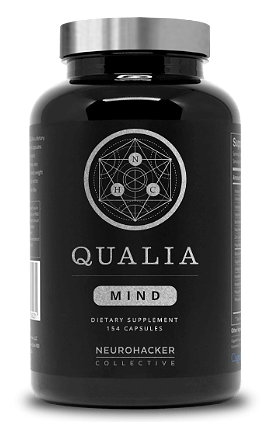
Developed by the Neurohacker Collective, Qualia Mind has seen several iterations. Qualia features nootropics like caffeine, L-theanine, and 21 other powerhouse substances.
Out of the fast-growing community of Nootropic consumers, Qualia has emerged with a reputation for being one of the best nootropic stacks available on the market.
And I agree with the evaluation: Qualia is the best all-in-one nootropic stack. I’m actually on it right now as I write this.
(You can get an additional 15% on Qualia Mind if you use code CEOSAGE at checkout.)
Qualia Mind’s Strengths and Key Features
Benefits of Qualia Mind’s nootropic stack include:
- Enhanced clarity, focus, and fluidity (without crashing)
- Increased empathy and alertness
- Heightened willpower
- Decreased procrastination
Effects last up to 6 hours with a single dose.
Your level of sensitivity will determine how you perceive the effects. I notice a slight buzzing sensation in my prefrontal cortex. This buzzing sensation is similar to what you might experience with caffeine, but without any jitters. Plus, this sensation coincides with a marked clear-headedness that enables prolonged focus.
If you notice that you tend to get distracted easily or lose focus on an important task, Qualia Mind can help you zoom in and get things done!
Qualia’s Unique Ingredients and Benefits
What makes Qualia one of the best nootropic stacks?
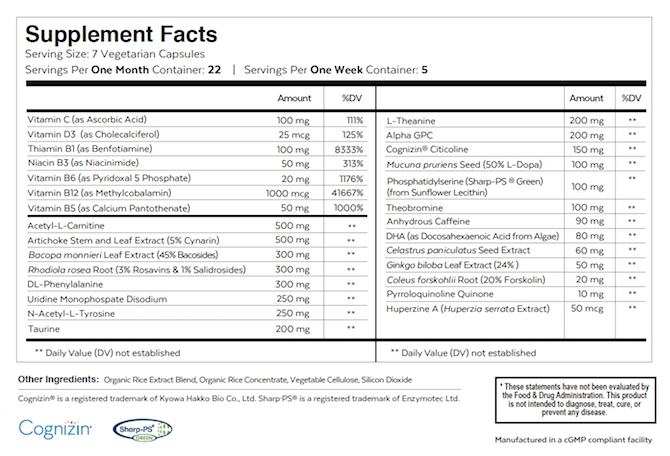
Qualia Mind has an innovative mega-blend of 22 ingredients that fall into different classes of components that make its performance effective and long-lasting.
Nootropic Compounds: Primarily responsible for improving cognitive brain functions. Qualia Mind has eight compounds that consistently provide consumers with a strong base for higher mental performances and enhanced productivity over time.
Neuro-Vitamins: Our nerves and nervous system require a steady supply of neuro-vitamins during peak working hours. These added ingredients ensure they are continuously being replenished.
Antioxidants: Provides cellular repair and reduces the effects of deterioration, slowing down the chain reaction initiated by highly reactive free radicals produced inside the human body.
Adaptogen Extracts: Enhances the longevity and vitality of human cells. Qualia Mind has 10 different extracts that promote longevity and raise energy levels over a period of time.
Amino Acids: Amino acids are substances that are building blocks of life. Neurotransmitters used in coordinating cognitive brain function are created and repaired with amino acids.
Choline Donors: A special type of neurotransmitter that governs neuro-motor functions and connections. Acetylcholine is responsible for maintaining the specific percentage of choline, allowing the brain to communicate more fluidly with your body.
Who is Qualia Especially For?
Qualia Mind targets high-performing individuals, including entrepreneurs, executives, and creative professionals looking to upgrade their brain power for sustained thinking and knowledge work.
Efficacy, Side Effects, Recommendations, and Dosage
Efficacy: Every human being is biologically unique, and the optimum dosage depends on your weight and sensitivity. So, as with any nootropic stack, experimentation is necessary to find the optimal dosage. Many well-known biohackers consider Qualia Mind to be the industry-leading nootropic stack.
Potential Side Effects: A small minority of consumers have reported a mild upset stomach. The Neurohacker Collective suggests taking Qualia after breakfast if this occurs for you.
Other Recommendations:
- Begin with a single stack and gradually work towards combining two more in their daily routine.
- Dosage should never exceed 10 capsules at once or more than 12 in a day.
- Qualia is designed to yield the best results with “ON-OFF CYCLE”. It is recommended to consume for 5 days a week with a break of 2 days.
Suggested Dosage: Take 7 capsules with water before breakfast.
Use code “CEOSAGE” to get 15% off
(disclaimer: affiliate links above)
A Quick Word on Supplement Brands
I’ve been taking a host of supplements for over 25 years. I was also involved in the business side of two supplement companies. Through these experiences, I’ve become very skeptical of supplement brands and wary of the quality of their products.
There’s only a select number of brands that I’ll recommend or reference. Just because a product, for example, is an “Amazon’s Choice” or bestseller, doesn’t mean it’s a quality product. The #1 best-selling 5-HTP (a cognitive enhancer that increases serotonin production) on Amazon is a product by BioScience Nutrition. The product contains calcium carbonate, which is a known calcifying agent.
Unfortunately, calcium carbonate is in many supplements, so you need to read labels carefully.
What is the Most Effective Nootropic?
Years ago, I had the opportunity to spend the weekend with Steven Kotler at a private retreat. Kotler is a journalist and author of numerous books, including The Rise of Superman and The Art of Impossible. He’s known as an expert in the field of neurobiology.
We had a long discussion about nootropics supplements, and his attitude on them was clear: for the most part, they aren’t worth your time or money.
Then, however, he made a caveat: “Except for L-theanine and coffee.”
Kotler’s comments resonate with my experience. Taking L-theanine right before drinking coffee provides noticeable and lasting results in terms of cognitive performance.
When I need to focus on a project for extended hours, this combination works brilliantly. You can augment the effects by blending grass-fed butter and MCT oil into the coffee (Asprey’s “Bulletproof Coffee” formula).
Plus, you can experiment by adding nootropics like Lion’s Mane, Rhodiola Rosea, and Bacopa Monnieri into the mix for additional cognitive benefits.
Biohacking vs Self‑Mastery
An entire “biohacking community” has formed over the last 20 years or so, as many achievers want to perform at the highest level they possibly can.
I don’t have a problem with biohacking itself. Many biohacking tactics make grounded sense. I was doing a lot of biohacking before I heard the term. For example, wearing blue-blocking glasses is a biohacking tactic.
But, to borrow an idea from American philosopher Ken Wilber, there’s an essential difference between states of consciousness and stages of consciousness.
A higher state of consciousness is a momentary, time-dependent experience. A higher stage of consciousness represents a new, permanent structure in your being.
Why is this distinction important? Natural nootropics can temporarily augment your cognitive ability, offering you a kind of higher state of consciousness. Although there may be exceptions, most of them don’t provide any structural changes.
As George Leonard put it in Mastery:
“Seduced by the siren of a consumerist, quick-fix society, we sometimes choose a course of action that brings only the illusion of accomplishment, the shadow of satisfaction.”
Nootropics tend to be exclusively focused on temporary gain and achievement. However, they won’t facilitate our self-mastery, which is the central theme of this website.
Bringing It Together: From Supplements to States of Flow
But, I believe there’s a middle ground: use the best natural nootropics to get your brain back online while you continue your self-development.
For example, let’s say you’re sitting down to write. You’ve got two hours set aside. You’ve eliminated all outside distractions. It’s just you and a blank screen.
Why not sit down with natural nootropics like L-theanine + coffee + Lion’s Mane that support mental alertness and memory?
Each of us must find a middle ground. You can combine both:
- Short-term cognitive enhancements with natural nootropics
- Long-term self-development and inner practices
These two go well together.
Read Next
Best Earthing Shoes Review: Do Grounding Shoes Work?
Grounding Sheets Review: Do Grounding Sheets Work?
What is Chi Energy and How Do You Cultivate It?
Best EMF Meters for Home Testing: A User-Friendly Review
This guide is part of the Energy Science & Environmental Physiology Series.
Understand how light, magnetism, and the Earth’s bioelectric field influence vitality. Discover practical ways to align your biology with natural energetic rhythms.
Scholarly References
Lion’s Mane (Hericium erinaceus)
- Huang, S., Xu, W., & Li, Y. (2017). Hericium erinaceus (Bull.) Pers. polysaccharides: extraction, structure, and biological activities. International Journal of Biological Macromolecules, 97, 228‑237.
- Mori, K., Inatomi, S., Ouchi, K., Azumi, Y., & Tsuji, S. (2009). Improving effects of Yamabushitake (Hericium erinaceus) on mild cognitive impairment: a double‑blind placebo‑controlled clinical trial. Phytotherapy Research, 23(3), 367‑372.
- Feng, Y., Tan, B. L., & So, K. F. (2016). Promotion of peripheral nerve regeneration by aqueous extract of Hericium erinaceus. Chinese Journal of Integrative Medicine, 22(10), 759‑767.
- Brandalise, F., et al. (2017). Dietary Supplementation of Hericium erinaceus Increases Mossy Fiber-CA3 Hippocampal Neurotransmission and Recognition Memory in Wild-Type Mice. Evidence-Based Complementary and Alternative Medicine : ECAM, 2017, 3864340.
- Kushairi, N., et al. (2003). Extract from Hericium erinaceus promotes myelin formation in cerebellar cell cultures. Fiziologicheskii Zhurnal, 49(1), 38‑45.
- Nagano, M., Shimizu, K., Kubo, K., Nakatomi, K., & Watanabe, O. (2010). Reduction of depression and anxiety by Hericium erinaceus intake in women: a randomized controlled trial. Biomedical Research, 31(4), 231‑237.
Bacopa Monnieri (Brahmi)
- Preethi, J., & Subramanian, P. (2011). Effect of Bacopa monniera leaf extract on serotonergic system in postnatal rats: Implications for learning and memory. Journal of Ethnopharmacology, 134(1), 55‑61.
- Jyoti, A., & Shankaranarayana Rao, B. S. (2011). Enhancement of hippocampal CA3 dendritic arborization by Bacopa monnieri: relevance to improved learning and memory. Romanian Journal of Morphology and Embryology, 52(3), 879‑886.
- Stough, C., & Lloyd, J. (2012). Systematic review: Bacopa monnieri as a memory enhancer in healthy humans. Journal of Alternative and Complementary Medicine, 18(7), 647‑652.
- Calabrese, C. (2008). Bacopa monnieri and memory: clinical evaluation in older adults. Journal of Alternative and Complementary Medicine, 14(6), 707‑713.
L‑Theanine
- Juneja, L. R., Chu, D.‑C., Okubo, T., Nagato, Y., & Yokogoshi, H. (1999). L‑Theanine — A unique amino acid of tea and its effect on mental state. Trends in Food Science & Technology, 10(5), 199‑204.
- Nobre, A. C., Rae, C., & Parsons, E. (2008). L‑Theanine, a naturally occurring amino acid in tea, improves attention and mental focus: Electroencephalographic evidence. Biological Psychology, 77(2), 113‑122.
- Haskell, C. F., Kennedy, D. O., Milne, A. L., Wesnes, K. A., & Scholey, A. B. (2008). The combined effects of L‑theanine and caffeine on cognitive performance and mood. Biological Psychology, 77(2), 113‑122.
Rhodiola Rosea
- Olsson, E. M. G., von Schéele, B., & Panossian, A. G. (2009). A randomized, double‑blind, placebo‑controlled study of Rhodiola rosea on fatigue and stress symptoms in physicians during night duty. Phytomedicine, 17(8‑9), 630‑635.
- De Bock, K., Eijnde, B. O., Hesselink, M. K., Koninckx, E., Rosemberg, S., & Van Leemputte, M. (2004). Effects of Rhodiola rosea extract on endurance exercise performance. International Journal of Sport Nutrition and Exercise Metabolism, 14(3), 298‑307.
- Spasov, A. A., Wiegand, B., & Mandrikov, V. B. (2000). Clinical study of Rhodiola rosea L. extract in fatigue and stress during night shifts in medical doctors. Phytomedicine, 17, 630–635.
- Darbinyan, V., Aslanyan, G., Amirajan, R., & Panossian, A. (2000). Rhodiola rosea L. and mental performance in students under stress: a double‑blind placebo study. Phytomedicine, 7(2), 85‑89.
Cordyceps Sinensis
- Chen, S., Li, Z., Krochmal, R., Abrazado, M., Kim, W., & Cooper, C. B. (2010). Effect of Cs‑4 (Cordyceps sinensis) on exercise performance in healthy older subjects: A double‑blind, placebo‑controlled trial. Journal of Alternative and Complementary Medicine, 16(5), 585–590.
- Kumar, R., Negi, P. S., Singh, B., Ilavazhagan, G., Bhargava, K., & Sethy, N. K. (2011). Cordyceps sinensis promotes exercise endurance capacity of rats by activating skeletal muscle metabolic regulators. Journal of Ethnopharmacology, 136(1), 260–266.
- Hirsch, K. R., Smith‑Ryan, A. E., Roelofs, E. J., Trexler, E. T., & Mock, M. G. (2017). Cordyceps militaris improves tolerance to high‑intensity exercise after acute and chronic supplementation. Journal of Dietary Supplements, 14(1), 42–53.
- Shu, M.‑Y., Zhang, X.‑C., Zuo, L., Jiang, F.‑L., Liang, J., & Li, F. (2025). Effects of fungal supplementation on endurance, immune function, and hematological profiles in adult athletes: A systematic review and meta‑analysis. Frontiers in Nutrition, 12, 1670416.