
Hidden at the geometric center of your brain lies a pinecone‑shaped organ no larger than a grain of rice. Ancient mystics called it the gateway between worlds; modern physiology calls it the pineal gland—a master regulator of the body’s rhythms and inner light.
For most people, this gland is quietly hardening. Exposure to synthetic fluoride, pesticides, heavy metals, and artificial light accumulates into microscopic crystals that block its natural signaling.
When this happens, sleep falters, hormones misfire, and the world itself can feel dimmer than it truly is.
This in‑depth guide—part of the Energy Science & Environmental Physiology series—reveals how the pineal gland becomes calcified and, more importantly, what you can do to reverse it through biology, biophysics, and disciplined self‑care.
When you understand and restore the pineal’s function, you don’t just sleep better—you see better. Not through your eyes, but through a mind re‑synchronized with the natural world.
Let’s dive in …
What Is the Pineal Gland and Why It Matters
The pineal sits at the brain’s central axis—between the hemispheres, bordered by cerebrospinal fluid, and supplied by one of the richest blood flows in the body. It acts as the biological compass aligning your internal clock with the solar day.
Every morning, light striking your eyes signals the pineal to pause melatonin production; every nightfall, darkness reactivates it.
Through this cycle, the gland orchestrates countless downstream processes: immune regulation, reproductive timing, metabolism, and the deep neurological repair that happens only during quality sleep.
Modern life has broken that rhythm. Screens emit blue‑light glare deeper into the night. Cities never darken. Our nervous systems forget what night truly means—until exhaustion becomes normal.
The pineal gland is therefore more than a clock; it’s a translator between celestial and cellular timing, the interface where environmental light becomes hormonal language.
This vital gland has been called the “regulator of regulators.”
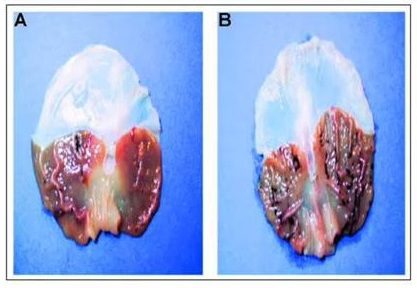 Images of Calcified Pineal Gland
How Calcification Occurs
Fluoride, certain forms of calcium, and industrial pollutants gradually deposit within the pineal’s tissues, forming calcium‑phosphate micro‑crystals that harden its structure.
Because the gland receives no barrier protection from circulating blood, it readily accumulates these reactive ions.
In the late 1990s, British biologist Jennifer Luke demonstrated that fluoride concentrations are higher in the pineal than in any other bodily tissue.
Subsequent studies connected this buildup to diminished melatonin output, disturbed sleep patterns, and accelerated puberty onset in children.
Synthetic fluoride—from municipal water, toothpaste, and pesticides—binds with dietary calcium to form crystals scattered throughout the gland.
Over time, these microscopic nodules reflect light like shards of glass inside the brain’s core, scattering the signal that helps coordinate your biological clock.
Once this crystalline shell forms, melatonin secretion drops, and the pineal’s feedback loop with the hypothalamus grows erratic. The result: chronic insomnia, hormone imbalance, and subtle mood dysregulation that few trace back to their origin.

Documented Effects of Pineal Calcification
When phosphate and fluoride crystals enclose the pineal, its primary hormone—melatonin—plummets.
Low melatonin doesn’t only mean restless nights; it means your losses its primary regulator.
Studies show that pineal gland calcification:
- Lowers production of melatonin (Kunz, et al, 1999)
- Impairs the sleep-wake cycle (Malhberg, et al, 2009)
- Disrupts the regulation of the circadian rhythm (Tan, D.X., et al, 2018)
Clinical imaging shows that the more calcified the pineal, the more fragmented the brain’s sleep spindles and circadian signals become. People report waking exhausted, forgetful, or mentally flat even after eight hours in bed.
In children, calcification correlates with premature puberty and impaired neurological development (Schlesinger, 1956). In adults, it contributes to seasonal depression, hormonal disarray, and weakened immunity.
Fluoride exposure in animal studies has been found to decrease melatonin and lead to accelerated sexual development in females.
A 2019 study published in Biological Trace Element Research found that when they fed male rats a diet free of fluoride, it stimulated pineal growth.
The larger pattern is simple: the more toxins a society absorbs, the less attuned it becomes to natural cycles. A calcified culture mirrors a calcified pineal gland—efficient but disconnected from proper biological and cognitive functioning. It literally disconnects us from the natural world.
3 Steps to Pineal Gland Decalcification
Decalcification is not a single detox; it’s a progressive re‑training of the body’s energetic and chemical hygiene. Think of it as three overlapping waves of restoration.
1 – Eliminate Inputs That Cause Calcification.
Remove synthetic fluoride, processed calcium additives, and perfluorinated chemicals (PFCs). This alone halts new crystal formation.
Switch to verified reverse‑osmosis water filtration and fluoride‑free toothpaste; replace non‑stick cookware with steel, glass, or ceramic.
2 – Detox and Re‑mineralize.
Once the inflow stops, support the body’s chelation pathways with nutrients like boron, iodine, chlorella, and turmeric.
These bind fluoride and oxidative debris, clearing room for cellular repair. Adequate magnesium ensures freed calcium relocates to bone, where it belongs.
We’ll cover this step in detail in Part 2: Pineal Gland Detox.
3 – Re‑establish Circadian Coherence.
True healing occurs when light and dark rhythms re‑entrain your hormonal timing.
Practice structured light exposure—morning sun, dim evening light, and blue‑blocking at night. Ground barefoot daily to reconnect to Earth’s electrical field.
We’ll do a deep dive in Part 3: How to Block Blue Light and Restore Your Sleep Cycle.
When these three stages stabilize, the results are quiet but profound: sleep deepens, dreams acquire coherence, stress drops, libido balances, and intuition returns as an ordinary faculty of clarity—not a mystical promise.
The Fluoride Deception
Numerous substances cause pineal gland calcification, but the two primary culprits are synthetic fluoride and calcium.
Eliminating your consumption and exposure to fluoride and synthetic calcium will help stop further pineal gland calcification.
Note: I’m aware that the topic of fluoride, especially its use in the public water supply, is a controversial issue for some. I don’t claim to be an expert here. However, I have invested countless hours reading available literature and studies related to this topic. Given the evidence I’ve seen (much of which I’m presenting in this series), I’ve reached my conclusion. You, of course, will need to reach your own.
Documented Health Risks of Fluoride Consumption
Fifty percent of the world’s municipal drinking water is fluoridated. Most developed nations, however, do not fluoridate their water.
For example, in Western Europe, only 3% of the population consumes fluoridated water. However, if you live in the United States and your source of water comes from a public water supply (as opposed to a private well), there’s a 73% chance your water has fluoride.
More people drink and shower in fluoridated water in the United States than the rest of the world combined.
But is that a bad thing? (Doesn’t fluoride prevent tooth decay? We’ll cover that topic in the toothpaste section below.)
Many studies show the dangers of fluoride consumption:
- Calcification of the pineal gland (Luke, J, 2001)
- Causes arthritis (Boivin, et al, 1985)
- Causes kidney disease (Chandrajith, et al, 2011)
- Lowers IQ and causes brain damage (Tang, et al, 2008)
- Harms male and female fertility (Freni, 1995)
- Weakens skeletal health (Chachra, et al, 2010)
- Causes cardiovascular inflammation (Varol & Varol, 2012)
There’s much more research available, but you get the idea.
Fluoride-contaminated water causes a host of diseases, reduces IQ, and reduces the body’s natural functioning. Pineal gland decalcification starts with reducing and/or eliminating fluoride consumption.
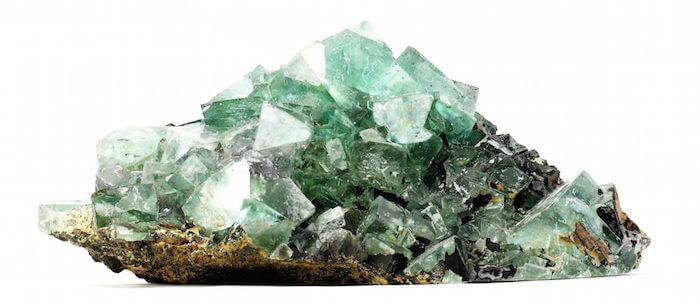
Fluorite crystals
Natural Fluoride versus Synthetic Fluoride
The fluoride debate is misleading because many people fail to differentiate between natural fluoride and synthetic fluoride.
Natural fluorite is a trace mineral. It’s an aqua-colored stone, found in the earth like any other mineral.
Fluorite is the mineral form of calcium fluoride. But calcium fluoride isn’t what’s put in our water supply, pesticides, or herbicides.
The fluoride in public water is made of non-pharmaceutical-grade synthetic materials like hydrofluoric acid or sodium fluoride.
These compounds are toxic chemical byproducts of aluminum, steel, cement, and other manufacturing.
Synthetic fluorides are also hazardous waste products of the phosphate fertilizer industry.
Hydrofluoric acid is used to refine gasoline and to make many products, including air conditioners, freezers, computer screens, fluorescent light bulbs, plastics, and pesticides.
And these fluoride chemicals are added to the majority of our water supply!
The Case Against Fluoride
In The Case Against Fluoride, Paul Connett and two other scientists explain how fluoride harms our brains, bones, and kidneys.
There are, for example, over 75 studies showing that fluoride reduces human intelligence.
As Paul Connett, executive director of the Fluoride Action Network, put it:
“When historians come to write about this period, they will single out fluoridation as the single biggest mistake in public policy that we’ve ever had.”
For another well-researched book on this topic, see Christopher Bryson’s The Fluoride Deception.
Reducing Fluoride and Halide Exposure
Fluoride and chlorine belong to a family of reactive halides that compete with iodine—the element critical for thyroid and pineal function. Their pervasive presence in public water systems quietly shifts body chemistry toward calcification and endocrine fatigue.
Chlorine also has strong calcifying effects on the pineal gland. Unfortunately, chlorine is also in virtually all of our public water supply.
A precise filtration strategy is therefore foundational. Reverse‑osmosis and activated‑alumina filters remove up to 95–99 percent of fluoride when properly maintained. Home filters built only for taste or odor will not suffice.
Toothbrushing habitually floods the mouth with fluoride several times a day. Switch to fluoride‑free formulas made from simple bases like coconut oil and baking soda, or olive‑oil soaps that clean without chemical loading.
Replace nonstick cookware that contains PFOA or PFAS with stainless steel or glass. These fluorinated polymers not only release toxic fumes when heated but act as persistent endocrine disruptors once in the bloodstream. The same family of chemicals also coats stain‑repellent fabrics, food wrappings, and fire‑resistant carpets.
Eating organic, unprocessed food reduces two major inputs simultaneously: fluoride‑based pesticides and synthetic calcium additives. Graceful biology depends on whole minerals arriving with their natural cofactors, not industrial isolates.
Water Filtration and Grounded Hydration
To find out for certain what you’re drinking and bathing in, you can contact your local municipality and request a water report.
If you aren’t on public water, scroll down past this section.
Assuming your water is fluoridated and chlorinated, the best solution is to filter your water as best as you can.
Clean water is the fastest way to unburden the pineal gland. Yet most “filters” are decorative —they improve taste but ignore fluoride, PFAS, and heavy metals. What matters is the filtration medium, testing transparency, and maintenance discipline.
There are two main types of filters: reverse osmosis and carbon blocks.
Generally speaking, reverse osmosis filters are better at removing fluoride.
Quality carbon mesh filters effectively filter almost everything except fluoride. (A few exceptions are listed below.)
Does Your Filter Need to be NSF Certified?
NSF is a third-party, not-for-profit testing agency that rates water filters. NSF stands for National Sanitation Foundation (not “Science”).
In the original version of this article, I said it was essential to obtain an NSF-certified product. However, I no longer believe that’s necessary.
Similar to organizations like the WHO and the CDC, the National Sanitation Foundation receives private funding. It is not a “government organization, ” which means that its financial backing can influence its current and future decisions.
Also, NSF charges a hefty annual fee for being “NSF-certified.” It’s understandable why many innovative upstarts don’t want to pay that fee.
Even if a water filtration brand isn’t NSF-certified, it should be tested using NSF/ANSI standard testing protocols. Also, they should publish their latest lab results on their website for public review. (All of the products listed below qualify.)
I’ve researched and vetted the brands below for this guide. The filters (called media) for each brand meet or exceed the NSF testing protocols.
(Disclaimer: The products recommended below have affiliate links. This does not affect what you pay at all. In fact, in most cases, you can use the discount codes provided below for additional discounts.)
1. Above‑Sink Pitchers — Simple Entry Point
For renters or low‑install spaces, use gravity or pressure pitchers certified for fluoride reduction.

ClearlyFiltered Water Pitcher
A BPA-free, medical-grade Tritan water pitcher filters out fluoride, lead, mercury, and chlorine.
It filters 98.2% of fluoride and 99.9% chlorine. If you use Brita, switch to ClearlyFiltered, which filters over 1,000% more contaminants.
(Note: ClearlyFiltered exceeds NSF standards, but they aren’t technically NSF-certified.)
ClearlyFiltered Water Pitcher | Use code CEOSAGE15 and save 15% on your first order from ClearlyFiltered.

Epic Pure Water Filter Pitcher
Removes 99.99% of contaminants, including 97.88% of fluoride and 98.4% of chlorine.
Epic’s most recent lab results can be found here.
Epic’s Pitcher is probably the most affordable option for filtering the majority of fluoride from drinking water.
(Note: Epic’s Pitcher exceeds NSF standards but they aren’t technically NSF-certified.)
Epic Pure Water Filter Pitcher | Use code CEOSAGE20 to save 20% on your order. (Use the same code for a 30% discount if you sign up for their filter subscription plan.)

Epic Pure Water Filter Dispenser
Same Epic filter as above in a countertop dispenser design.
Epic Pure Water Filter Dispenser | Use code CEOSAGE20 to save 20% on your order. (Use the same code for a 30% discount if you sign up for their filter subscription plan.)
2. Under‑Sink Systems — Permanent Solution

Aquasana OptimH2O Reverse Osmosis Water Filter
This below-sink reverse osmosis filtering system is certified to remove 95% of fluoride and 97% of chlorine.
Aquasana OptimH2O Reverse Osmosis Water Filter | Use code CEOSAGE for a 50% discount and free shipping at Aquasana.

3-Stage Under-the-Sink Filter System by ClearlyFiltered
So most under-sink, water-filtration options use reverse osmosis and generally require a professional to install (including the option below).
But ClearlyFiltered managed to develop an under-sink filtration system that is not only do-it-yourself but also removes up to 99.9% of contaminants.
According to their lab report, their 3-stage system filters out 99.5% of fluoride and 98.6% of chlorine. Impressive!
3-Stage Under-the-Sink Filter System by ClearlyFiltered | Use code CEOSAGE15 and save 15% on your first order from ClearlyFiltered.
Here’s a quick comparison table:
| Filter Type | Fluoride % Rem. | Chlorine % Rem. | Install | Discount Code |
|---|---|---|---|---|
| Clearly Filtered Pitcher | 98 % | 99.9 % | Counter / Pitcher | CEOSAGE15 |
| Epic Pure Pitcher | 97.9 % | 98.4 % | Counter / Pitcher | CEOSAGE20 |
| Aquasana RO Under‑Sink | 95 % | 97 % | Plumbed | CEOSAGE |
| Clearly Filtered 3‑Stage Under‑Sink | 99.5 % | 98.6 % | DIY Plumbed | CEOSAGE15 |
Shower Solution
Fluoride and chlorine are absorbed by the skin when you shower or bathe.
Although plenty of shower filters remove chlorine, I don’t know of any that filter fluoride.

Aquasana Deluxe Shower Water Filter System
Removes over 90% of chlorine.
Aquasana Deluxe Shower Water Filter System | Use code CEOSAGE for up to a 50% discount and free shipping at Aquasana.
Whole House Water Filters?
Unfortunately, I am unaware of any whole-house water filtration system that removes fluoride.
Before you message me with an existing whole-house water filter, I am aware that numerous whole-house filters claim to filter fluoride.
However, you’ll notice that none of them show lab results. Personally, I suspect this is just “marketing,” and I don’t believe any true whole-house water filter exists that actually removes a significant amount of fluoride.
Other Common Household Calcifying Culprits
Let’s start with toothpaste.
1 – Avoid Commercial Brands of Toothpaste
Doesn’t fluoride prevent tooth decay? Isn’t that why cities put fluoride in our water supply in the first place?
That’s what I thought too. However, the evidence doesn’t support this claim. In fact, the data clearly shows there’s no difference in tooth decay between nations that fluoridate their water and those that don’t.
Even though 97% of Europe bans fluoride, tooth decay has decreased considerably.1Ibid.
The Cochrane Collaboration, a group of doctors and researchers, set out to determine the effects of fluoride on dental care. They found only ten studies with sufficient scientific rigor. These papers determined that “fluoridation does not reduce cavities to a statistically significant degree in permanent teeth.”
Ninety-five percent of commercial toothpaste brands have fluoride. I recommend you avoid using all commercial brands of toothpaste. Not only do they include fluoride, but they also contain many other toxic chemicals, including sodium lauryl sulfate (SLS). SLS is a cheap thickening agent found in most soaps, including your laundry detergent.
Instead, you can find many alternative toothpaste makers available, like OraWellness and Tooth Soap.
I sometimes use Tooth Soap. It’s made with olive oil, coconut oil, distilled water, and essential oils. You just need a few drops of the liquid. One bottle lasts months. It’s a different experience, but I didn’t find it difficult to adjust to it.
Or you can make your own with coconut oil and baking soda.
2 – Be Wary of Calcium Supplements
Calcium is essential for strong bones, right?
Yes, but when that calcium is in a synthetic form, it too has a calcifying effect on the pineal gland and other places in the body.
Did someone tell you it’s important to take calcium supplements?
One Harvard study links calcium supplements with dementia. Calcium supplements are also linked to a higher rate of heart attack in older women.
Most calcium supplements contain calcium carbonate, a known calcifying agent.
If you need more calcium in your diet, eat more organic whole foods, such as spinach, kale, and broccoli.
Brands like Megafood use food-derived supplementation instead of synthetics.
Also, pairing magnesium with calcium helps direct the calcium into the bones instead of the brain.
3 – Avoid Bottled and Instant Teas
I used to drink a fair amount of hot tea, mainly organic green tea. So when I began seeing articles linking tea consumption and fluoride levels, I was concerned.
Green and black tea are loaded with antioxidants. So, how do you get the benefits from tea without the fluoride?
Research shows that young tea leaves have far more antioxidants than older leaves.
With fluoride, the situation is reversed: the older the leaves, the higher the fluoride levels.
“White teas” have the least fluoride and most antioxidants. For example, try Uncle Les’s Tea- Organic White Tea or Prince of Peace Organic White Tea.
Commercial brands like Lipton, Nestea, and AriZona, have twice as much fluoride as public water (Mercola, 2005). Obviously, these brands use older, lower-quality sources of tea.
If you want to decalcify your pineal gland, avoid bottled tea, instant teas, and low-priced commercial brands of tea.
4 – Ditch Your Nonstick Cookware and Other PFCs
Again, to decalcify your pineal gland, we must stop doing all the common “modern things” people do that lead to further calcification.
Most non-stick coatings on cookware contain PFOA (perfluorooctanoic acid) and perfluorinated compounds (PFCs).
As you can see in these names, they are fluoride-based substances that are both toxic and calcifying.
So swap your nonstick cookware with stainless steel, ceramic, glass, or cast iron cookware.
Other products that contain PFCs include stain-proof clothing, flame-retardant products, stain-resistant carpeting, and packaging for greasy foods.
5 – Avoid Processed Foods
Conventionally-grown produce sprayed with pesticides, as well as processed foods, are a double-whammy for pineal gland calcification.
Pesticides, Herbicides, and Fluoride
Fluoride’s high toxicity makes it an effective ingredient in commercial pesticides.
Two types of pesticides sprayed on foods use fluoride: cryolite and sulfuryl fluoride.
Cryolite is used heavily in grape products. According to a 2005 USDA study, the average fluoride level in white grapes juice, white wine, and raisins is over 2 ppm (that’s twice as much as fluoride in public water).
Many farmers also spray cryolite on produce, including broccoli, kale, and cabbage.
Processed Foods, Fluoride, and Synthetic Calcium
Virtually all processed foods contain some form of synthetic calcium, such as calcium phosphate, calcium carbonate, or dicalcium phosphate.
All of these forms of calcium lead to calcification.
Additionally, food-processing facilities use sulfuryl fluoride to fumigate their facilities and food, both of which contaminate food with fluoride.
So if you’re interested in decalcifying the pineal gland, you now have one more reason to eat organic, whole (unprocessed) foods.
Bottom line: Do your best to avoid processed foods and “conventionally grown produce” (produce grown with pesticides). Consume as much organic, non-genetically modified (non-GMO) produce and foods as you can. If you eat animal products, ensure they are organic, grain-free, free-range, antibiotic-free, and hormone-free.
Decalcification as Self‑Leadership
Understanding the pineal is less about biology and more about self-mastery.
When you choose what enters your body and attention, you reassert governance over your own consciousness. That act of leadership reverberates through vitality, clarity, and ethics.
A clear pineal correlates with consistent decision‑making and emotional stability because melatonin anchors serotonin balance.
CEOs learn that mental fog is often biological noise. Remove the noise, and strategy emerges naturally.
Conscious decalcification also reconnects you to circadian truths larger than human systems of schedule and screen. It reminds you that the body listens first to the sun, the earth, and your own coherence.
Reclaim Pineal Clarity: Next Steps for Fluoride Removal and Circadian Restoration
The pineal gland sits at the crossroads of light and biology—translating cosmic rhythm into cellular order.
Modern pollutants and habits mute that translation through calcification, altering sleep, mood, and intuition.
Reversing the process requires:
- Ending fluoride and synthetic calcium inflow.
- Supporting chelation and mineral balance through targeted nutrition.
- Re‑establishing circadian discipline in light, dark, and earth connection.
Decalcification is not a trend but a threshold—bioelectric clarity returning to its natural frequency.
Once you cross it, health feels less like “maintenance” and more like internal resonance.
Now, it’s time to detoxify the pineal gland and chelate heavy metals from your blood. That’s the topic of Part 2.
Read Next in this Pineal Gland Series
Continue your journey with the rest of the series:
Part 1: How to Decalcify Your Pineal Gland (You Are Here)
Part 2: Pineal Gland Detox with Supplements
Part 3: Block Blue Light (Restore the Circadian Rhythm)
Part 4: Activate Your Pineal Gland
This guide is part of the Energy Science & Environmental Physiology Series.
Understand how light, magnetism, and the Earth’s bioelectric field influence vitality. Discover practical ways to align your biology with natural energetic rhythms.
Scholarly References
- Dawson, D., Gibbon, S., & Singh, P. (1996). The hypothermic effect of melatonin on core body temperature: Is more better? Journal of Pineal Research, 20(4), 192–197.
- Edward R. Schlesinger, M.D., M.P.H., et al. (1956). Newburgh‑Kingston caries‑fluorine study XIII: Pediatric findings after ten years. Journal of the American Dental Association, 52(3), 296–306.
- Iheozor‑Ejiofor, Z., Worthington, H. V., Walsh, T., O’Malley, L., Jevons, C., Waterhouse, P. J., … Cochrane Oral Health Group. (2015). Water fluoridation for the prevention of dental caries. Cochrane Database of Systematic Reviews, Issue 6, CD010856.
- Kunz, D., Schmitz, S., Mahlberg, R., Mohr, A., Stöter, C., Wolf, K. J., & Herrmann, W. M. (1999). A new concept for melatonin deficit: On pineal calcification and melatonin excretion. Neuropsychopharmacology, 21(6), 765–772.
- Liberman, J. (1990). Light: Medicine of the Future. Bear & Company.
- Luke, J. (2001). Fluoride deposition in the aged human pineal gland. Caries Research, 35(2), 125–128.
- Luke, J. (1997). The Effect of Fluoride on the Physiology of the Pineal Gland [Doctoral dissertation, University of Surrey]. Fluoride Action Network Archive.
- Łukomska, A., Jakubczyk, K., Maciejewska, D., Baranowska‑Bosiacka, I., Janda, K., Goschorska, M., Chlubek, D., Bosiacka, B., & Gutowska, I. (2015). The fluoride content of Yerba Mate depending on the country of origin and conditions of infusion. Biological Trace Element Research, 167(2), 320–325.
- Mahlberg, R., Kienast, T., Hädel, S., Heidenreich, J. O., Schmitz, S., & Kunz, D. (2009). Degree of pineal calcification is associated with polysomnographic sleep measures in primary insomnia patients. Sleep Medicine, 10(4), 439–445.
- Mercola, J. (2005, February 9). Fluoride and Tea. Mercola Articles Archive.
- Mrvelj, A., & Womble, M. D. (2020). Fluoride‑free diet stimulates pineal growth in aged male rats. Biological Trace Element Research, 197, 175–183.
- Paul Connett, J. Beck, & H. Micklem. (2010). The Case Against Fluoride: How Hazardous Waste Ended Up in Our Drinking Water and the Bad Science and Powerful Politics That Keep It There. Chelsea Green Publishing.
- Tan, D. X., Xu, B., Zhou, X., & Reiter, R. J. (2018). Pineal Calcification, Melatonin Production, Aging, Associated Health Consequences and Rejuvenation of the Pineal Gland. Molecules (Basel, Switzerland), 23(2), 301.
- US Centers for Disease Control and Prevention (CDC). (2020). Fluoridation statistics: United States, 2020.
- Water Fluoridation Status in Western Europe. (2023). Fluoride Action Network.
- World Health Organization (WHO) / Fluoride Action Network Data Compilation. (2016). Tooth decay in fluoridated and non‑fluoridated countries.