
How do you make positive changes in your life?
And how do you make these changes stick?
Why can it seem difficult to create good habits and stop bad ones?
I know of one executive behavioral coach whom Fortune 500 CEOs pay over $100k to change their behaviors.
Can you imagine? They focus on just ONE habit and work together for an entire year!
Crazy, right?
Thankfully, establishing good habits and making positive changes can be relatively easy IF you understand a few basic principles and apply them daily.
This definitive guide reveals the findings on the science of willpower and self-control. It also outlines specific strategies you can use to create good habits that stick.
Let’s dive in…
What is a Positive Change?
Simply put, a positive change is any fundamental change you make in your behavior that positively influences your overall well-being.
A habit is a specific pattern of behavior. Establishing good habits puts you on a fast track to making positive changes in your life. Shifting away from unsupportive habits also leads to positive change.
To make positive changes, it helps to understand the science of self-control and to adopt specific strategies that enable us to make our changes stick.
Children and Their Passion for Marshmallows
Have you heard of the marshmallow experiments?
One at a time, psychologist Walter Mischel sat four-year-olds at a table, a single item placed before them: one marshmallow.
Mischel or a staff member would tell the child that if they wait to eat the marshmallow until they return, they can have two marshmallows instead of one.
Then, the adult leaves the room with only the child, a video camera, and a single marshmallow on a table.
Some kids eat the tasty treat right away. Some fight the temptation for a while before caving. Others regulate their impulses successfully.
Mischel began these tests over 45 years ago, and they continue today:
What are the findings of this massive longitudinal study?
We’ll get back to that in a minute. But first…
The Cookie and the Radish
Another psychologist, Roy Baumeister, set up an equally, if not more, sadistic experiment.
Participants enter a room with a table displaying a platter of freshly baked chocolate chip cookies and a bowl of red and white radishes.
With cookie aroma wafting through the air, Baumeister’s researchers instruct one group of participants to eat two or three radishes before asking them to solve geometric puzzles.
Unknown to the participants, these puzzles were unsolvable.
Participants were not permitted to eat any cookies.
Another group, the control group, was offered two or three warm cookies and then given the same puzzles. No radishes were necessary.
The result?
Compared to the control group, the radish-eating group spent less than half the amount of time trying to solve the puzzles. This same group also recorded about half the number of attempts at solving them.
The conclusion: In resisting the temptation to eat the warm cookies, the radish eaters had depleted their mental strength or what’s commonly called willpower.
The Science of Self-Control
These and many other creative experiments that measure the depletion of willpower form the basis and understanding for a new science of self-control.
Two critical discoveries emerge from these experiments:
- Everyone is born with varying levels of willpower.
- The will, like any muscle in the body, can get fatigued—what Baumeister calls ego depletion.1Baumeister, R. F., Bratslavsky, E., Muraven, M., & Tice, D. M. (1998). Ego depletion: Is the active self a limited resource? Journal of Personality and Social Psychology, 74(5), 1252-1265. http://dx.doi.org/10.1037/0022-3514.74.5.1252
These researchers have also illuminated the importance of self-discipline in making positive changes in your life …
THE Major Determining Factor in Success
Mischel’s team followed up with his marshmallow subjects many years later.
Mischel found that kids who could exert greater willpower (by resisting the temptation to eat the first marshmallow) were better adjusted in high school and scored higher on their standardized tests.
Psychologists Angela Duckworth and Martin Seligman found that self-discipline outdoes IQ in determining academic performance.2Duckworth, A. L., & Seligman, M. E. P. (2005). Self-Discipline Outdoes IQ in Predicting Academic Performance of Adolescents. Psychological Science, 16(12), 939–944. https://doi.org/10.1111/j.1467-9280.2005.01641.x
As adults, these participants had higher self-esteem, better relationships, fewer psychological abnormalities, and earned more money.
These results show how vital willpower is for making positive changes that direct the course of our lives.
Impulse Control: A Pervasive Human Problem
Do you struggle with bad habits in one form or another?
According to psychologist Kelly McGonigal, author of The Willpower Instinct, you’re not alone:
“The science of willpower makes clear that everyone struggles in some way with temptation, addiction, distraction, and procrastination. These are not individual weaknesses that reveal our personal inadequacies—they are universal experiences and part of the human condition.”
Well, that’s comforting, to a degree.
But while on a personal level, this fact might alleviate a degree of shame and guilt, we all know what it’s like when the limits of our will confront us.
There must be more to the story…
The Astounding Limits of Willpower for Making Positive Changes
Research from Mischel, Baumeister, and others confirms what we’ve all experienced: willpower has its limits.
Willpower is a battle between the immediate desires of our animal self (Freud’s ID) and the long-term goals of our Future Self.
Taoist literature distinguishes the lower soul from the higher soul. The lower soul is our animal nature.
Conditioned and distorted by our environment, this lower soul only seeks what it perceives to be pleasurable in the immediate now.
The higher soul, in contrast, gently guides us on a path of patience and forbearance so we may return to our Original Nature. Our Original Nature isn’t subject to the conditioning of our environment.
But because our animal self or lower soul has been conditioned from early life to run the show (“give me what I want when I want it,” “make me comfortable,” etc.), it often wins the willpower battle. As a consequence, our Original Nature often never returns.
Breaking Through the Motivation Fallacy for Change
Have you ever thought:
If only I had more motivation, THEN I would be able to change [insert your undesirable habit here].
Let’s say you want to change a habit. For example:
- Manage your time better.
- Eat more wholesome food.
- Stop using social media.
- Be less lazy.
- Exercise more frequently.
- Procrastinate less.
- Communicate more directly.
- Love more wholeheartedly.
- Be kinder and more patient.
- Improve your finances.
You genuinely want to make positive changes, but you seem to lack the internal drive.
“Motivation” is the word we often use here, right?
- I should be better.
- I really should change that …
While these thoughts are terrific at producing guilt and internal tension, they don’t help us make positive changes in our lives.
Where’s the Motivation to Make Positive Changes?
As we’ve seen above, the science of willpower shows that we have a limited reservoir of mental strength each day.
So if you’re already using your available mental energy each day, where is the source of this motivation supposed to come from?
This ego depletion, combined with our repetitive conditioning of certain disempowering habitual patterns, partly explains why making positive changes can be challenging.

How to Break Bad Habits
So here’s one of the most practical strategies behavioral science has to offer:
Instead of using willpower to restrict yourself, use your available self-discipline to identify your impulse control triggers in advance.
In essence, set up your environment to support your Future Self. Psychologists call this situational self-control, and it works far better than willpower.3Duckworth, A. L., Gendler, T. S., & Gross, J. J. (2016). Situational Strategies for Self-Control. Perspectives on Psychological Science, 11(1), 35–55. https://doi.org/10.1177/1745691615623247
How do you use situational self-control to break bad habits?
Want to stop binge-snacking in the evening? Don’t keep junk food in your house.
Want to watch less television? Put the remote control in a drawer in the other room (instead of next to the couch) and unplug your television.
Notice how these actions make it more difficult to succumb to your impulses. Putting the remote control in a drawer doesn’t make it so you can’t watch TV, but it makes you pause long enough to make a conscious choice.
How to Create Good Habits for Positive Change
But it doesn’t stop there. You can also use situational self-control strategies to promote constructive habits that lead to positive change. How?
- Want to work out more often? Keep a set of dumbbells next to your desk.
- Want to focus on a writing project? Shut off all notifications on your computer and put your mobile phone on airplane mode.
- Want to run in the morning? Put your clothes and running shoes by your bedside in the evening.
Your environment shapes your thoughts, behaviors, habits, and actions.
Change your setting and you will gradually break bad habits, install good habits, and make major positive changes in your life.
Remember, your environment trumps willpower.
How to Build Willpower to Support Positive Changes
However, just because willpower has limitations doesn’t mean we should neglect it entirely.
Research shows that willpower is like a muscle that can be developed over time. How?
Interestingly, meditation is one of the primary ways to build willpower because it helps develop parts of the brain associated with willpower and counteracts the depletion of self-control.4Friese, M., Messner, C. & Schaffner, Y. (2012) Mindfulness meditation counteracts self-control depletion. Consciousness and Cognition, 21(2), 1016-1022. https://doi.org/10.1016/j.concog.2012.01.008
Meditation can provide you with more time between your impulses (stimuli) and your need to respond to them (actions).
For specific guidance and instructions on willpower-building exercises, see:
- 21 Meditation Training Tips for Beginners
- How to Tune Your Breath to Increase Mental Energy
- How to Cultivate Energy using Zhan Zhuang
These guides offer detailed practices that can help you restore your mental energy, thereby building willpower and enhancing impulse control.
Cultivating your will greatly improves your ability to make positive changes in your life.
See also: The Ultimate List of Spiritual Practices (200+)
Moving Beyond Willpower and Impulse Control
All of the methods current research suggests are helpful. But ultimately, the struggle between our animal impulses and our Future Self remains.
This battle taxes our mental strength daily, hindering our potential in ways difficult to communicate.
Is there anything else we can do about our limitations when bad habits persist?
Instead of outsmarting our impulses, what if there were a way to reduce the intensity of these base desires?
If successful, it would significantly improve all of the useful methods offered by the science of willpower.
The answer seems to lie not in the exercise of willpower but in the application of free will.
What does this mean?
The Power of Free Will
Willpower is a force we exert over our impulses. Like any force, it has a limited supply of energy, and so it depletes as we use it.
Free will, in contrast, is the exercise of choice. When we select an option, we decide. Decide, from Latin decidere “to decide, determine,” literally “to cut off.”
When we decide, we cut off other options.
To decide, however, isn’t always straightforward. We’ve all seemingly made decisions to make positive changes that support ourselves, only later to go against our decisions.
The key is to have your cognitive mind, which makes decisions—also called executive function—team up with your emotional brain and your Future Self. Together, you have formidable allies.
What does this look like in practice?
Let’s first take a quick look at the role emotions have in facilitating positive change.
The Challenge of Inspiring Positive Change to Create Constructive Habits
We often try to change our habits by appealing to reason and logic. We present a compelling argument for why a particular change or habit is beneficial.
Does it work?
Try telling a friend that if he doesn’t change his behavior and get his aggression under control, he’ll lose his job.
Even if he wants to stop his current behavior, this argument won’t lead to positive change. Why not?
All physicians know that being overweight is detrimental to their health. Yet, aren’t there many overweight physicians?
Knowledge is not enough to trigger meaningful change.
The Secret to Creating Positive Change in Your Life
Rational arguments and logic appeal to our prefrontal cortex—our thinking brains.
But before logic and reason can influence us, the limbic system—our emotional brain—must first engage.
The overweight physician knows being overweight is harmful to his health. His thinking brain has all the information he needs to make a rational decision to change.
But where’s the emotional hook?
If he’s able to associate being overweight with not being alive to see his granddaughter grow up, for example, he may become sad or angry. These emotions might help motivate him to change his habits for the better.
Your friend likely knows of the damaging effects of his poor anger management. His thinking brain knows there’s a problem.
The key is to trigger an emotional response associated with the desired positive change.
Change is possible when we evoke our emotional center first.
We change when change is meaningful. In this context, we derive meaning from feelings, not thoughts.
How to Create Positive Change and Establish Constructive Habits
So how do you change your behavior, stop bad habits, and install positive habits?
In the case of your fictitious friend, you paint a picture that highlights the cost of his continued behavior in his performance, his work relationships, and his uncertain financial future.
In short, you agitate him. Agitation can lead to action.
(By the way, this is what clever advertisers and marketers do daily to get us to buy their products and services.)
You can also inspire him to a new view of his potential:
- How would it feel to have better control over your emotional reactions?
- When you triumph over this behavioral problem, what will it give you?
- How much more energy and enjoyment will you discover in your work and personal life?
Having awoken his emotions, you can now give his thinking brain specific instructions.
Perhaps he can take steps to improve his emotional intelligence through targeted mental training exercises.
Finally, how can he alter his environment to help make the change stick?
For example, he can set up an automatic reminder to do a 2-minute breathing exercise each morning when he wakes up and before going into any meeting.
3 Steps to Making Positive Changes to Your Behavior
To recap, if you want to inspire positive changes for yourself:
Step 1: Tap into your emotions.
Find a way to feel the cost of staying the same and the benefits of changing.
Step 2: Outline specific actions you can take on the path to positive change.
Clearly define simple steps you can take to establish positive changes. Make these steps obvious, attractive, and easy.
Step 3: Set up the conditions in the environment necessary to support the desired change.
Do everything you can to make establishing good habits easier without requiring forethought or mental energy.
Remember: feelings come first; reasons come second.
3 Essential Tools for Supporting Lasting Positive Change
Okay, so we’ve already highlighted three powerful strategies for changing behavior, regulating impulse control, and breaking bad habits:
- Change your environment to support positive change.
- Tap into your emotions to create meaning for the desired change.
- Make steps for positive change that are obvious, attractive, and easy.
But if you genuinely want to set yourself up for lasting positive change by leveraging your free will, there are still a few more ingredients.
In truth, many issues around impulse control and harmful behaviors are a sign that you’re living in discord with your values. These bad habits are merely symptoms.
So instead of focusing on the symptoms, set your sights on where you want to go.
There are at least three key areas to focus on:
- A personal vision for your Future Self that guides you forward,
- A clear set of personal values that highlight your ideal behaviors, and
- An understanding of the categories of life that are important to you.
With your vision, values, and areas of focus clear in your mind, it’s easier to make behavioral course corrections and move in a positive direction because you now have a personal North Star.
The power of vision and values is known by anyone who has them and lives them each day.
Mastering the Inner Game of Positive Change
As a former business coach to entrepreneurs and someone involved in transformational practices for over 30 years, I’ve confronted many of the common behavioral hurdles in working with clients and on my path to self-mastery.
From my observations, most individuals try to make positive changes in ineffective ways (as I did in the past too). Our attempts often fail because our strategies are ineffective and our mindsets are misaligned.
Here are seven lessons from current research and my experience in making positive changes in your life that stick:
Lesson 1: Restricting yourself will backfire.
Restricting yourself always backfires in the end.
For example, are you trying to think positive thoughts and avoid negativity?
Studies show that suppressing negative thoughts increases the chances that you’ll become depressed.5Wegner, D. M., Erber, R., & Zanakos, S. (1993). Ironic processes in the mental control of mood and mood-related thought. Journal of Personality and Social Psychology, 65(6), 1093-1104. https://doi.org/10.1037/0022-3514.65.6.1093,6Wegner, D. M. and Zanakos, S. (1994), Chronic Thought Suppression. Journal of Personality, 62: 615-640. https://doi.org/10.1111/j.1467-6494.1994.tb00311.x
Are you going on a diet to lose weight?
Not only does dieting not work, but studies also show that restricting yourself increases your cravings.7Mann, T, Tomiyama, AJ, et al. (2007) Medicare’s search for effective obesity treatments: diets are not the answer. American Psychologist. 62(3):220-33. DOI: 10.1037/0003-066X.62.3.220,8Hill, AJ. (2007) The psychology of food craving. Proceedings of the Nutrition Society. 66(2):277-85. DOI: 10.1017/S0029665107005502
This dynamic is a known insight from depth psychology too: what you repress grows stronger within your unconscious.
Using force against yourself does not support positive mental health or positive change.
Lesson 2: Focusing on bad habits reinforces them.
When it comes to bad habits, it’s easy to fixate on what you’re doing wrong.
Not only might this trigger shame and guilt, but it also keeps your mind on how things are right now. Perhaps you’ve heard the saying, “What you hold in mind tends to manifest.”
For this reason, it’s helpful, once again, to establish a vision for your Future Self and align with your values.
These essential tools can magnetically pull you toward positive change as you take the other steps to cultivate willpower and leverage your environment.
Lesson 3: Change your fixed mindset first.
Another reason that it’s difficult for many people to make positive changes is that they fundamentally don’t believe change is possible—and sometimes, they don’t even know they have this mindset!
Psychologist Carol Dweck’s research on mindsets reveals that those with a fixed mindset believe “they are the way they are.” With this fixed mindset deeply rooted, it’s nearly impossible to make positive changes to your daily habits.
See my in-depth guide based on Dweck’s work on how to change your fixed mindset into a growth mindset.
Lesson 4: Guilt reinforces bad habits. Self-compassion supports positive change.
Anyone struggling with impulse control is likely familiar with guilt. This emotion is used as a tool by most organized religions, as well as parents, to manipulate children to behave better.
Guilt is so ingrained in many of us that we often don’t even know we’re feeling it.
The problem is that guilt doesn’t inspire positive change; it just makes you feel bad. When you feel bad, your brain seeks a dopamine kick to feel better, which triggers more bad habits and impulse control issues.
Guilt often leads to self-criticism, which reinforces bad habits. Self-compassion, in contrast, fuels healthy development and positive change. But if this is so, why don’t we take it easier on ourselves?
Psychologist Kristin Neff explains:9Tara Parker-Pope. “Go Easy on Yourself, a New Wave of Research Urges.” The New York Times. February 28, 2011.
“The biggest reason people aren’t more self-compassionate is that they are afraid they’ll become self-indulgent. They believe self-criticism is what keeps them in line. Most people have gotten it wrong because our culture says being hard on yourself is the way to be.”
Self-compassion, not self-criticism, inspires positive change.
Studies show that self-compassion is a powerful ally in improving self-regulation and impulse control, especially for health-related behaviors.10Horan, Kristin, H and Taylor, M. (2018) Mindfulness and self-compassion as tools in health behavior change. Journal of Contextual Behavioral Science. Vol 8, April 8-16. https://doi.org/10.1016/j.jcbs.2018.02.003,11Biber, D. D., & Ellis, R. (2017). The effect of self-compassion on the self-regulation of health behaviors: A systematic review. Journal of Health Psychology. https://doi.org/10.1177/1359105317713361
Lesson 5: Cultivate your mental energy.
If you’re running on mental fumes, as many of us do on an all-too-consistent basis, you’ve already put yourself in a weakened position.
The key to consistency in making positive changes is learning to manage your mental energy.
First, it’s helpful to become conscious of what depletes your energy. These factors include:
- Decisions you make, including what to wear, eat, or do next.
- Emotions you repress or express (especially desires and rage).
- Distractions that take you out of flow (including every push notification on your mobile device).
- Everything you do that you don’t want to do (talking to certain people, filing your taxes, etc).
Next, learn to rest and recover. Take more breaks. Nap, if you can. Find ways of rejuvenating yourself when you feel fatigued or wired.
Restoring the circadian rhythm is vital to restore your mental energy and enhance self-regulation.
I have derived significant benefits from a traditional standing practice from various qigong systems called Zhan Zhuang.
Find whatever works for you and restore your energy often. (See also my audio program: The Mastery Methods.)
Lesson 6: Understand What’s Driving You
Intrinsic motivation means doing things because you want to do them for yourself.
Extrinsic motivation is when you do it because you’re seeking an external reward based on your basic human needs.
When your motivations are predominantly extrinsically motivated, you will deplete your internal resources more quickly.
See this in-depth guide on intrinsic motivation here.
Lesson 7: Make Micro-Changes to Establish Positive Momentum
Micro-changes are minute changes you make daily to help establish good habits.
Oftentimes, when we get inspired to create positive change, we make too many changes at once.
For example, let’s say you haven’t been working out or doing any strength-building exercises for years. Then, you decide to go to the gym 5 days per week and work out for an hour daily.
While this decision is admirable, it’s also not sustainable. Why? Because you’re going to trigger internal resistance once your initial enthusiasm wanes. Eventually, you’ll abandon this desired positive change entirely.
Instead, to establish good habits and make them stick, be gentle and incremental with your approach.
Following the above example, instead of going to the gym, which is time-consuming and involves many actions, start with a brief strength-building routine at home.
For example, start with five or ten daily pushups. Then, add one or two more pushups each day. Set a goal of, say, 20 or 50 push-ups.
Once you establish positive momentum, introduce other exercises into your routine. But again, do so slowly and deliberately.
Recap: Key Lessons on Making Positive Changes
Here are the steps highlighted above to manage impulse control, break bad habits, and make positive changes in your life:
- Decide what positive changes you want to make.
- Connect with the emotional reasons why you want to make these changes.
- Create a concise and easy-to-follow action plan for positive change.
- Set up your environment to make change easier.
- Clarify the vision for your Future Self.
- Discover your core values and related desired behaviors.
- Practice methods like meditation to cultivate your mental energy.
- Establish a growth mindset.
- Use self-compassion and self-acceptance instead of guilt and self-criticism.
- Make micro-changes to your daily behaviors to establish positive momentum.
Okay, time to put these insights into practice.
Here’s something you can do right now:
- Select ONE positive change you want to make.
- Determine ONE thing you can do to your environment to promote the change you seek.
Then, get started right now!
Book Recommendations on Making Positive Changes
Here are four excellent books on creating good habits and making positive change:
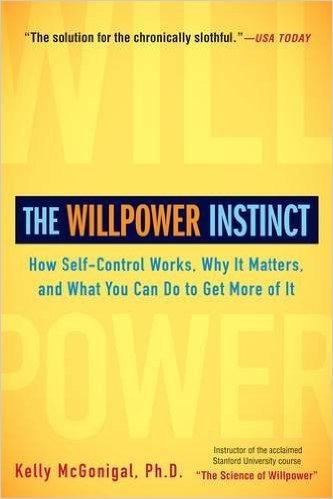
The Willpower Instinct by Kelly McGonigal
Print

The Power of Habit by Charles Duhigg
Print

Atomic Habits by James Clear
Print

Switch by Dan and Chip Heath
Print
Read Next
How to Use the Wheel of Life Assessment to Improve Your Level of Fulfillment
A Practical Guide to Maslow’s Basic Human Needs for Understanding Motivation
How to Use Morning Routines and Rituals to Enliven Your Day
A Practical Guide to Authentic Spiritual Guidance (7 Effective Approaches)
Wow! Can we teach this at every school, university and company please?
Once again you gave us an amazing article, which inspired me to make some powerful upgrades to our coaching programs. Scott, thank you!
That’s really great to hear, Alexander. I’m sure your coaching program will become even more awesome. Thanks for your comment!
Scott ,
Thank you Very much for Sharing your Valuable knowledge and experience , It Makes a lot of Difference to me , always you Excel by Yourself , Always Better and Better …
Easy , Deep , Practical and Guided Problem solving …
your web become my first to look for searching for a solution or insight related to coaching and Psychological help and development .
Thank You !
Bassem
You’re most welcome, Bassem. Glad you’re finding these guides useful for your development.
Hello, I have found your articles very interesting, well written and just summarized in a way that not alot of people can accomplish. It’s to the point, reinforced with evidence but not too much to lose track. Those recaps are excellent as well.
Thank you very much. Keep it up. I am sure that alot of people read and find useful things is your articles but dont necessarily comment. Which is a shame.
Have a great day and thank you again.
Hi Larry, you’re most welcome. Thank you for the kind words and for taking the time to share them.
Scott out of all the digital marketing that’s hit my email box in the last 20 years yours. I have to say I’m glad to let your insights through. There seems to be an element of sense and care to what you put out there.
Thank you, Richard. That’s great to hear. I appreciate your comments.
I am really grateful to you. Thank you Very much for Sharing your Valuable knowledge and experience.
You’re welcome, Deepak!
You have helped me in so many ways. Thank you so much
You’re most welcome, Raina. :-)
Brilliant and very well explained, inspiring, excited about putting these ideas into action.
Thank you for the feedback, Pamela. Yes, enjoy putting these ideas into action. They truly do work.
It’s really amazing to be part of you! Thanks a lot guru.
Amir, you are in no way a part of me. And I’m in no way a part of you.
I’m also not your guru or anyone’s guru.
If you find the information useful, apply it, and use it to your benefit.
I love these guides. The information helps me to improve my money coaching practice and myself too. Thank you Scott.
You’re welcome, Fanny.
I’m curious as to why guilt of all emotions is so popular yet seems to be so debilitating. Was this the first emotion to be experienced? I mean, how could we know. I started reading Jung’s on Man and His Symbols and he mentioned the guilt that may have been experienced when we had done something wrong. Which made us aware of ourselves in a way. I don’t know. I may have misinterpreted his explanation. Anyways! This guide is extremely helpful, thank you Scott Jeffrey.
All of the negative emotions can be debilitating — especially when we keep recycling them.
It is unlikely that guilt was the first emotion. Fear and anger are more likely candidates as they are tied to our limbic system. That is, they are more primal. I would also say that fear and anger are far more pervasive in society than guilt. Guilt is a sign of having a conscience — and not everyone has access to their conscience in a meaningful way.
Ultimately, children don’t experience guilt in childhood because they did something wrong. They experience guilt because their parents dump something on them that was inappropriate. If a child does something wrong (because they simply don’t know), and if a parent explains the situation and why it’s wrong to behave that way (treating the child as a small person), the child learns not to do that behavior without experiencing any shame or guilt. However, this is quite rare. And as such, we subconsciously learn to harbor “neurotic guilt” that stays with us.
In contrast, appropriate guilt is an adult response (as David Richio explains in “How to be an adult”). We learn from appropriate guilt. Neurotic guilt is the learned response that is both debilitating and destructive.
Wow, just what i needed right now. A fantastic insight into why I have chosen not to change my habits. Reading your article has given me the right tools to make the positive changes i need. I am so excited to start this new journey and to share it with others. Thank you
That’s great to hear, Sue. You’re most welcome.
Excellent sharing! It’s a much more holistic approach than many books tell about.
Thanks for the feedback, Luke.
Another amazing article Scott. You’re a hell of an inspiration mate. I’m 32 and for the last 10 years I’ve been drifting with no clear direction.
I then read your article on finding your core values and just like that I’ve now found what I wanted to do.
I’m now looking to become a video game developer and have a structured health and fitness plan coinciding with it.
Thanks again Scott and look forward to finally enrolling on one of your shadow courses. The recent one came at a bad time, but God willing I will enroll on the next one if the circumstances are favourable.
Thanks for the feedback, Jonathan.
Great to hear that you’ve found some direction for yourself. Enjoy the journey!
This is awesome! I think this should be part of a module especially in my Leadership and Management module. Fantastic
Thanks a million for the eye-opening revelations on the subject of human behavior. That goes to explain why change is not so easy, but following the principles here ushers in a platform for winning in the game of impulse control and taking dominion.
very helpful information!