
OVERVIEW: This in-depth guide explores the harmful effects of artificial blue light and how it affects the pineal gland and the circadian rhythm. It offers many strategies to block blue light to improve sleep.
______________
Welcome to Part 3 of this in-depth series on the pineal gland: how to block blue light to restore your circadian rhythm.
We covered how to decalcify your pineal gland and why it’s vitally important in Part 1.
In Part 2, we explored specific foods, minerals, and supplements for detoxifying the pineal gland.
Now, in Part 3: How to Block Blue Light, we’ll explore:
- The important role light plays in the pineal gland,
- The destructive influences of artificial blue light,
- How our modern lives are hijacking the pineal and impairing healthy cognitive functioning, and
- Actions you can take to block blue light right now.
Let’s dive in…
What is Circadian Rhythm?
In 1981, Harvard sleep researcher Charles Czeisler showed that a person’s internal clock aligns with the environment via daylight.
Circadian rhythm is the approximately 24-hour cycle of biological activities linked with natural periods of light and darkness.
“Biological clock” is another term for the circadian rhythm.
Circadian Rhythm, the Pineal Gland, and Melatonin
The pineal gland is the body’s light meter.
The pineal synthesizes and secretes melatonin. Melatonin is a hormone that plays a central role in regulating circadian rhythm.
How does the pineal gland know how much melatonin to secrete?
Light exposure to our eyes is the primary factor.
Normally, the pineal produces less melatonin in daylight hours and increases secretion during the night.
The Importance of Melatonin
Besides regulating circadian rhythm, melatonin is an important hormone that:
- Helps us sleep,
- Reduces pain in chronic conditions,
- Acts as an anti-inflammatory agent,
- Supports cellular immune responses, and
- Promotes healing in damaged tissues.
Studies by Walter Pierpaoli and Georges Maestroni show that melatonin also increases performance and longevity in rats.1MAESTRONI, G.J.M., CONTI, A. and PIERPAOLI, W. (1988), Pineal Melatonin, Its Fundamental Immunoregulatory Role in Aging and Cancer. Annals of the New York Academy of Sciences, 521: 140-148. https://doi.org/10.1111/j.1749-6632.1988.tb35272.x
But here’s the problem: nowadays, the pineal gland tends to produce an insufficient amount of melatonin in most people.
Circadian Rhythm Gone Wrong
What did we do before the advent of artificial light?
The sun used to be our primary source of lighting. Our evenings were spent in relative darkness.
Living under nature’s time clock, the pineal gland secretes melatonin correctly, and our bodies align with the circadian rhythm.
Now, however, artificial blue lighting pours through our homes, offices, and virtually everywhere else.
We stare at blue-lit screens—phones, tablets, monitors, and televisions—all day and evening.
And, it turns out, this abundance of lumens comes at a high cost to our biology. It throws the circadian rhythm out of alignment.
Our sleep suffers, and research shows, that it may contribute to causing cancer, heart disease, obesity, diabetes, and more.
Thankfully, we have ways to “reset” our natural body clock and restore the circadian rhythm.
The Benefits of Blue Light
Each wavelength of light in the electromagnetic spectrum affects our biology differently.

The Light Spectrum
Blue wavelengths, for example, are beneficial during daylight hours.
Natural blue light from the sun:
- Improves attention
- Increases reaction time2https://www.sciencedaily.com/releases/2016/06/160610094747.htm
- Boosts energy
- Enhances mood
- Helps fight fatigue3https://www.sciencedaily.com/releases/2014/02/140203191841.htm
All of these things support proper functioning and daily performance.
But come sundown, blue light is unnatural and becomes disruptive.
Why Block Blue Light?
Blue light causes the pineal gland to suppress melatonin production for up to four hours.
One Harvard study compared the effects of 6 1/2 hours of blue light and green light exposure.4Blue light has a dark side, 2020. https://www.health.harvard.edu/staying-healthy/blue-light-has-a-dark-side
They found that blue light suppresses melatonin twice as long as green light, shifting circadian rhythms by twice as much (3 hours versus 1 1/2 hours).
A University of Oxford study found that blue light delays sleep.5Violetta Pilorz, Shu K. E. Tam, Steven Hughes, Carina A. Pothecary, Aarti Jagannath, Mark W. Hankins, David M. Bannerman, Stafford L. Lightman, Vladyslav V. Vyazovskiy, Patrick M. Nolan, Russell G. Foster, Stuart N. Peirson. Melanopsin Regulates Both Sleep-Promoting and Arousal-Promoting Responses to Light. PLOS Biology, 2016; 14 (6): e1002482 DOI: 10.1371/journal.pbio.1002482
Health Risks Linked to Blue Light Exposure
A growing body of research links blue light exposure to numerous health risks:
- Cancer risks (melatonin reduces the risk of death from cancer)6J Pineal Res. 2005 Nov;39(4):360-6. PMID: 16207291
- Diabetes risks (messes with blood pressure)7The Endocrine Society. “Room light before bedtime may impact sleep quality, blood pressure and diabetes risk.” ScienceDaily, 14 January 2011. www.sciencedaily.com/releases/2011/01/110113082716.htm.
- Increased hunger and obesity (disrupts our metabolism)8American Academy of Sleep Medicine. “Evening blue light exposure linked to increased hunger.” ScienceDaily, 2 June 2014. www.sciencedaily.com/releases/2014/06/140602115916.htm.
- Higher risks of breast cancer9Chunla He, Sonia Taj Anand, Mark H. Ebell, John E. Vena, Sara Wagner Robb. Circadian disrupting exposures and breast cancer risk: a meta-analysis. International Archives of Occupational and Environmental Health, 2014; DOI: 10.1007/s00420-014-0986-x
- Bipolar disorder in kids10BioMed Central. “Faulty body clock may make kids bipolar.” ScienceDaily, 13 November 2009. www.sciencedaily.com/releases/2009/11/091111200213.htm.
Ultimately, because blue light suppresses melatonin and disrupts the circadian rhythm, it necessarily reduces our sleep quality.
Poor Sleep is Correlated With …
Poor sleep, in general, is linked to:
- Heart disease11Cappuccio FP, Cooper D, D’Elia L, Strazzullo P, Miller MA. Sleep duration predicts cardiovascular outcomes: a systematic review and meta-analysis of prospective studies. Eur Heart J. 2011 Jun;32(12):1484-92. doi: 10.1093/eurheartj/ehr007.
- Depression12Zhai L, Zhang H, Zhang D. SLEEP DURATION AND DEPRESSION AMONG ADULTS: A META-ANALYSIS OF PROSPECTIVE STUDIES. Depress Anxiety. 2015 Sep;32(9):664-70. doi: 10.1002/da.22386. Epub 2015 Jun 5. PMID: 26047492.
- Type-2 diabetes13Cappuccio FP, D’Elia L, Strazzullo P, Miller MA. Quantity and quality of sleep and incidence of type 2 diabetes: a systematic review and meta-analysis. Diabetes Care. 2010 Feb;33(2):414-20. doi: 10.2337/dc09-1124.
- Obesity14Zhai L, Zhang H, Zhang D. SLEEP DURATION AND DEPRESSION AMONG ADULTS: A META-ANALYSIS OF PROSPECTIVE STUDIES. Depress Anxiety. 2015 Sep;32(9):664-70. doi: 10.1002/da.22386.
Now, let’s look at how blue light affects our brains.
Blue Light Exposure Promotes Neurodegeneration
As we saw above, blue light reduces melatonin production. This vital hormone helps protect our brains and keep mitochondria functioning properly.
As unique structures in every cell in your body, mitochondria are considered the “powerhouses of the cell.” They generate the body’s energy by converting nutrition into adenosine triphosphate (ATP).
ATP is the body’s primary source of cellular fuel. When your body—especially your brain—doesn’t produce sufficient ATP, you’re prone to depression, anxiety, and fatigue.
Additionally, mitochondria regulate free radicals and neurotransmitters in your brain. Numerous studies link impaired mitochondrial function in the brain with neurodegenerative diseases like Alzheimer’s, Parkinson’s, panic disorder, Schizophrenia, major depressive disorder, and bipolar disorder.
Mitochondrial dysfunction is potentially linked to virtually every chronic disease.15Pieczenik SR, Neustadt J. Mitochondrial dysfunction and molecular pathways of disease. Exp Mol Pathol. 2007 Aug;83(1):84-92. doi: 10.1016/j.yexmp.2006.09.008., 16Nicolson GL. Mitochondrial Dysfunction and Chronic Disease: Treatment With Natural Supplements. Integr Med (Encinitas). 2014 Aug;13(4):35-43. PMID: 26770107; PMCID: PMC4566449.
As such, artificial blue light is like a nasty pest that eats at our biological systems over time.
Okay, enough about the problem. Let’s see what we can do to reduce and block blue light exposure to help restore the circadian rhythm.

How to Block Blue Light: 3 Important Steps
Below, we’ll cover a series of steps you can take to block blue light, reduce your exposure to its harmful effects, and begin restoring the circadian rhythm.
These steps include:
- Removing artificial blue light from your home
- Changing your screen settings
- Wearing glasses that block blue light
Then, we’ll cover additional steps you can take to:
- Mitigate the harmful effects of blue light
- Protect your pineal gland
- Improve sleep
Let’s start with artificial lighting …

The De-Evolution of the Light Bulb
The Destructive Nature of Artificial Blue Light
Light researcher, Dr. John Ott, coined the term malillumination to reflect the malnourishment we’re getting from artificial light.
It’s called junk light (think “junk food”).17David Asprey, Head Strong, 2017.
Fluorescents, compact fluorescents (CFLs), and LEDs became popular because of their superior energy efficiency to traditional incandescent bulbs.
But, it turns out, these new artificial “white light” bulbs aren’t only more toxic for the environment, they’re toxic to our eyes and pineal glands too.
Most of these artificial light bulbs lack many frequencies of natural light. That is, they are not full-spectrum lighting.
Instead, these bulbs amplify blue light while reducing or eliminating infrared, red, and violet light found in sunlight.
In fact, CFLs and LEDs emit five times more blue light than our eyes are accustomed to seeing.18Theoria Apophasis, LED DANGERS. What you DON’T know about LED’s. Youtube. April 19, 2024.
Worse still, these bulbs have the same pulse flicker as blue-lit screens (see below). This pulse flicker is horrible for your eyes.
Pay Attention to the Artificial Blue Light in Your Home
One study from the University of Haifa shows that the bright white light from LEDs suppresses melatonin production five times more than bulbs that emit a yellow-orange light.19https://www.sciencedaily.com/releases/2011/09/110912092554.htm
Junk light in the evenings also increases eye strain, causing fatigue.
This junk white light slows down ATP production and increases free radical production, reducing cognitive functioning.
 Different Types of Light Sources
Blue Light, Flicker, and Various Light Sources
Although halogens and incandescents aren’t as energy-efficient, they have significantly fewer harmful chemicals (like mercury) and emit less artificial blue light.
Consider ditching your CFLs and LEDs. Replace them with halogen or traditional incandescent bulbs—if you can still find them! Alternatively, look for LEDs that are designed to block blue light.
It is known that LEDs also have a pulse flicker that damages the eyes and causes brain fatigue over time. While it’s believed that halogens and incandescent bulbs don’t have this pulse flicker, this is inaccurate.
In fact, most lights plugged into an AC outlet flicker. Flickering in LEDs can be more intense because the brightness change per cycle is higher in LEDs than in incandescent bulbs.20SSL Technology Fact Sheet: Flicker. DOE. March 2013 https://www1.eere.energy.gov/buildings/publications/pdfs/ssl/flicker_fact-sheet.pdf
If you can’t find halogen or incandescent bulbs, look for “full spectrum bulbs.” Alternatively, blue-light-blocking LED bulbs exist as well. (These bulbs are generally amber-colored.)
Avoid “dimmable” LED bulbs because, generally speaking, dimmer switches and dimmable bulbs emit more dirty electricity.
The Dangers of the Blue-Lit Screen
Neurosurgeon Jack Kruse tells the very troubling story of how and why all of our devices use blue light instead of red or green.21“Decentralized Medicine” | Jack Kruse | Assembly 2023, Posted on Youtube, May 14, 2024, 22“Exiled Brain Surgeon: DARPA Mind Control, Quantum Biology & Sunlight Medicine | Dr. Jack Kruse,” Youtube, Sep 30, 2024
The blue-light screen was first used in slot machines in Las Vegas casinos. They found that these screens helped hypnotize the users, leading them to empty their wallets (especially after drinking free booze).
This technology then became part of the CIA MK-Ultra program, later becoming the standard in all modern devices.
Similar to artificial lighting, the blue light in monitors, smartphones, and other devices is leading to all of the biological and mental health problems listed above.
Worst still, the blue light emitted from these devices combined backlight flicker-frequency is acting like an addictive drug. Yes, the world population’s addiction to technology can be traced primarily to these sources.
How to Block Blue Light on Your Devices
So how can we mitigate the effects of this technology and block blue light?
Use a Blue Light Filtering App
Thankfully, several companies make apps you can install on your devices to reduce blue light exposure.

F.lux App
F.lux is a free app available for Mac OS, Windows, and Linux. It’s easy to set up and runs in the background. You can set it to filter more or less blue light based on the time of day.
I used the F.lux app for many years. I kept it at the optimal setting (1200k) so it blocked the most blue light—day and night.
F.lux is terrific for a free app. And it will certainly help you block blue light, especially in the evenings.

Iris App
However, if you’re serious about blocking blue light from your monitor, install Iris.
The Iris program has significantly more features and customization. It’s also available for Mac OS, Windows, and Linux.
Not only can you block blue light completely with Iris, but you can also control the brightness on your monitor without PWM flicker (the major cause of eye strain, headaches, and brain fatigue from blue-lit monitors).
Irs is a paid app; there’s a one-time $15 fee for lifetime use, but in my opinion, it’s well worth it.
They have a 7-day free trial period so you can give a test drive.
Change Your Smartphone Settings
Both F.lux and Iris used to be available for the iPhone, but unfortunately, Apple changed their policies and now they’re not. I believe the same is the case for Andriod.
However, the iPhone does have “Nightshift mode” that blocks some blue light. Try to keep this feature turned on whenever possible.
To access Nightshift:
- Open Settings
- Go to “Display and Brightness”
- Click “Night Shift”
From here, you can access the settings.
For Android users, use the Night Light setting.
- Open the Settings
- Select Display
- Tap the toggle switch for Night Light to turn it on
- Tap Schedule. Select “Turns on at custom time” or “Turns on from sunset to sunrise.”
- Tap Start time then End time to set new times.
Dim Your Screens
Another way to block blue light is simply to reduce the brightness on your screens.
The average person is accustomed to blasting their eyes with intense blue light.
If you slowly reduce the brightness settings on your devices and monitors, eventually your eyes will acclimate to the lowest available sitting.
As a general rule, the back-lit screen should never be reflecting light on your face.
Block Blue Light with Amber Glasses
We can’t always control our environments. And artificial blue light is everywhere.
As the awareness of the blue light problem increased, a new industry was born: blue light-blocking eyewear.
Sometimes referred to as blue blockers or amber glasses, these glasses claim to block out most of the blue light wavelengths.
Do these blue light-blocking glasses work?
A study published in The Journal of Biological and Medical Rhythm Research shows that these amber-tinted glasses do indeed improve sleep.23Burkhart Kimberly & Phelps James R. (2009) AMBER LENSES TO BLOCK BLUE LIGHT AND IMPROVE SLEEP: A RANDOMIZED TRIAL, Chronobiology International, 26:8, 1602-1612, DOI: 10.3109/07420520903523719
Studies also show these blue light-blocking glasses can:
- Enables melatonin production
- Improves sleep and workday productivity
- Reduces ADHD and manic symptoms
- Provide insomnia relief
- Reduces eye fatigue
- Restores circadian rhythm
For a detailed review of available literature see: Blue Light Glasses Benefits: Do They Really Work?
My Experience Wearing Glasses that Block Blue Light
I became aware of the damaging effects of blue light over 15 years ago and have been wearing blue light-blocking glasses consistently for over a decade.
The effects on my quality of sleep were undeniable. If you ever feel wired with a racing mind when you go to bed as I used to, these glasses will likely help.
After I started wearing amber glasses, I found that my eyes stayed more relaxed in the evenings.
When it was time to sleep—even if I was on the computer for hours that evening—I still felt calmer and more easily slipped into a restful night’s sleep.
How to Block Blue Light With Glasses
According to Charles Czeisler, M.D., chief of the Division of Sleep and Circadian Disorders at Brigham and Women’s Hospital in Boston, these glasses should block almost all blue light to be effective.
Our eyes are sensitive to a small region of the electromagnetic spectrum.
- Visible light corresponds to a wavelength of 400 to 700 nanometers (nm).
- Visible blue light has a wavelength from about 400 to 510 nm.
- The most disruptive range of blue light is considered to be between 450 to 510 nm.
The later in the evening it is—the further you are past sunset—the more blue light you want your glasses to filter.
As such, two categories of glasses that block blue light are:
- Daytime glasses (generally tinted yellow)
- Evening or sunset glasses that are reddish-amber
Both serve their purpose.
Block Blue Light During the Day
To block blue light during the day, wear daytime glasses that block from 50% to 95% blue light.
If you aren’t working in an office environment with artificial lighting, and you’re using the Iris app on your monitor to block blue light, you probably don’t need daytime blue-blocking glasses.
Instead, scroll to the sunset glasses below.
Otherwise, two excellent options are:
(Disclaimer: the glasses recommended below have affiliate links. This does not affect what you pay at all. In fact, in most cases, you can use the discount codes provided below for additional savings.)

Maxwell Daylight Glasses by Ra Optics
Ra Optics designs a line of high-quality blue light blockers that are stylish, attractive, and comfortable.
Ra Optics lenses are super high quality and ultra-lightweight. Their daytime lenses block 95% of blue light.
Ra Optics uses the highest quality CR-39 polymer lenses. They are scratch-proof and shatter-resistant.
They have options for prescription reading glasses as well.
Use this link to save 10% on all Ra Optics glasses.
 Daylights Elite by TrueDark
TrueDark is a product created by Dave Asprey (the Bulletproof guy).
Daylights Elite by TrueDark filters out 75% of blue light within 380nm-500nm light wavelengths. These photochromic lenses have an anti-reflective coating.
The aircraft-grade aluminum frame is ultra-light.
Daylights Elite are great glasses for those who spend many hours in front of a computer during the day. They are also suitable for those who work in buildings with fluorescent lights.
Use code CEOSAGE for a 10% discount on all TrueDark glasses (and get free shipping).
Block Blue Light After Sunset
Blocking blue light after sunset is incredibly important as this is when artificial lighting does the most hormonal and cognitive damage.
Here are a few blue light-blocking glasses to experiment with:

Night Shades Blue Blocking Amber Glasses by Spectra479
These were my personal favorites for years. These amber-tinted glasses are tested to block 100% of light from the 280-490 nm range and 99.82% in the critical 450-510 nm range.
Spectra479 is an excellent choice if you’re just starting with blue light-blocking glasses.
These amber glasses are lightweight and comfortable. Plus, they wrap around your head, which means they block more blue light from the sides.
They cost significantly less than the other options listed (but the quality isn’t as stellar either).
Use code CEOSAGE for a 15% discount on Spectra479 glasses.
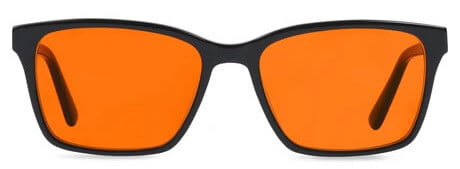
Evening Glasses by Ra Optics
Ra Optics’s night-time lenses reportedly block 100% of harmful artificial blue and green light.
Excellent quality lenses and build. Super lightweight and comfortable. Available for prescription reading glasses too.
Use this link to save 10% on all Ra Optics glasses.

TrueDark Twilight Classic by TrueDark
You only wear TrueDark Classics the last few hours before going to sleep.
These glasses reportedly block 99% of the wavelengths associated with blue, green, and violet light.
Wearing these glasses is an intense experience. They definitely block blue light!
Use code CEOSAGE for a 10% discount on all TrueDark glasses (and free shipping).
How to Test If Your Glasses Block Blue Light
I found this blue light glasses test in this post by Siriya Mitsattha.
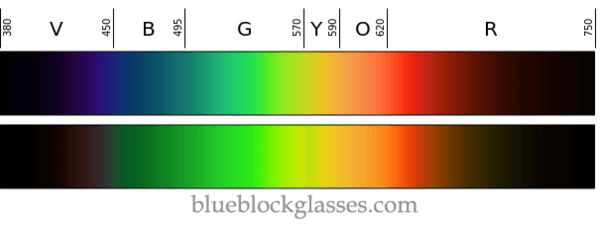
When you look at these two strips of the colored spectrum with the naked eye, you’ll notice they are different.
The top light wavelength spectrum is the common one.
From about 520 nanometers and down, the bottom light spectrum is different: there is no visible blue light.

What should happen when you look at these two spectrums with your blue light-blocking glasses?
They should appear identical.
9 More Ways to Mitigate Blue Light and Restore Your Sleep Cycle
Many “achievers” tend to think that the less we sleep, the more productive we can be.
But, as the director of the sleep and neuroimaging lab at UC Berkeley, Matthew Walker, explains:
We all think we have to stay awake to get more done. I think that’s simply not true. In fact, if you have a good night of sleep, what you’ll find is that you can get more done than if you simply stay awake.
Do you ever sleep only five hours a night, day after day, when you’re working on a project?
A study published in Occupational and Environmental Medicine found that after 17 hours without sleep, one’s alertness is similar to the cognitive effects of being “impaired” (legally drunk).24Williamson AM, Feyer AM. Moderate sleep deprivation produces impairments in cognitive and motor performance equivalent to legally prescribed levels of alcohol intoxication. Occup Environ Med. 2000 Oct;57(10):649-55. doi: 10.1136/oem.57.10.649.
According to the CDC, over 50 million adults in the United States have chronic sleep disorders, and less than a third of adults sleep the optimal amount.25Prevalence of Healthy Sleep Duration among Adults — United States, 2014. https://www.cdc.gov/mmwr/volumes/65/wr/mm6506a1.htm
So it’s no wonder that people’s circadian rhythms are off. Virtually everything in our modern environments is taking us out of rhythm with nature—including the EMF from devices and powerlines.
Here are nine more things you can do to support “sleep hygiene” and restore your body clock:
Reduce Screen Time
Even if you do every strategy and hack to block blue light, blue-lit screens do not support healthy biological functioning. They are unnatural, and we should not use them.
As such, do everything possible to reduce your overall screen time.
Particularly in the evening, get in the habit of powering down your screens earlier.
Dr. Charles Czeisler and other experts advise avoiding staring at computer screens, smartphones, or televisions for at least two hours before going to sleep.
I realize this is a tall order for many individuals, however, if you can make it happen, you will notice the difference in your sleep quality.
And if you have insomnia or ADHD, experiment with this and see if it yields results for you.

Photo by Dawid Zawiła
Increase Your Exposure to Sunlight
In a preliminary study at Uppsala University, students exposed to bright daytime light were able to use tablets for two hours in the evening without affecting their sleep.26Plenty of light during daytime reduces the effect of blue light screens on night sleep, 2016. https://www.sciencedaily.com/releases/2016/08/160810104246.htm
A little sunlight in your eyes increases melanin, which supports proper pineal functioning.
There are tremendous benefits to sunlight, which we’ll cover in part 4 of this series.27Mead MN. Benefits of sunlight: a bright spot for human health. Environ Health Perspect. 2008 Apr;116(4):A160-7. doi: 10.1289/ehp.116-a160. Erratum in: Environ Health Perspect. 2008 May;116(5):A197. PMID: 18414615; PMCID: PMC2290997. Sunlight boosts your mood and improves your sleep at night.
Neurosurgeon Jack Kruse recommends at least a 1:1 ratio of sunlight exposure to screen time.
Go outside in the morning and throughout the day and gaze up at the sky. You don’t need to look directly at the sun. (However, early morning sun gazing is a powerful and beneficial practice—as discussed in part 4.)
Increasing melanin in this way will improve cognitive function, reaction times, and light sensitivity.
Direct sunlight exposure will also make you more resilient to the harmful effects of blue light in the evenings.
Also, if you stare at a computer screen for long periods, periodically shift your gaze out the window and into the distance.
Better yet, take more breaks, walk outside, and look around!
Protect Yourself from EMF
Electromagnetic frequencies from electric, magnetic, and microwave fields disrupt our biology just as much as blue light.
EMF is a serious problem that too few people are aware of (although that’s beginning to change).
The EMF from basic wiring in our homes (AC – electric and magnetic currents) was bad enough. But now, the average home is littered with Wi-Fi-enabled devices that emit harmful radio and microwave radiation.
The damaging effects of EMF radiation on our overall health and sleep patterns are well-documented. Reducing and mitigating the influences of EMF is essential for restoring the circadian rhythm.
This topic is too massive to adequately address here. But for starters:
- Keep your smartphone out of your bedroom.
- Unplug your wireless router before going to sleep.
- Unplug everything in your bedroom before sleeping.
- Make sure your head is at least two feet from an outlet.
For a complete step-by-step EMF guide see: The Best EMF Protection for your Home.
Also, here’s a user-friendly review of EMF meters.
Ditch Your Sunglasses
In line with the suggestion above, ditch your sunglasses. Sunglasses and sunblock are two things that if you do a little research on, you’ll likely never use again.
Direct and indirect sunlight stimulates the pineal, prompting it to produce serotonin. This neurotransmitter will elevate your mood and your level of energy.
Our eyes are designed to take in direct sunlight.
If you frequently wear sunglasses because your “eyes are sensitive,” it’s likely related to excessive blue light exposure. If you follow the steps listed above and block blue light, within a brief period, you’ll be ready to ditch those shades.

Photo by Noah Silliman
Sleep in Total Darkness
Sleeping in total darkness is surprisingly important.
Harvard sleep researcher Steven Lockley notes that a mere eight lux—about twice as much light as the average night light—affects the circadian rhythm and melatonin secretion.
Any light while we sleep (including candlelight) confuses the pineal gland as to what time of day it is.
Night-time light is a major factor in why many people don’t experience quality sleep.
Creating total darkness can be an investment depending on your situation, but of all the methods available to support your sleep, this may be the most essential.
Here are some steps you can take to block out nighttime light:
- Consider investing in blackout shades (if you have street lights or neighbors nearby).
- Remove your alarm clock or put it in the next room. (Or replace it with a battery-operated one.)
- If you have any other electronic devices in your bedroom, unplug them before going to sleep.
- Put electrical tape over any other lights.
You can wear an eye mask, but I don’t recommend it as a solution. Besides being potentially uncomfortable, your skin is photosensitive too, so total darkness is preferred.
The darker the room, the better you’ll sleep.
Avoid Caffeine in the Evening
Drinking caffeine in the evening will also disrupt your sleep cycle.
A study at the University of Colorado found that having a double espresso before sleep caused a 40-minute delay in the circadian rhythm.28Caffeine at night delays human circadian clock. 2015. https://www.sciencedaily.com/releases/2015/09/150916161833.htm Duh.

Ground Yourself
There are numerous ways to ground yourself to reduce inflammation and mitigate some of the harmful effects of EMF.
- Ground yourself outside by walking barefoot on the earth for at least 20 minutes daily. This is, by far, the best and most effective method. Earthing works!
- Sleep on earthing sheets to ground your bed. Earthing sheets use conductive materials like carbon or silver that plug into the grounding port in your outlet so you can stay grounded while you sleep.
- Use grounding mats during the day if you work in front of a computer.
- Wear earthing shoes when you’re walking outside (and you can’t be barefoot).
All of these strategies can help your body restore its natural rhythm. But again, earthing barefoot on the ground outside is the most important.
Allow Yourself to Sleep Longer
According to research from The National Sleep Foundation, approximately 95 percent of test subjects, under ideal conditions, sleep seven to nine hours within 24 hours.29https://www.abc.net.au/science/sleep/facts.htm
Obviously, the amount of sleep needed will vary from person to person. Other factors that influence sleep include:
- Seasonal changes
- Weather
- Stress
- Physical pain
- Light exposure
- Medications
- Environment
- Foods and other habits
However, there are studies in the performance literature that suggest that we’re not sleeping enough.
Interestingly, numerous research studies of high performers, including Anders Ericsson’s study of top violinists, suggest they sleep more than the rest of us, not less.30Anders Ericsson, Peak: Secrets from the New Science of Expertise, 2017.

Use Red Light Therapy
While getting more natural sunlight exposure is ideal, the reality is that most of us don’t.
Over 6,500 studies have been published on the benefits of red and near-infrared (NIR) light therapy (which mimics the natural healing power of sunlight).
Red and NIR light therapy devices are affordable and effective.
This in-depth guide provides everything you need to know to get started.
Recap: How to Block Blue Light
I was a business coach to CEOs and high-performing entrepreneurs for over 25 years. Many high achievers believe that sleeping less is the key to success. The opposite, however, is true.
High performers in any field tend to sleep more than the average person. Learning how to improve the quality of your sleep is foundational for optimal performance in most areas of life.
Improving your quality of sleep will help restore the circadian rhythm. And doing so will promote healthier pineal gland functioning.
A fundamental key to restoring the circadian rhythm is to reduce artificial blue light exposure during the day and block blue light after sunset.
Here’s a quick summary of how to block blue light to restore the circadian rhythm:
- Remove artificial white light sources (LEDs and CFLs) in your home.
- Use blue-light modulating apps on your monitors.
- Adjust native smartphone settings to reduce blue light.
- Dim your screens to the lowest level of brightness possible.
- Wear daylight blue light glasses during the day.
- Wear stronger blue light-blocking glasses after sunset.
- Avoid using screens at least 2 hours before going to sleep.
- Get more direct sunlight exposure during the day.
- Reduce EMF exposure in your home.
- Take frequent breaks from the screen and stare into the distance.
- Ditch your sunglasses.
- Sleep in total darkness.
- Practice grounding outside.
- Avoid caffeine in the late afternoon and evening.
- Allow yourself to sleep longer.
- Use red and NIR light therapy.
Making these lifestyle changes takes a little time and effort, however, the positive effects you’ll experience on your sleep quality, overall physical health, level of energy, and mental performance are worth it.
Pineal Gland Series Index
Part 1: Decalcify Your Pineal Gland
Part 2: Pineal Gland Detox
Part 3: Block Blue Light (You Are Here)
Part 4: Activate Your Pineal Gland
Additional Reading

Light: Medicine of the Future
by Jacob Liberman
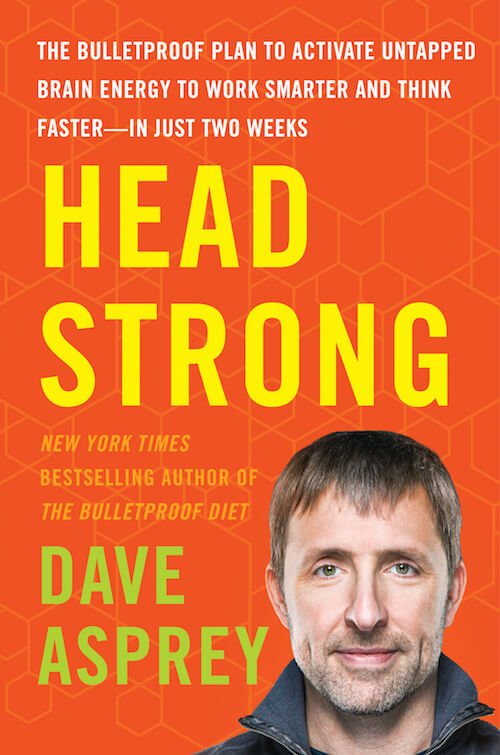
Head Strong: The Bulletproof Plan to Activate Untapped Brain Energy to Work Smarter and Think Faster
by Dave Asprey
Read Next
Now that we’ve reviewed how to decalcify and detoxify the pineal gland and block blue light, we’re ready for the final installment in this series. In Part 4, we’ll explore 5 powerful ways to activate your third eye.