
If you’re looking for the best energy supplements, there are one of two reasons.
- You often feel tired, perhaps chronically fatigued, or
- You want more energy for higher mental and physical performance.
As a former coach to CEOs and entrepreneurs, the topic of energy has been important to me for over two decades.
Bestselling books like The Power of Full Engagement made many people aware of the importance of taking a “complete” approach to energy cultivation.
Let’s dive in and see how you can boost your energy levels the natural way…
When Your Energy Levels Begin to Drop, Here’s What Happens …
When you don’t manage your energy, you:
- Lose your focus and get distracted
- Overwork yourself, getting diminishing returns on your effort
- Succumb to bad habits that get reinforced over time
- Make bad decisions in your career/business, and for your well-being
Not only that, but you also …
- Lose your creative edge because creativity takes energy
- Begin to flatline (that is, you become dull and mechanistic)
- Experience an uptick in emotional turmoil due to less resilience
- Fail to access your best self and rarely enter flow states
We are all familiar with these experiences. The common denominator is a lack of energy that leads to chronic fatigue.
So whether we’re talking about getting the right things done, growing a business, actualizing your potential, or performing at your best … you need a healthy supply of energy to create.
Five Common Causes of Chronic Fatigue
Most issues with fatigue and insufficient energy stem from a combination of the following five factors:
1 – Biochemical or nutritional imbalances
Biochemical or nutritional imbalances are so pervasive in modern culture that virtually everyone has biochemical (often hormonal) deficiencies.
2 – Psychological imbalances
Psychological imbalances in the form of stress and emotional repression may represent the most significant and least understood cause of chronic fatigue.
Most of us are fighting with and running away from past emotional trauma while we store up new grievances each day.
3 – Inadequate sleep
Inadequate or poor sleep is a common problem for many individuals, which leads to hormonal imbalances.
Sleep is designed to restore the body’s energy, but modern life hijacks our circadian rhythm, making it difficult to recharge our internal batteries.
4 – Physical and/or mental overexertion
Physical and/or mental overexertion is a product of neurosis, fueled by the belief that our worth is defined by doing more, being more, and doing it faster.
The overachiever archetype is often the culprit here.
5 – EMF and Artificial Blue Light Exposure
Harmful biological effects of electromagnetic frequencies (EMF) from electrical lines, wireless devices, and other modern-day conveniences are a significant contributor to people’s chronic fatigue.
Additionally, the well-documented effects of artificial blue light are another massive contributing factor.
Taking steps to protect yourself from EMF and blocking blue light are arguably more important than taking supplements.
Two Classes of the Best Energy Vitamins for Chronic Fatigue
The best energy supplements can fall into two categories:
- General vitamins and minerals that address common nutritional deficiencies.
- Supplements designed to boost energy and enhance your mental performance.
Common deficiencies in vitamins, minerals, and hormones that lead to chronic fatigue include:
- Shilajit
- Iodine
- Magnesium
- Vitamin D
- Vitamin B-12
- Coenzyme Q10 (CoQ10)
- Melatonin
Supplements that can directly influence your energy level include:
- Red Panax Ginseng
- Pine Pollen
- Rhodiola Rosea
Both groups deserve attention when you’re battling chronic fatigue.
The 10 Best Energy Supplements for Chronic Fatigue
Let’s review the best energy supplements for chronic fatigue and examine what the research tells us.
Best Energy Supplement 1: Shilajit

In my experience, shilajit is one of the best energy supplements for chronic fatigue. You’ll likely feel right away.
Shilajit is a plant material produced over millions of years from plants preserved in dark crevices of the Himalayan Mountains. Shilajit forms a thick resin that’s packed with 85 different trace minerals, including fulvic acid.
Numerous studies demonstrate shilajit’s anti-aging effects and how it protects against cellular damage. Shilajit also reduces chronic fatigue syndrome in rats.1Surapaneni DK, Adapa SR, Preeti K, Teja GR, Veeraragavan M, Krishnamurthy S. Shilajit attenuates behavioral symptoms of chronic fatigue syndrome by modulating the hypothalamic-pituitary-adrenal axis and mitochondrial bioenergetics in rats. J Ethnopharmacol. 2012 Aug 30;143(1):91-9. doi: 10.1016/j.jep.2012.06.002. Many individuals will experience an energy boost after taking shilajit.
Where to get it?
Authentic Shilajit™ by Lotus Blooming Herbs (it’s the highest quality shilajit I’ve found on the market)
Lost Empire Herb’s Shilajit. (A close second. Use code CEOSAGE for a 10% discount.)
Best Energy Supplement 2: Iodine
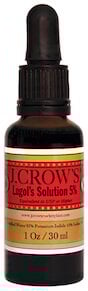
Iodine is a mineral found in sea vegetables like seaweed or kelp. This vital energy supplement assists the thyroid gland in regulating hormones, which in turn regulate metabolism and trigger the release of biochemicals associated with energy creation.
I also include iodine as one of the essential supplements for detoxing your pineal gland, as iodine chelates heavy metals such as mercury, lead, cadmium, and aluminum. It also helps remove synthetic fluoride.
While seaweed is a mainstay of an Asian diet, in the West, most individuals are iodine-deficient.2https://www.newswithviews.com/Howenstine/james37.htm
Where to get it?
Lugol’s Solution of Iodine (5%) by J.CROW’S (note: 2% solution generally isn’t sufficient; go with 5% if you want to see better results.)
Best Energy Supplement 3: Magnesium
Magnesium is one of the best energy supplements for chronic fatigue to try first.
Magnesium is a mineral that assists in over 300 biochemical reactions, including blood pressure, muscle function, and energy production. Magnesium deficiency was found in 50% of a patient group diagnosed with chronic fatigue.3Boyle NB, Lawton C, Dye L. The Effects of Magnesium Supplementation on Subjective Anxiety and Stress-A Systematic Review. Nutrients. 2017 Apr 26;9(5):429. doi: 10.3390/nu9050429.
Studies also suggest that about 50% of individuals in the United States and Europe consume less than the daily recommended amount of magnesium.4Rosanoff A, Weaver CM, Rude RK. Suboptimal magnesium status in the United States: are the health consequences underestimated? Nutr Rev. 2012 Mar;70(3):153-64. doi: 10.1111/j.1753-4887.2011.00465.x.
Magnesium helps:
- Convert food into energy
- Create new proteins from amino acids
- Repair DNA and RNA
- Regulate neurotransmitters
- Move blood sugar into your muscles
- Activate ATP and maintain mitochondrial health
Best Energy Supplement 4: Vitamin D
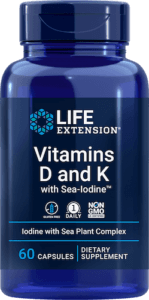
The easiest way to get a healthy dose of Vitamin D is by increasing your exposure to direct sunlight. Most of us receive insufficient sunlight, leading to Vitamin D deficiency, which is linked to depression, anxiety, and excessive weight gain.
How does Vitamin D relate to energy? This vitamin plays an important role in regulating mood. One study of overweight individuals with depression found that people who took vitamin D supplements noticed an improvement in their depression.5Jorde, R., Sneve, M., Figenschau, Y., Svartberg, J., & Waterloo, K. (2008). Effects of vitamin D supplementation on symptoms of depression in overweight and obese subjects: Randomized double-blind trial. Journal of Internal Medicine, 264(6), 599-609. https://doi.org/10.1111/j.1365-2796.2008.02008.x
Suppressing your bad mood or attempting to mask a bout of depression requires a tremendous amount of mental energy (even though we don’t often notice it). Vitamin D reduces emotional instability, freeing up your mental energy so you can direct it toward things that are meaningful to you.
Where to get it?
Vitamins D and K with Sea-Iodine by Life Extension
Best Energy Supplement 5: Vitamin B12

Vitamin B12 is a powerhouse vitamin for energy and tiredness. Found in fish, meat, eggs, and dairy, Vitamin B12 is an essential vitamin that helps:
- Cells to produce energy
- Form red blood cells
- Support neurological function, bones, and the heart
According to the National Institute of Health, Vitamin B12 deficiency increases your risk of chronic fatigue and weakness.6https://ods.od.nih.gov/factsheets/VitaminB12-HealthProfessional/#h5
When taking vitamin B12 supplements for energy, look for a product containing methylcobalamin to enhance absorption.
Where to get it?
B12 Blend by Global Healing Center
Save 10% on this B12 Blend with code CEOSAGE for orders over $50.
Best Energy Supplement 6: CoQ10

Every cell of your body needs CoQ10 to produce energy. This antioxidant is found in organ meat, fish, and peanuts.
Our bodies tend to produce less CoQ10 as we age. Chronic fatigue is one of the primary symptoms of CoQ10 deficiency.7Garrido-Maraver J, Cordero MD, Oropesa-Avila M, Vega AF, de la Mata M, Pavon AD, Alcocer-Gomez E, Calero CP, Paz MV, Alanis M, de Lavera I, Cotan D, Sanchez-Alcazar JA. Clinical applications of coenzyme Q10. Front Biosci (Landmark Ed). 2014 Jan 1;19(4):619-33. doi: 10.2741/4231.
I didn’t experience any effects from this supplement; however, given the research, it’s worth experimenting with to see if it helps you.
Where to get it?
CoQ10 & BioPQQ® with Shilajit by Global Healing Center
Save 10% on Global Healing’s CoQ10 with code CEOSAGE.
Best Energy Supplement 7: Melatonin
The last common deficiency is melatonin.
Melatonin is a serotonin-derived hormone produced by the pineal gland. Melatonin modulates sleep patterns. The pineal gland synthesizes and secretes melatonin.
Melatonin is an important hormone that also:
- Reduces pain in chronic conditions,
- Acts as an anti-inflammatory agent,
- Supports cellular immune responses,
- Promotes healing in damaged tissues, and
- Directly influences energy metabolism.
Studies by Walter Pierpaoli and Georges Maestroni show that melatonin also increases performance and longevity in rats.8M. MAESTRONI, G. J., CONTI, A., & PIERPAOLI, W. (1988). Pineal Melatonin, Its Fundamental Immunoregulatory Role in Aging and Cancer. Annals of the New York Academy of Sciences, 521(1), 140-148. https://doi.org/10.1111/j.1749-6632.1988.tb35272.x But the pineal now tends to produce an insufficient amount of melatonin, leading to chronic fatigue and accelerated brain aging.
While there are many melatonin supplements on the market, I highly recommend you read this guide on how to restore the circadian rhythm to produce more melatonin naturally.
Energy Supplement 8: Pine Pollen
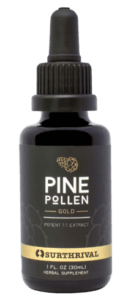
Next, we come to perhaps my favorite and least well-known supplements for energy: pine pollen.
This powerful adaptogen has over 200 bioactive, natural nutrients, minerals, and vitamins. Pine pollen has anti-aging properties and provides hormonal support.9Mao GX, Zheng LD, Cao YB, Chen ZM, Lv YD, Wang YZ, Hu XL, Wang GF, Yan J. Antiaging effect of pine pollen in human diploid fibroblasts and in a mouse model induced by D-galactose. Oxid Med Cell Longev. 2012;2012:750963. doi: 10.1155/2012/750963.
Pine pollen has been used for thousands of years in China to reduce fatigue and increase energy and endurance. Western research on pine pollen is limited; however, it’s believed to boost testosterone.
Even though pine pollen doesn’t have a stimulating effect, it can often be more energizing than caffeine, making it an ideal supplement for energy. Be sure to find one that’s non-irradiated and has broken cell walls.
Where to get it?
- Pine Pollen Gold by Surthrival (tincture formula)
- Cell Wall Broken Pine Pollen Powder by Lost Empire Herbs (use code CEOSAGE for 10% savings)
Lost Empire Herbs also offers tinctures.
Best Energy Supplement 9: Rhodiola
Rhodiola is a powerhouse energy supplement. Rhodiola Rosea is a high-altitude herb native to the Arctic regions of Europe and Asia.
Traditional Chinese, Scandinavian, and Russian medicine use it as a remedy for chronic fatigue and restoration.10Darbinyan V, Kteyan A, Panossian A, Gabrielian E, Wikman G, Wagner H. Rhodiola rosea in stress induced fatigue—a double blind cross-over study of a standardized extract SHR-5 with a repeated low-dose regimen on the mental performance of healthy physicians during night duty. Phytomedicine. 2000 Oct;7(5):365-71. doi: 10.1016/S0944-7113(00)80055-0.
Research continues to demonstrate how this adaptogenic herb can increase our mental performance and reduce the adverse effects of stress, making it one of the best energy supplements for chronic fatigue to test out for yourself.
There are over 160 published studies on this herb. This 2012 study shows that Rhodiola reduces many physical symptoms of fatigue, including muscle soreness, sleepiness, and headaches.
Rhodiola has proven to increase the brain’s capacity for mental work in the face of stress and chronic fatigue.11Shevtsov VA, Zholus BI, Shervarly VI, Vol’skij VB, Korovin YP, Khristich MP, Roslyakova NA, Wikman G. A randomized trial of two different doses of a SHR-5 Rhodiola rosea extract versus placebo and control of capacity for mental work. Phytomedicine. 2003 Mar;10(2-3):95-105. doi: 10.1078/094471103321659780.
Best Energy Supplement 10: Ginseng

Finally, ginseng root is an ancient adaptogenic with energy-boosting characteristics, supporting the body’s response to stress, anxiety, and exertion.
This double-blind study showed that patients suffering from chronic fatigue experienced increased energy and improved cognitive function.
The challenge with ginseng is finding a high-quality option. I’ve been told that Korean Panax ginseng is preferable.
Ginseng may be one of the best energy supplements for chronic fatigue for some people, but not for others.
Where to get it?
5 Ginseng by Global Healing Center (Save 10% with code CEOSAGE)
Disclaimer: There are affiliate links in this review.
The Search for the Best Energy Supplements for Chronic Fatigue
Through the last three decades, I’ve spent thousands of dollars on supplements to treat various conditions and achieve specific improvements.
In my experimentation, I’ve come to appreciate the importance of context: of understanding what I’m taking and why, and being open to the experience (or lack thereof).
For example, if you feel like you have chronic fatigue and you think taking an energy supplement or a handful of supplements is going to solve the problem, you’ve lost the battle before it’s ever fought. (I’ve lost my share of battles in the past, too.)
Taking an Integrated Approach to Energy
Because many interrelated factors influence our energy, it helps to take an integrated approach.
Meaning if you’re suffering from chronic fatigue and expect some energy pill to be your solution, you’re bound to be disappointed.
It doesn’t matter what the solution is; it will likely fail if it’s not grounded in a comprehensive protocol.
You might get an energy boost, but it will be temporary, and the benefit will fall off over time because of habituation.
Energy supplements are best approached from a holistic perspective, where they are part of an overall protocol, but not held as a panacea.
So, to get the best results from energy supplements, make sure you’re doing other things to support your energy and stop doing things that are “leaking” energy.
I provide resources at the end of this guide to help you develop a comprehensive approach.
You Are a Random Sample of One
You are a random sample of one, meaning what works for one person may or may not work for you.
Many people in the biohacking community take a “scientific approach,” performing blood tests and other analyses to understand their biochemistry.
If this approach speaks to you, by all means, go for it. But for this general guide, I’ve addressed common deficiencies you can experiment with for yourself.
How to Take the Best Energy Supplements for Chronic Fatigue
Ultimately, to find what works for your biochemical makeup, experiment.
It’s essential to manage your expectations and not to expect immediate results from any energy supplements.
It’s often helpful to “stack” the best energy supplements for chronic fatigue in a particular sequence.
For example, you might take magnesium, D, and B12 in the morning, followed by ginseng and shilajit to increase your energy reserve. Then, take Rhodiola when you need to rest and restore your energy.
Experiment and play around with it until you find what works for you.
Also, be sure to apply the principle of cycling. That is, take these best energy supplements for 3 to 5 days and then take 2 to 3 days off. It’s never advisable to take any supplement every day.
Other Ways to Boost Your Energy Naturally
As I said at the beginning of this guide, you’ll get the best results if you take these best energy supplements within the framework of a comprehensive protocol.
Additionally, here’s a selection of transformative guides that will help you address other modalities to increase your energy and mental reserves:
How to Tune Your Breath to Increase Mental Clarity, Energy, and Emotional Resilience
Cultivate Boundless Energy With This Ancient Standing Meditation
How to Ground Yourself: 15 Effective Techniques to Achieve Instant Calm
What is Chi Energy and How to Cultivate It
These practices will help you become more conscious of what drains your energy.
With practice and increased awareness, you can change your habits that deplete your energy.
As a consequence, you will no longer be plagued with chronic fatigue and lethargy.
Enjoy!
Read Next
Do Grounding Mats Work? A Complete Review of the Best Earthing Mats
A Complete Guide to Red and Near Infrared (NIR) Light Therapy Devices