
OVERVIEW: Do grounding mats work? And if so, what are the best earthing mats to purchase?
______________
When I first learned about grounding/earthing over 15 years ago, this concept immediately clicked.
It was one of those “Ah ha” moments of clarity. I’ve been walking barefoot on the earth ever since.
But the reality is that most of us spend way too much time indoors. And we’re bombarded in every direction with harmful, non-native EMF radiation from our devices.
Thankfully, there are grounding mats that can help us connect to the Earth even when indoors.
In this guide, we’ll explore the science of earthing and whether grounding mats work.
Then, we’ll review the best earthing mats on the market. I’ll also show you how to build a copper grounding mat (DIY).
Let’s dive in…
What is Grounding?
Grounding, also called earthing, is the process of connecting your skin to the Earth.
A copper grounding rod is buried beneath the ground next to our homes and connected to every outlet via a grounding wire.
In case of a short circuit, the ground wire provides a path for the electrical current to be absorbed into the ground. This grounding pathway helps avoid a shock or electrocution if you touch the short-circuiting device.

The Science Behind Grounding Mats
Let’s quickly review the principles behind grounding so we can better understand how earthing mats work.
How Does Earthing Work?
The same principle of short-circuiting applies to humans as well.
As Clint Ober and company explain in Earthing: The Most Important Health Discovery Ever (2010):
Earthing naturally protects the body’s delicate bioelectrical circuitry against static electrical charges and interference.
Humans are bioelectrical beings.
Unfortunately, various electromagnetic frequencies (EMF) and radiation from our devices (WIFI, Bluetooth, etc) are flooding through us. And our bodies are not designed to handle this unnatural EMF.
From an earthing perspective, our bodies are short-circuiting, leading to the prevalence of various symptoms, including inflammation. (Inflammation is the precursor to most diseases.)
The Healing Power of Earthing
A direct connection with the Earth allows a transfer of negatively charged electrons from the Earth’s surface into the human body.
These electrons neutralize positively charged free radicals that cause chronic inflammation.
Excess free radicals damage our cell membranes and DNA, leading to cancer and other diseases.
Again, from Clint Ober and the authors of Earthing:
[Earthing] facilitates the reception of free electrons and the stabilizing electrical signals and energy of the Earth. Earthing remedies an electrical instability and electron deficiency you never knew you had. It refills and recharges your body with something you never knew you were missing … or needed.
Simply put, the human body is designed to stay connected with the Earth to support our natural bioelectrical functioning.
Does Grounding Really Work?
Two decades of scientific research suggest it does. Over twenty peer-reviewed research studies show the positive effects of grounding.
For example, grounding yourself to the Earth:
- Reduces inflammation1Chevalier, G., Melvin, G. and Barsotti, T. (2015) One-Hour Contact with the Earth’s Surface (Grounding) Improves Inflammation and Blood Flow—A Randomized, Double-Blind, Pilot Study. Health, 7, 1022-1059. doi: 10.4236/health.2015.78119.
- Improves immune response2Oschman J, Chevalier G, Brown R. The effects of grounding (earthing) on inflammation, the immune response, wound healing, and prevention and treatment of chronic inflammatory and autoimmune diseases. J Inflamm Res. 2015;8:83-96 https://doi.org/10.2147/JIR.S69656
- Reduces emotional stress3Chevalier G. The effect of grounding the human body on mood. Psychol Rep. 2015 Apr;116(2):534-42. doi: 10.2466/06.PR0.116k21w5. Epub 2015 Mar 6. PMID: 25748085.
- Improves blood flow4Chevalier, G., Melvin, G. and Barsotti, T. (2015) One-Hour Contact with the Earth’s Surface (Grounding) Improves Inflammation and Blood Flow—A Randomized, Double-Blind, Pilot Study. Health, 7, 1022-1059. doi: 10.4236/health.2015.78119.
- Elevates mood5Chevalier, G. (2015). The Effect of Grounding the Human Body on Mood. Psychological Reports, 116(2), 534-542. https://doi.org/10.2466/06.PR0.116k21w5
Preliminary studies show that earthing has a calming and balancing effect on the nervous system.6Gaétan Chevalier, PhD; Stephen T. Sinatra, MD. Emotional Stress, Heart Rate Variability, Grounding, and Improved Autonomic Tone: Clinical Applications. Integrative Medicine, Vol. 10, No. 3, Jun/Jul 2011. My personal experience with earthing validates these studies.
Biophysicist James Oschman, author of Energy Medicine: The Scientific Basis, explains:7James L. Oschman, Energy Medicine: The Scientific Basis. 2015.
The moment your foot touches the Earth, or you connect to the Earth through a wire, your physiology changes. An immediate normalization begins. And an anti-inflammatory switch is turned on.
How Do Grounding Mats Work?
Although there are many different brands of grounding mats, they all operate virtually the same way and use similar materials.
Grounding mats are generally made of leatherette derived from polyurethane infused with carbon to make it conductive.
An embedded, conductive metal snap connects with an insulated grounding wire.
This wire plugs into any grounding port in a standard three-prong, type B outlet (used in the United States).
The grounding port connects to a large copper grounding wire used in most homes globally (with a few exceptions). Some individuals install a separate grounding rod exclusively for their grounding mats.
Many grounding mats come in kits. These kits include an outlet checker to confirm that the outlet and grounding port are working correctly. You can also get an outlet adaptor if you live outside the United States.
Below, I’ll explain how to test whether your grounding mat is working correctly.
Real-Life Experiences: Do Grounding Mats Work?
The benefits of using grounding mats and earthing sheets are most notable in individuals who are suffering from:
- Chronic pain
- Sleep issues/insomnia
- Anxiety/stress
- Fatigue
- Chronic inflammation
Imbalances in one’s autonomic nervous system often cause or exacerbate these symptoms. Studies show that grounding can help reduce these symptoms. Thousands of reviews online corroborate this research.
Grounding can reduce anxiety and increase emotional resilience, enabling people to cope with stress more productively.
I suspect that individuals who live and work in environments flooded with EMF from modems, WIFI, and other devices will experience the most noticeable benefits from a grounding mat.
Could the Benefits of Grounding Mats be a Placebo Effect?
It’s always important to consider if the reported benefits of a claim are related to the placebo effect.
Although preliminary research on the effects of grounding is now available, the industry is still in its infancy. Sufficient double-blind studies in controlled environments have not been conducted to determine the exact efficacy of earthing or grounding mats.
In my opinion, the principles behind grounding are sound. If you’re attuned to your body, you’ll likely experience noticeable benefits after standing barefoot on the earth for 20 minutes.
But do ground mats used indoors work to the same degree?
It’s difficult to say with certainty.
I personally can’t feel the same benefits from using a grounding mat.
But should you? Grounding mats are used indoors where we’re surrounded by electrical fields emitted from the walls (wiring) and our appliances and devices.
The question is:
Do grounding mats help mitigate the harmful effects of non-native electromagnetic fields?
The jury is still out.
But what is clear is that grounding outside provides therapeutic benefits.

Comparing Different Types of Grounding Mats
Before we dive into the best earthing mats, let’s quickly review the different types of grounding mats and pads.
There are two different types based on everyday use cases:
- Universal earthing mats for versatile placement
- Mattress covers for grounding while you sleep
Let’s look at each of these:
1 – Universal Earthing Mats for Versatile Placement
Earthing mats are highly versatile. You can use them at desks, in sitting areas, and on the floor.
You can place earthing pads under your keyboard or laptop. (As long as your skin is in contact with the mat, you are grounding.)
Earthing mats are generally 24 to 35 inches long, and their width ranges from 10 inches to 23 inches. There are also earthing pads with larger dimensions used as yoga mats.
Placing an earthing mat on the floor where you make direct contact with your feet is another viable practice.
2 – Grounding Mattress Covers for Grounding While You Sleep
The other primary use case for grounding mats is for sleeping.
Earthing mats for beds are considerably larger (designed to fit the size of your mattress). These earthing mats generally work in conjunction with conductive grounding sheets.
Earthing sheets and grounding mattress pads have become incredibly popular over the last few years.
Thousands of customers have shared positive reviews online, reporting relief from sleeping problems and inflammation after starting to ground while sleeping.
Grounding your bed is an entirely different category. See my review of the best grounding sheets here.

Top Picks for the Best Earthing Mat in 2024
The truth is that most of the earthing mats on the market are relatively indistinguishable.
Earthing.com, however, is the pioneer in the space. They have patented materials they use in their grounding pads.
For years, Earthing.com was the only game in town. Every other earthing mat on the market is ultimately a knock-off of Earthing.com’s product.
That said, I’ve included two additional brands with positive reviews.
Disclaimer: This review contains affiliate links.

Best Earthing Mat: Universal Mat Kit by Earthing.com
Earthing.com is Clint Ober’s company—the pioneer in this space. Their products have gone through multiple iterations and development.
Their universal earthing mat uses a patented conductive carbon leatherette that’s third-party tested to be free of Azo dyes, phthalates, and lead. This mat is arguably the most durable and highest-quality option available.
Their earthing mats measure 12.5 x 29 inches (32 x 73.7 cm). In my opinion, this is the ideal size for those looking to ground themselves while working at a desk.
This kit includes:
- 1 or 2 Earthing Universal Mats
- 1 or 2 coil cords (15 feet in length)
- 1 U.S. outlet checker
- 1 for 2 U.S. safety adapters
(If you live outside of the U.S., you’ll want to add an outlet checker or safety adapter for your specific country.)
If I had to recommend ONE option as the best earthing mat, it would be this one. It’s the highest quality available. I’ve used an earthing mat for over a decade. (I’m using it right now as I type this.)
Shipping is free.

Grounding Universal Mat by Earthing Harmony
Earthing Harmony provides another solid option with their Grounding Universal Mat.
Their grounding mat has a similar design, using carbon for conductivity and a 16-foot cord to connect to the ground port of your electrical outlet.
Their earthing mat is 10″ x 27″—still within the sweet spot (ideal dimensions for tabletop use).
Shipping is free.
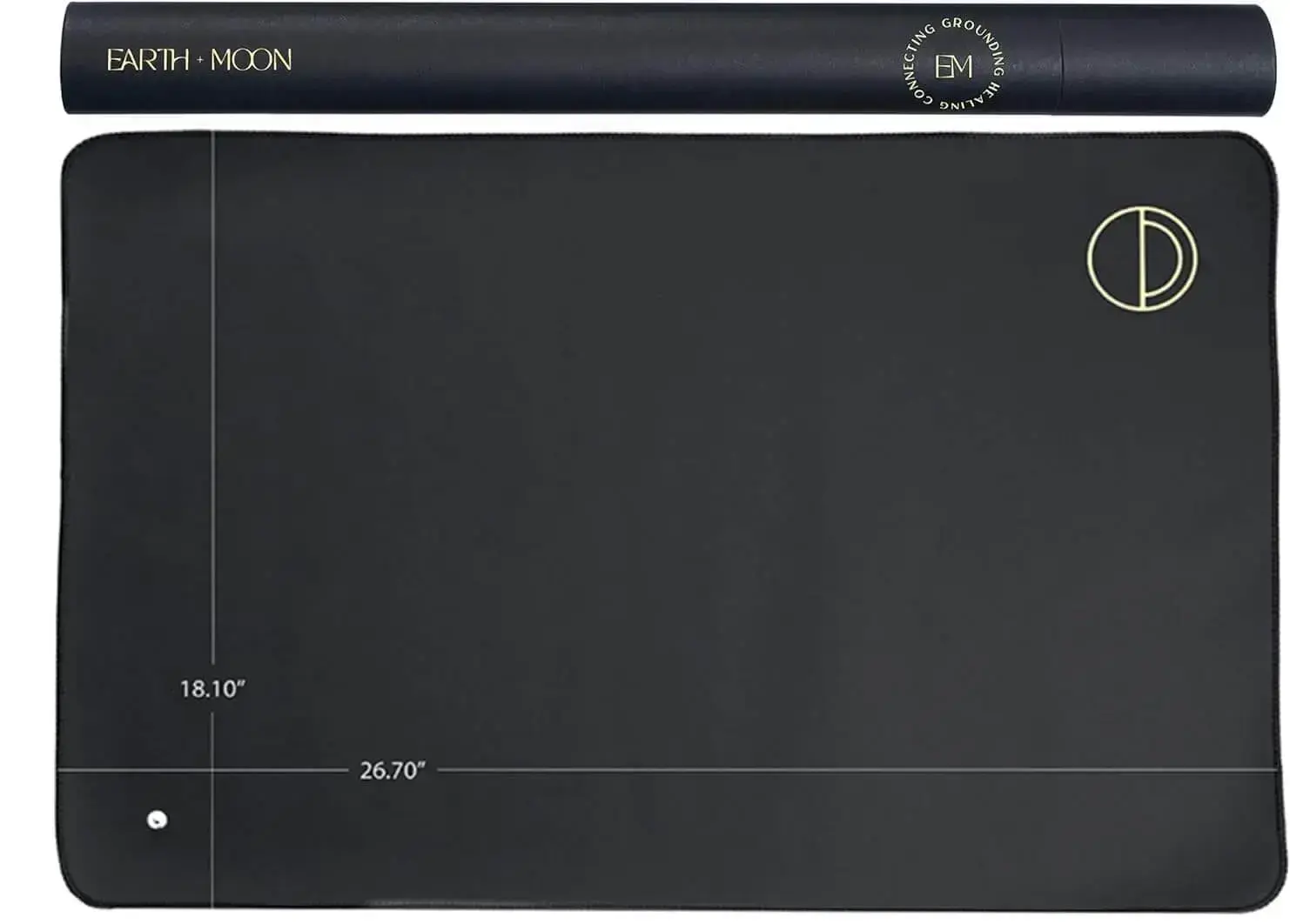
Earth + Moon Mat
Earth + Moon offers carbon-based ground mats that measure 35.43 inches by 23.62 inches.
Their kits include coil cords, outlet checkers, safety adapters, protective cases, and a grounding bracelet.
Shipping is free within the United States.
How to Make a DIY Copper Grounding Mat
Another option is to make a do-it-yourself earthing mat. To do so, you’ll need:
- A conductive material like copper mesh
- A grounding cable with an alligator clip
- An outlet tester
You can use various conductive materials, but perhaps the easiest one to get is a pure copper wire mesh screen.
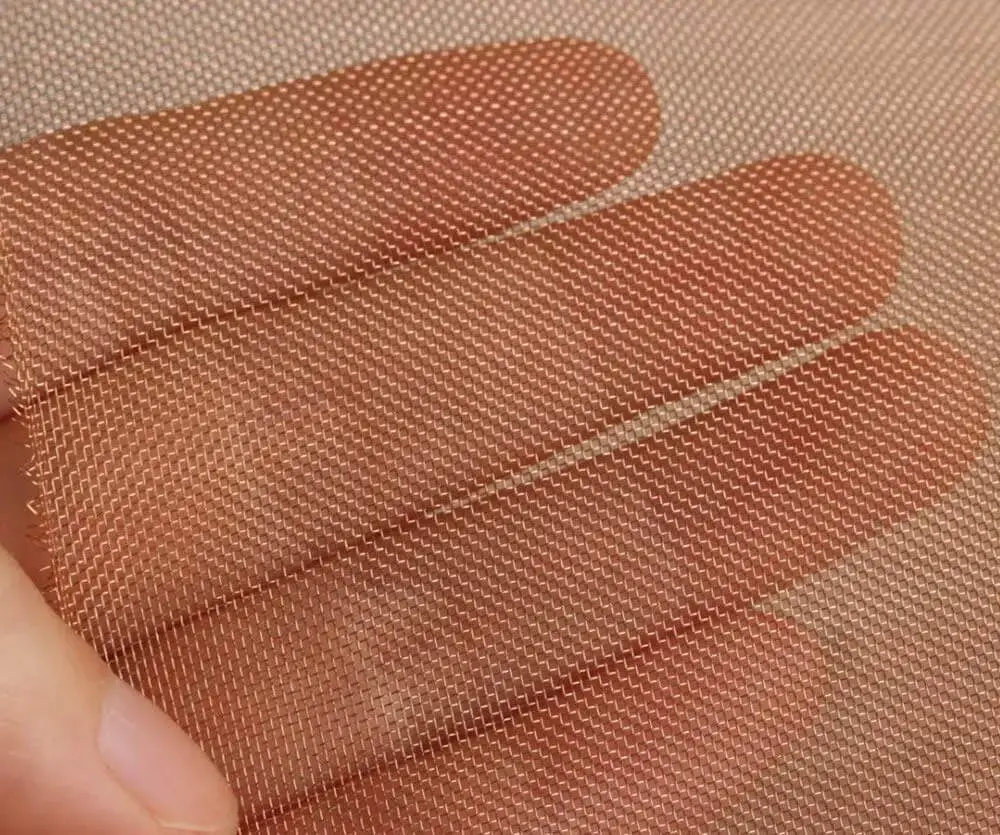
Pure copper mesh
Ideally, you’ll want it to be 99.9% pure copper.
Then, get a cord with an alligator clip to connect the conductive material to the grounding port on your outlet.
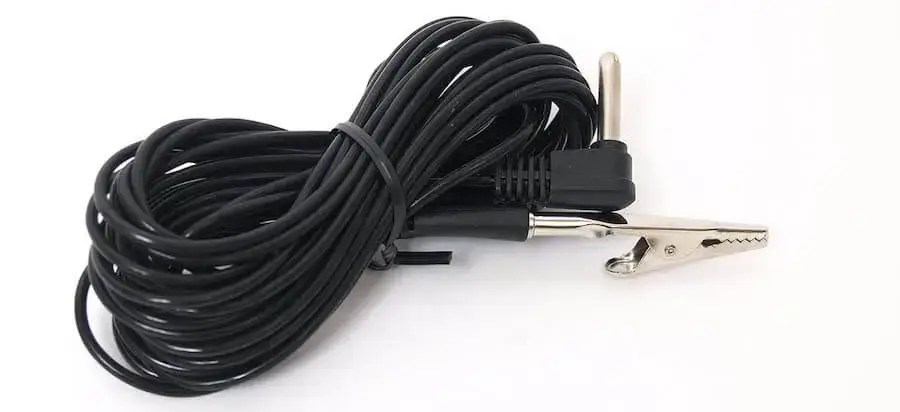
Grounding cord with a clip
Now, you need only attach the alligator clip to the conductive material and plug the cord into the grounding port.
It’s a good idea to test your outlet first with an outlet tester.

Outlet checker
Finally, if you want to make your copper earthing mat more “professional” looking, you have two choices:
- Wrap it around a piece of wood or some other rigid material.
- Fold over some heavy-duty black duct tape around the edges.
I also used furniture tacks on the bottom of the grounding mat to ensure the copper mesh stayed secure and wouldn’t scratch the floor.
Note: Be sure to cover the edges of the copper mesh, as they are sharp and can easily cut you. (So be careful when handling it.)
What to Look for in a Grounding Mat
Ultimately, the basic design of a grounding mat is consistent across the market. What differentiates one pad from another is the durability and quality of the materials.
I’ve used the same Universal Pad from Earthing.com for over seven years, and it’s still holding up. I doubt the same can be said about many knock-off brands available.
Also, make sure the snap that attaches to the mat is secure. If that snapping mechanism loosens, the mat’s grounding effectiveness will lessen.
If you don’t already have an outlet tester, consider getting a complete earthing mat kit. Otherwise, the tester costs around ten more dollars.
Outside of the durability factor, look for a mat made with non-toxic materials. Unfortunately, all of the earthing mats on the market use “leatherette” derived from polyurethane (plastic).
Earthing.com uses a 3rd party to ensure toxic materials like azo dyes, phthalates, and lead are not found in their mats.
Grounding Mats FAQs: Everything You Need to Know
Okay, let’s review a few commonly asked questions about grounding mats.
Are Earthing Mats Dangerous?
A common concern is the safety of connecting to an electrical outlet’s grounding port for indoor use. It’s crucial to understand that mats plug into the grounding port only, not the electrical supply. There should be no electrical current going to or from the mat.
To ensure safety, use an outlet tester to check if the outlet is wired correctly before connecting your mat. Earthing.com kits also come with an additional safety adapter.
In fairness, the author of EMFwise does not recommend earthing pads because he questions their safety.
The main potential concerns are:
- Your home’s electrical wiring is not securely grounded.
- Your home has faulty wiring.
For example, if you use an earthing mat connected to faulty wiring, you could potentially join the “circuit” with an existing electrical current.
Also, if your home has “dirty electricity,” using grounding mats could pose an additional risk. Dirty electricity (DE) is the noise in an electrical power supply. I cover this topic in this EMF home protection guide.
How Long Should You Use a Grounding Mat Each Day?
The optimal duration for a grounding mat can vary depending on individual needs, but generally, more prolonged exposure is considered beneficial. I would aim for at least 30 minutes to an hour daily.
But if you place your mat in a strategic location—for example, under a keyboard/laptop or in front of a chair that you often sit in—there’s a good chance you’ll be grounding for much longer each day.
How Do You Maximize the Benefits of Your Earthing Mat?
To maximize the benefits of your grounding mat, ensure consistent, direct contact with the mat, ideally with bare skin. Direct skin contact facilitates the transfer of the Earth’s electrons into your body while discharging free radicals.
Regular use is also essential. Incorporating grounding into your daily routine, whether through a dedicated session or by using a grounding mat while working or sleeping, can enhance the effects of grounding, contributing to overall well-being and positive health.
Make it easy for yourself: keep your earthing mats in convenient locations where you will use them by default (like on your desk or couch).
What Results Should I Expect from Using a Grounding Mat?
The results many people report from using a grounding mat are encouraging, especially for individuals suffering from inflammation, fatigue, and sleep issues.
However, it’s also essential to approach grounding with realistic expectations. A grounding mat is not a cure-all. Grounding does not replace the need for exercise or a healthy diet. Many alternative healthcare providers suggest using a grounding mat to complement a comprehensive health protocol.
Can You Use a Grounding Mat with Shoes On?
For adequate grounding, direct skin contact with the mat is preferable. Most shoes and many slippers have rubber soles that are insulators. Insulators are the opposite of conductors as they reduce the flow of electrons from the earth to your body.
Whenever possible, use your grounding mat barefoot or with socks made from natural materials like cotton or bamboo (not polyester). You can also find “earthing socks” made of conductive materials like silver that provide a stronger grounding connection.
Is It Safe to Use a Grounding Mat Every Day?
Based on my experience and the research I’ve reviewed, using a grounding mat daily appears safe and beneficial. The safety adapter included with most mats helps ensure protection from electrical risks.
That said, in my opinion, it’s far more important to reduce non-native EMF exposure in your home than it is to use grounding mats daily.
Harmful EMF from electrical wiring, devices, WIFI, etc, is likely a leading factor in many illnesses and sleep issues. Educating yourself on the effects of EMF and learning how to mitigate it in your home environment is vital.
How Do You Care for Your Earthing Mat?
Occasionally, wipe it down with a damp cloth. Earthing.com suggests using a non-corrosive cleaner like soap with water on a damp sponge. Then, allow it to air dry.
Note: Avoid using hand lotions, creams, or body oils before touching the mat. The materials in these products can oxidize and damage the conductivity of your mat.
Does a Grounding Mat Replace the Need to Walk Barefoot Outside?
While you are technically connecting to the Earth by using a grounding mat, in my experience, it’s NOT the same thing. Standing or walking barefoot outside for at least 20 minutes daily is relaxing, regenerative, and therapeutic.
In my view and experience, earthing mats are used to counteract some of the bombardment of harmful, non-native electromagnetic frequencies (EMFs) indoors, while grounding outdoors is physically and mentally restorative.
You can also use a body voltage meter to test how EMF influences your body, comparing the results on a grounding mat with those obtained while standing outside.
HINT: There is a BIG difference. When you’re indoors surrounded by “hot wires” in the walls, unnatural electrical voltage is coursing through your body, even with a grounding mat.
Want to Learn More About Earthing?
See this documentary: The Earthing Movie: The Remarkable Science of Grounding:
Read Next
How to Ground Yourself: 15 Effective Techniques
Best Earthing Sheets: Do They Improve Your Sleep?
Earthing Shoes Review: The Best Grounding Shoes on the Market
The Ultimate Guide to Self-Healing (Including a List of 75+ Techniques)