
You spend a third of your life asleep—yet most of us rest on insulated beds that cut us off from nature’s most powerful healer: the Earth itself.
Modern homes hum with artificial frequencies while our ancestors slept grounded, their bodies in silent electrical dialogue with the planet.
“Earthing sheets,” also called grounding sheets, attempt to restore this primal contact.
They link your body to the Earth’s charge through a simple conductive pathway, offering a subtle but measurable impact on inflammation, stress hormones, and circadian rhythm.
By reconnecting to Earth’s negative charge, they may ease systemic inflammation and recalibrate the circadian clock.
This in‑depth guide, part of the Energy Science & Environmental Physiology hub, explores the physics, research, and practical methods behind sleeping grounded—uniting ancient environmental wisdom with modern physiology.
This guide contains independent product reviews. Some links are affiliate partnerships that help support CEOsage research—without affecting our editorial integrity.
What Is Earthing and How It Works
“Earthing” describes the direct physical connection between the human body and the Earth’s surface charge.
The planet holds an endless supply of negatively charged electrons created by lightning, solar radiation, and atmospheric ionization.
When bare skin touches ground—or when a conductive sheet transfers that charge indoors—these free electrons flow into the body, helping neutralize the oxidative stress produced by chronic inflammation.
Research in bioelectromagnetics shows that the human organism operates like a finely tuned circuit, and its voltage fluctuates with environmental charge differences.
Re‑establishing contact with the planet stabilizes that potential, reducing electrical noise within cells and tissues (Oschman et al., 2015).
In simple terms, earthing restores resonance between body and biosphere—a forgotten piece of physiological equilibrium.
Why Modern Lifestyles Create Electron Deficiency
Our ancestors walked barefoot, slept on soil, and lived within the Earth’s electromagnetic rhythm.
Each contact continually supplied free electrons that neutralized oxidative stress.
In contrast, modern life insulates us—rubber‑soled shoes, synthetic floors, high‑rise buildings, and the near‑constant exposure to artificial electromagnetic fields.
This separation creates what researchers call electron deficiency: an imbalance that amplifies chronic inflammation and fatigue.
Free radicals—unstable molecules generated by stress, pollution, and poor diet—seek electrons to stabilize themselves.
When the body lacks an external source, those radicals attack healthy cells, sustaining chronic inflammation (Chevalier et al., 2015). Grounding restores the missing charge, allowing excess electrical potential to discharge safely.
In short, disconnection from Earth is more than cultural; it’s a biological deficiency created by modern insulation and digital saturation.
Grounding Sheets Explained
Grounding sheets—sometimes called earthing bedding—bring the planet’s electrical potential indoors.
Each sheet contains conductive threads, usually silver or carbon, woven through natural fibers.
A small cord connects the fabric to a grounded outlet or an external stake in the soil.
Through this path, free electrons from the Earth travel into the conductive surface and equilibrate with your body’s charge while you sleep.
Because the human body is over 60 percent water and rich in electrolytes, it acts as an ideal conductor.
Small pilot studies show measurable changes in voltage at the skin surface within seconds of grounding contact.
The effect isn’t mystical—it’s biophysical realignment. During sustained use, many users report improved sleep quality and lower nighttime tension, consistent with findings that grounding may stabilize cortisol rhythms (Ghaly & Teplitz, 2004).
The Physics of Grounding During Sleep
When a grounded surface touches bare skin, a subtle current begins flowing between the body and the Earth until their electrical potentials equalize.
Sensitive voltmeters show that a grounded person’s body voltage can drop from several volts to near zero within seconds.
This discharge reduces the static electrical load created by electromagnetic fields in the environment—especially during sleep, when the nervous system is most vulnerable to external charge fluctuations.
Grounding sheets operate on this same bioelectrical principle.
The transfer of electrons through a low‑resistance pathway is thought to neutralize excess reactive oxygen species, allowing tissues to enter deeper parasympathetic states.
In multiple small studies, subjects sleeping grounded reported fewer nighttime awakenings and reduced morning pain (Chevalier et al., 2015).
Bioelectric Coherence and Circadian Rhythms
The circadian rhythm—the body’s 24‑hour clock governing hormone cycles and healing—is regulated partly by electrical gradients within cellular membranes.
Artificial lighting, screens, and EMF exposure disrupt those gradients by desynchronizing melatonin release and voltage‑gated signaling.
Grounding counteracts this drift by providing a continuous conductive reference to Earth’s steady potential.
As the body’s charge stabilizes, cortisol secretion begins normalizing, often correlating with improved morning alertness and slower evening pulse rate (Ghaly & Teplitz, 2004).
The mechanism is elegantly simple: when voltage noise declines, biological clocks re‑synchronize. Sleep becomes more restorative because the body is literally “electrically quiet.”
Research Findings on Grounding Benefits
Over the past two decades, independent scientists have explored how grounding influences measurable biological markers.
Controlled pilot studies have reported decreases in night‑time cortisol, lower skin conductance, faster wound healing, and reduced blood viscosity—changes consistent with improved autonomic balance.
In several experiments, subjects connected to the Earth’s surface during rest showed normalized circadian hormone patterns and enhanced microcirculation (Chevalier et al., 2015).
Other investigations using thermography and electroencephalography suggest that grounding helps dissipate inflammatory hotspots and stabilizes brain-wave coherence during sleep (Oschman et al., 2015).
While sample sizes remain small, the consistency across methodologies points toward genuine bioelectrical regulation rather than placebo.
Together they suggest that earthing affects the infrastructure of recovery —our circulatory, endocrine, and nervous systems operating in greater phase with Earth’s field.
Key Findings — Sleep, Inflammation, and Stress
Across trials, the most consistent outcomes of grounding are improved sleep continuity, lower pain perception, and calmer emotional tone.
Participants sleeping on grounded pads often fell asleep faster and experienced fewer awakenings—a pattern mirrored by declining nighttime cortisol and reduced skin voltage.
Inflammation markers such as CRP and neutrophil activation decreased in several small cohorts, supporting the hypothesis that electron transfer from the Earth neutralizes oxidative stress (Chevalier et al., 2015).
Mood‑related studies also noted reductions in irritability and tension after 30–60 minutes of contact (Chevalier, 2015).
Collectively, the data portray grounding as a low‑cost method for moderating the chronic stress response—a physiological “reset button” aligning circadian, endocrine, and inflammatory systems with a stable electrical baseline.
Can You Feel the Effects of Earthing Sheets?
Not everyone feels a surge of difference the first night they sleep grounded.
When I began using earthing products years ago, my sleep didn’t change dramatically—but my environment was already low in EMF and fully optimized for circadian health.
The body’s electrical system adapts quickly, so sensitivity depends on how much imbalance you’re carrying.
People who live amid Wi‑Fi saturation or chronic inflammation often notice the effects first: calmer pulse, deeper sleep, fewer nighttime disruptions.
Grounding doesn’t stimulate; it stabilizes. The more static charge a system holds, the more noticeable the discharge.
If you don’t feel it immediately, measure results through sleep quality, pain reduction, or mental clarity over time.
For broader guidance on reducing interference, see the Best EMF Protection for the Home guide.
A Conversation with Martin Zucker
When I asked Martin Zucker—co‑author of Earthing: The Most Important Health Discovery Ever—why some people experience stronger grounding effects, his answer was straightforward: healthy individuals may already be electrically stable.
The larger the biological stress load, the more dramatic the grounding response. In his words, “The difference shows up where the imbalance is.”
That perspective reframes expectations. Grounding is not an instant boost but a long‑term return to equilibrium. The process is subtle—like tuning an instrument that’s been slightly sharp for years.
As your exposure to artificial frequencies lessens, so will the drama of each earthing session. The signal doesn’t need to be loud once resonance has been restored.

How to Use Grounding Sheets Safely
Using grounding sheets is simple, but safety and consistency matter.
Plug the sheet’s connector into a verified grounded outlet or use a grounding stake placed directly in the soil outside your window.
Always check your outlet with the tester that comes in the kit—the third prong is the ground line.
Once the connection is verified, ensure that at least part of your bare skin touches the conductive area through a thin natural‑fiber sheet like cotton or bamboo.
Avoid synthetic bedding or insulating foam toppers, which can weaken conductivity.
Keep devices such as phones at least ten feet from the bed. Ensure there are no WI-FI routers or other “smart devices” in the bedroom to maintain low electrical noise. Most users notice deeper relaxation after a week of nightly use; others feel subtle improvements in morning energy or muscle recovery (Ghaly & Teplitz, 2004).
Setting Up an Earthing Bed
To build a reliable earthing bed, place the conductive pad or fitted sheet directly on your mattress, then cover it with a single natural‑fiber layer.
Connect the coil cord firmly into the grounding port or extension wire, then confirm the circuit with a voltage meter—the reading should drop near zero volts once you’re on the sheet.
Because the body’s contact area affects current flow, keep your shoulders, legs, or feet touching the sheet during sleep.
Over time, consistent grounding may restore a healthier cortisol curve and support parasympathetic repair (Chevalier et al., 2015).
Caring for Conductive Materials
Conductive fibers are sensitive to harsh detergents and body oils.
Wash grounding sheets in warm water with a mild, oil‑free detergent, then tumble dry on low heat.
Avoid bleach, softeners, or “eco‑detergents” that include natural oils—they leave residues that reduce conductivity.
If using silver‑thread designs, periodic voltage testing confirms ongoing performance; silver tarnish or residue can increase resistance over time.
For carbon‑based mattress covers, simply wipe down with a soft cloth and mild soap.
Proper care extends both the conductivity and life of the product, ensuring a consistent connection night after night.
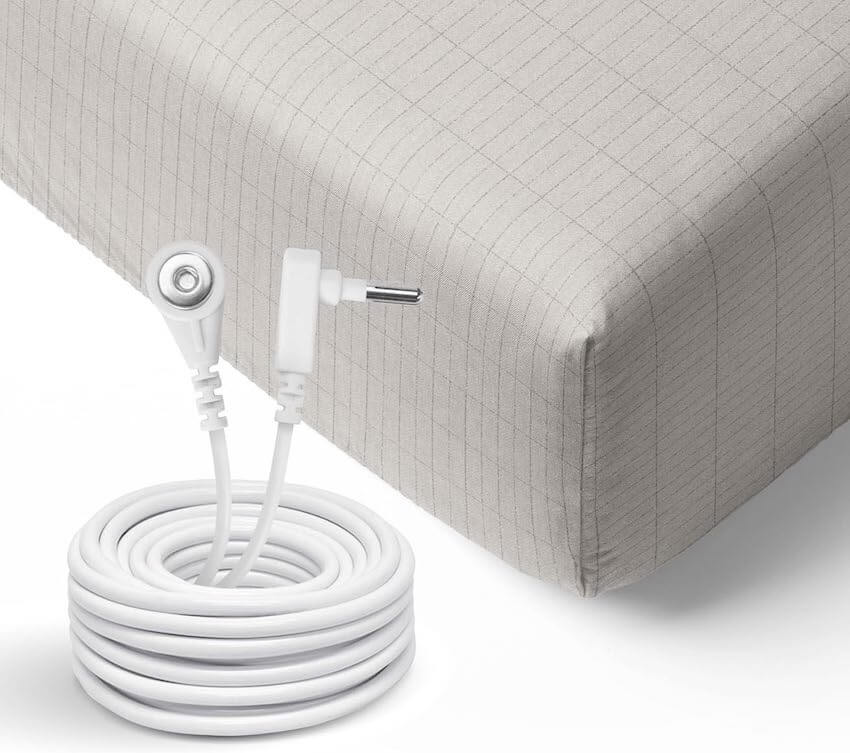
Recommended Earthing Sheets (Updated 2026)
Many brands now market grounding sheets, yet durability and conductivity vary dramatically.
The most reliable remain those developed by Earthing.com, the team behind the original research popularized by Clint Ober.
Their new Earthing Elite Mattress Cover substitutes silver filament with a carbon‑based conductive layer—stronger, longer‑lasting, and easier to clean.
The kit includes a coil cord, U.S. outlet checker, and continuity tester.
If you prefer natural fibers, consider the Earthing Harmony Sheet, woven with 95 percent cotton and 5 percent silver thread.
Both maintain stable contact when used beneath a breathable cotton or bamboo sheet. Choose the design that aligns with your environment: carbon for durability or silver for purity.
Affiliate Disclosure: Some links on this page are affiliate partnerships. If you purchase through them, CEOsage may earn a small commission at no additional cost to you. Our reviews remain independent, evidence‑based, and reflect genuine evaluation of product quality and safety.

Earthing Elite Mattress Cover
The Earthing Elite Mattress Cover is built from a conductive polyurethane infused with carbon, free of phthalates, PVC, and vinyl.
Unlike older silver‑threaded designs that gradually lose conductivity, this surface maintains charge transfer even after years of nightly compression.
The heavy‑duty connection snap resists breakage while the material wipes clean with mild soap—ideal for urban environments with higher EMF density.
Testing with a multimeter typically shows voltage reduction to near zero when properly grounded.
Many long‑term users report calmer heart rate variability and warmer extremities—signs of improved microcirculation (Chevalier et al., 2015).

Earthing Harmony Sheet
For those who prefer organic materials, the Earthing Harmony Sheet uses a soft cotton base interlaced with pure silver filament.
Silver’s high conductivity allows excellent charge dispersion but requires gentle care: wash on warm with mild detergent and avoid oils or lotions before sleep.
Because the design isn’t plastic‑coated, it pairs well with an organic mattress or latex topper—important for readers optimizing low‑toxin environments.
Voltage tests confirm reliable grounding for approximately 3–5 years when properly maintained.
Some users notice the subtle warmth typical of silver conduction during first use, which gradually subsides as the body equalizes potential.
This design embodies a tactile link between modern bioelectric technology and natural textile comfort—lightweight, breathable, and elegantly minimal.

Earthing Blanket (Throw Kit)
For readers who want grounding beyond the bedroom, the Earthing Throw Blanket—sometimes called the Grounding Throw Kit—offers mobility and convenience.
Woven from a soft conductive fiber blend and equipped with a detachable coil cord, it replicates the same electrical connection as grounding sheets but can be used while reading, meditating, or watching TV.
Because skin contact drives conductivity, drape the blanket so it touches bare hands, feet, or ankles.
Users often describe a subtle warmth during use, followed by tension release across the neck and shoulders.
That gentle current reflects balanced electron flow rather than heat generation.
The blanket’s flexibility also helps travelers maintain grounding routines in hotels or offices.
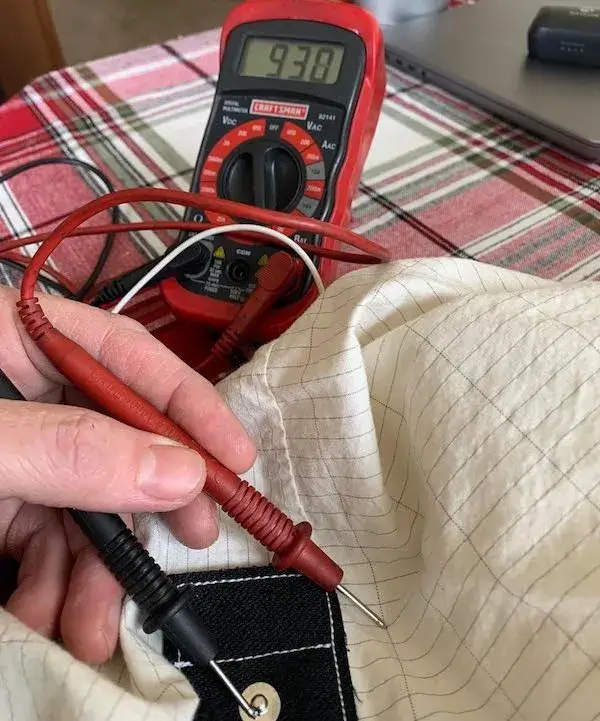
A photo from Aaron’s grounding sheet review (Amazon)
What to Avoid When Buying Earthing Sheets
With demand rising, online marketplaces are flooded with imitation grounding sheets that look identical but fail basic continuity tests.
Many use inferior snap connectors or non‑conductive threads, delivering little to no grounding effect.
Quality control also varies across mass‑market factories—some overseas brands appear briefly on Amazon, collect reviews, then vanish.
Before purchasing, confirm that your kit includes an outlet tester, continuity meter, and clear safety certification.
Avoid listings that omit voltage data or rely on vague “bio‑energy claims.”
Feedback like Aaron Stafford’s review (on Amazon) reveals common problems: loose snaps, broken wires, or missing ground continuity.
Reliable options—such as Earthing.com’s Elite series or Harmony cotton‑silver designs—maintain stable charge transfer and responsive support.
In grounding, cheaper often means non‑functional. When current can’t flow, neither can results.
Beyond the Bed — Other Grounding Practices
Grounding is most powerful when integrated into daily rhythm, not restricted to bedtime.
Walking barefoot on soil, sand, or unsealed stone remains the simplest and most potent form of earthing.
Regular contact for twenty minutes can measurably lower body voltage and enhance circulation (Chevalier et al., 2015).
For those living in dense cities, earthing shoes with conductive soles enable electron flow through asphalt’s insulating barrier.
Indoors, grounding mats extend the connection during meditation, reading, or computer work.
Small lifestyle changes—spending morning light outside, touching living trees, swimming in natural water—rebuild electrochemical harmony lost to prolonged screen time and EMF exposure.
Think of grounding not as treatment but as re‑entrainment: restoring synchronization between your body’s electrical cadence and the field that sustains every living system.
Final Thoughts — Grounding as Environmental Physiology
Grounding is more than a curiosity of alternative health—it’s a practical expression of environmental physiology, the study of how external energies shape internal function.
Our bodies evolved in constant electrical contact with the planet; rediscovering that contact closes a feedback loop long interrupted by modern insulation.
When we reconnect, inflammatory noise diminishes and subtle coherence returns to the systems governing rest, mood, and cellular repair.
For many, the first night on an earthing sheet serves as tangible proof: sleep feels denser, time passes differently, and anxiety ebbs.
Yet the deeper value lies not in any device but in remembering that human vitality depends on resonance with nature’s field.
Re‑aligning with Earth doesn’t merely improve health—it reintroduces stillness, clarity, and physical belonging in a world increasingly charged with distraction.
Recommended Reading
Earthing: The Most Important Health Discovery Ever by Clinton Ober, Stephen Sinatra, and Martin Zucker
Read Next
How to Ground Yourself: Earthing Outdoors & Indoors
Red and Near‑Infrared (NIR) Light Therapy: A Complete Guide
Blue Light Glasses Benefits: What the Science Really Shows
Best EMF Meters for Home Testing: A User-Friendly Review
This guide is part of the Energy Science & Environmental Physiology Series.
Understand how light, magnetism, and the Earth’s bioelectric field influence vitality. Discover practical ways to align your biology with natural energetic rhythms.
Scholarly References
- Oschman J, Chevalier G, Brown R. The effects of grounding (earthing) on inflammation, the immune response, wound healing, and prevention and treatment of chronic inflammatory and autoimmune diseases. J Inflamm Res. 2015;8:83-96
- Chevalier, G. , Melvin, G. and Barsotti, T. (2015) One-Hour Contact with the Earth’s Surface (Grounding) Improves Inflammation and Blood Flow—A Randomized, Double-Blind, Pilot Study. Health, 7, 1022-1059.
- Ghaly, M., & Teplitz, D. (2004). The biologic effects of grounding the human body during sleep as measured by cortisol levels and subjective reporting of sleep, pain, and stress. Journal of alternative and complementary medicine (New York, N.Y.), 10(5), 767–776.
- Chevalier G. (2015). The effect of grounding the human body on mood. Psychological reports, 116(2), 534–542.